The most poisonous tree in the world is the Manchineel, a species whose every part contains a potent, blistering toxin that can cause severe injury or even death upon contact, This deadly plant, native to coastal regions of the Americas, has earned its fearsome reputation through history and numerous documented cases of human poisoning, Understanding the specifics of this tree’s dangers, including its fruit, sap, and smoke, is essential for anyone traveling through its natural habitat,
In this article, we will explore the tree’s toxicology, historical accounts of its use, and practical advice for avoiding it.
What Is the Most Poisonous Tree in the World?
The most poisonous tree in the world is the manchineel tree, scientifically known as Hippomane mancinella, This deadly species grows in tropical regions of the Americas.
- Identification — Look for small, greenish-yellow fruits resembling crabapples, often called ‘beach apples.’
- Common names — Referred to as manchineel tree, poison guava, or death apple.
- Reputation — Recognized by the Guinness World Records as the world’s most poisonous tree.
- Warning signs — Many beaches where this tree grows display red markers or painted trunks to alert tourists.
Why the Manchineel Tree Is Considered the Deadliest
The manchineel is widely recognized as the deadliest tree in the world because every part of it contains potent toxins, Even minor exposure can cause immediate distress.
🔴 Immediate Dangers
Touching the sap causes severe skin burns, blistering, and inflammation within minutes, Eye contact can lead to temporary or permanent blindness.
⚡ Systemic Toxicity
Ingesting even one fruit triggers a cascade of symptoms: intense vomiting, diarrhea, seizures, and potential kidney failure.
🌿 Lethal Dose
As little as 2–3 milligrams of the sap’s active compound, phorbol, can be lethal to an adult human.
Where the Most Poisonous Tree Grows
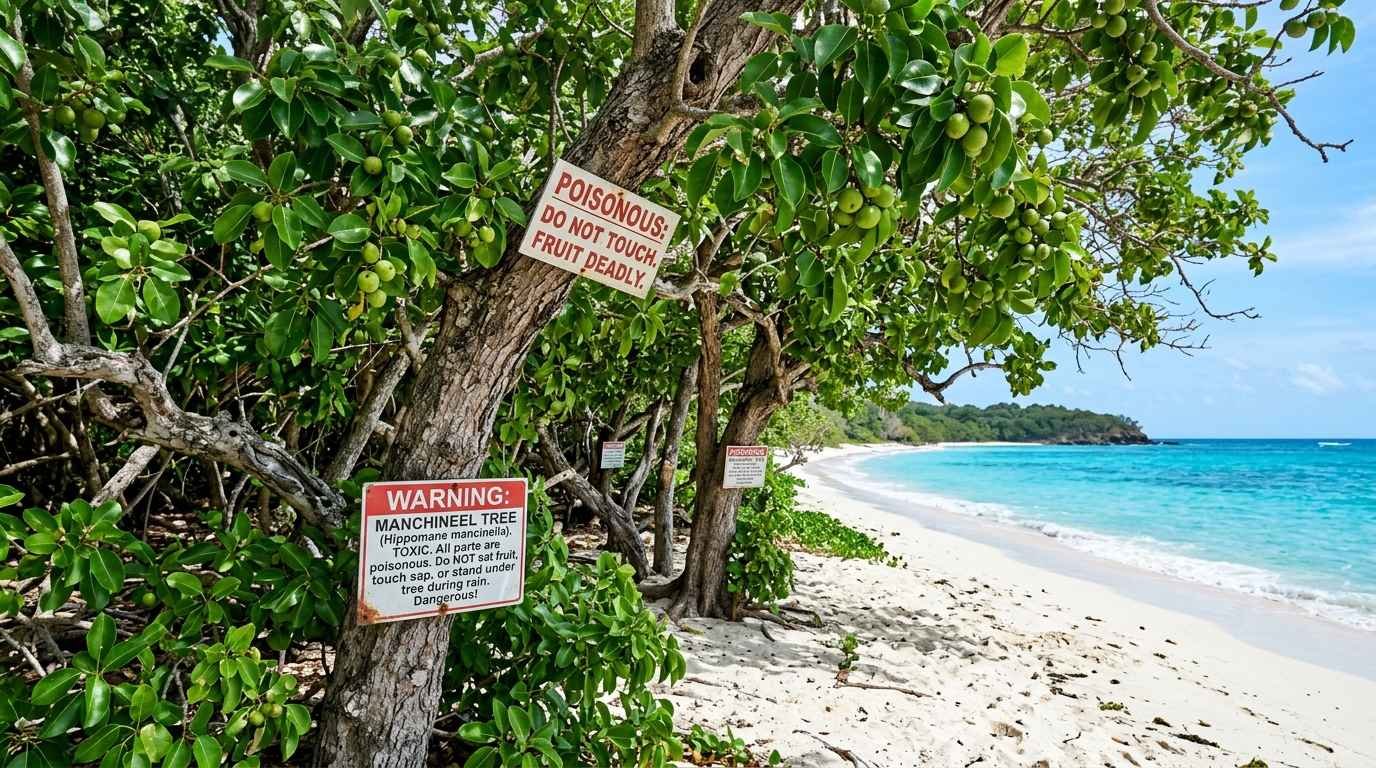
This toxic tree thrives in coastal ecosystems across the Caribbean, Central America, northern South America, and southern Florida, It prefers sandy, well-drained soils.
| Region | Typical Habitat | Warning Systems |
|---|---|---|
| Florida (USA) | Coastal hammocks, Everglades | Park rangers mark trees with red paint or signs |
| Caribbean Islands | Sandy beaches, mangrove edges | Fenced areas, tourist brochures |
| Central America | Coastal lowlands, tidal zones | Informal local knowledge, fewer signs |
What Makes the Manchineel Tree So Toxic?
The manchineel contains milky white sap loaded with phorbol esters, powerful skin irritants and carcinogens, These compounds attack cells on contact.
The sap also contains additional toxins like physostigmine, sapogenin, and hydrocyanic acid, Even breathing smoke from burning wood can cause severe respiratory damage, This combination of aggressive dermal toxins and systemic poisons is why the manchineel is considered the most poisonous tree in the world by toxicologists, The tree’s toxicity is so extreme that rainwater dripping from leaves can still contain enough poison to cause skin burns.
Can Touching the Tree Be Dangerous?
Yes, even brief skin contact with the bark, leaves, or sap can cause immediate chemical burns and blisters, The manchineel tree’s danger is not limited to ingestion alone.
- Skin contact — Rapid blistering, swelling, and deep tissue damage that may require weeks to heal.
- Eye exposure — Extreme pain, temporary blindness, and potential permanent corneal damage.
- Inhalation — Burning wood releases toxic fumes causing coughing, chest pain, and throat swelling.
What Happens If You Eat the Fruit?
Ingesting even one small fruit can be fatal, The manchineel fruit poisoning causes immediate burning of the mouth and throat, followed by violent illness.
The progression of symptoms typically includes oral pain within seconds, then nausea, profuse vomiting, bloody diarrhea, and severe dehydration, Within hours, gastrointestinal bleeding and kidney failure may occur, Without emergency care, the victim can die from shock or organ failure, Because of this, the manchineel fruit poisoning is considered one of the most painful and dangerous toxic exposures from any plant species, The fruit looks deceptively sweet, but it is the most poisonous tree in the world for a reason.
Question: Is there any antidote for manchineel tree poison?
Answer: No specific antidote exists, Treatment is supportive: activated charcoal (if ingested recently), IV fluids, pain management, and monitoring for kidney failure, Skin exposure should be washed with soap and water; do not apply solvents or oils.
Symptoms of Manchineel Tree Poisoning
Exposure to the manchineel tree triggers immediate, severe health reactions, Symptoms depend on the route of contact.
- Skin contact — Burning pain, redness, and blistering occur within 30 seconds to 2 minutes, Deep chemical burns may take weeks to heal.
- Eye exposure — Intense burning, swelling, and temporary or permanent vision loss, Medical evaluation is critical.
- Ingestion — Immediate oral burning, throat swelling, vomiting, bloody diarrhea, and abdominal pain, Respiratory distress and seizures may follow.
- Inhalation — Coughing, chest tightness, and throat inflammation, In severe cases, lung damage can occur.
Other Highly Poisonous Trees Around the World
While the manchineel is the world’s most poisonous tree, several other species also pose severe risks, These dangerous poisonous trees share similar toxic mechanisms.
🌲 Strychnine Tree
Native to Southeast Asia, its seeds contain strychnine, a neurotoxin that causes muscle spasms and respiratory failure.
☠️ Oleander
Common in gardens worldwide, all parts are toxic, Ingestion leads to heart arrhythmias and death.
🌴 Gympie-Gympie
Found in Australia, its stinging hairs deliver a neurotoxin causing weeks of excruciating pain.
| Tree Species | Toxin | Lethal Dose | Region |
|---|---|---|---|
| Manchineel | Phorbol esters | 2–3 mg sap | Americas, Caribbean |
| Strychnine Tree | Strychnine | 30–60 mg | Southeast Asia |
| Oleander | Cardiac glycosides | 1–2 leaves | Global (temperate) |
| Gympie-Gympie | Moroidin | Contact causes pain | Australia |
What to Do After Exposure to a Toxic Tree
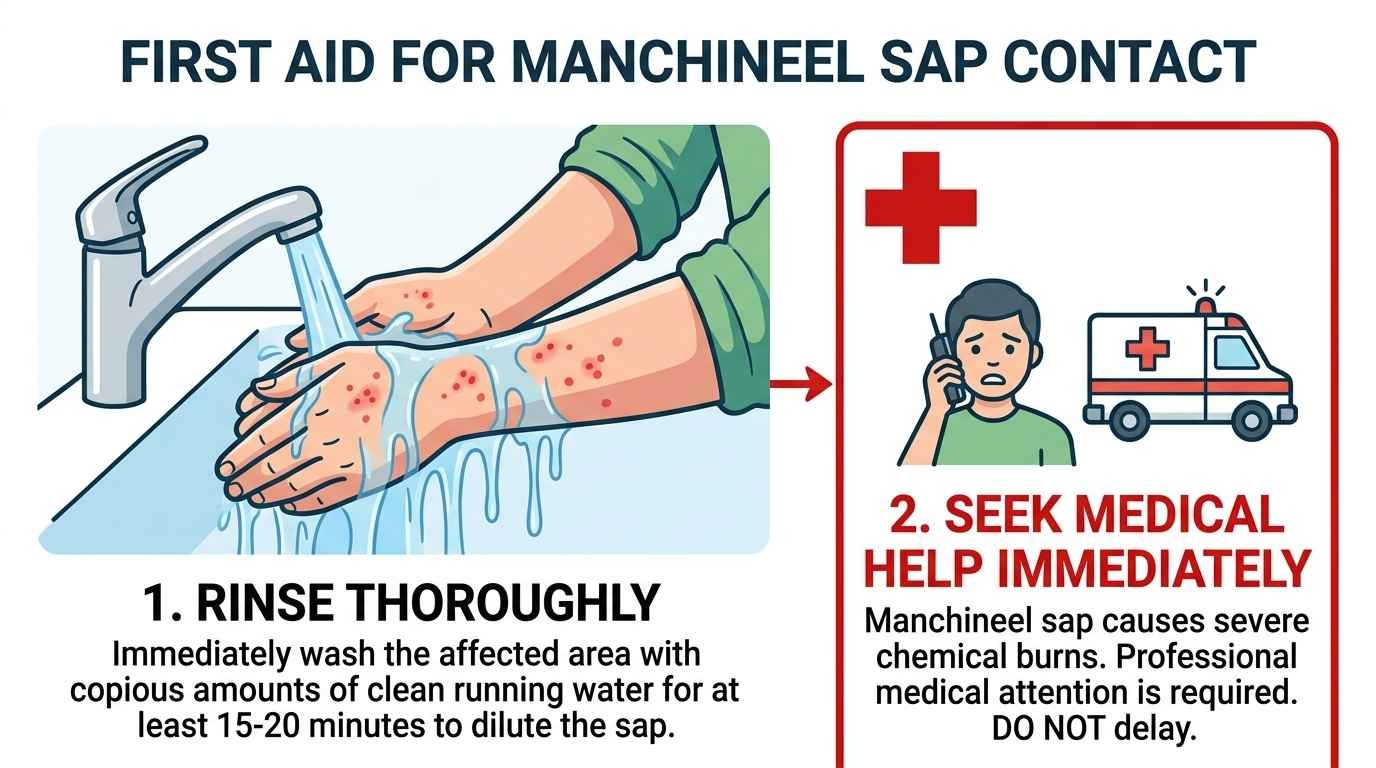
Immediate action can reduce harm after contact with the deadliest tree in the world, Follow these steps without delay.
- Skin contact — Wash with soap and copious water for 15 minutes, Do not scrub or use alcohol-based cleansers, which can spread the sap.
- Eye contact — Flush eyes with clean water for 20 minutes, holding eyelids open, Remove contact lenses if present.
- Ingestion — Do not induce vomiting, Drink small sips of water or milk, Go to the emergency room immediately.
- Inhalation — Move to fresh air, If breathing is difficult, administer oxygen if available and call emergency services.
How to Stay Safe Around Dangerous Trees
Awareness and caution are your best defenses against the most toxic tree and other hazardous species, Prevention is always safer than treatment.
🛑 Look for Warning Signs
Many parks paint red rings around manchineel trunks or post signs, Heed them and stay on marked paths.
🧤 Use Barriers
Wear thick gloves and long sleeves if you must handle vegetation, Wash gear after use.
🌧️ Avoid Rainy Areas
Do not stand under trees during or after rain, Sap dilutes in water but remains toxic.
By staying informed about the most dangerous tree species and respecting their habitats, you can explore nature safely, Share this knowledge with fellow travelers to prevent accidents.
Frequently Asked Questions About the Most Poisonous Tree in the World
Here are answers to common questions about the most poisonous tree in the world and its effects.
Question: Can you die from touching a manchineel tree?
Answer: Death from skin contact alone is extremely rare, However, the sap can cause severe burns, infection, and secondary complications, Eye exposure can cause blindness.
Question: Is the manchineel fruit poisonous to animals?
Answer: Yes, most mammals, including dogs and livestock, suffer similar toxic effects, Birds appear resistant but it is not fully understood.
Question: How is manchineel tree poisoning treated in hospitals?
Answer: Treatment is supportive: IV fluids, pain medication, wound care for skin burns, and monitoring for kidney failure, No specific antidote exists.
To fully appreciate why the Manchineel tree is officially recognized as the most poisonous tree in the world, one must understand that every single part of this plant contains a powerful cocktail of toxins capable of causing severe harm upon contact or ingestion.
From the blistering sap that can permanently damage your car’s paintwork to the deceptively sweet fruit that can cause life-threatening internal injuries, this tree demands the highest level of respect and awareness from anyone who encounters it in its native coastal habitats across the Americas and the Caribbean.
Therefore, while many dangerous plants exist, the Manchineel’s combination of potent water-soluble toxins, airborne irritants, and historically documented human fatalities solidifies its dark reputation as the most dangerous toxic tree on the planet, serving as a stark warning about the hidden dangers lurking in nature.