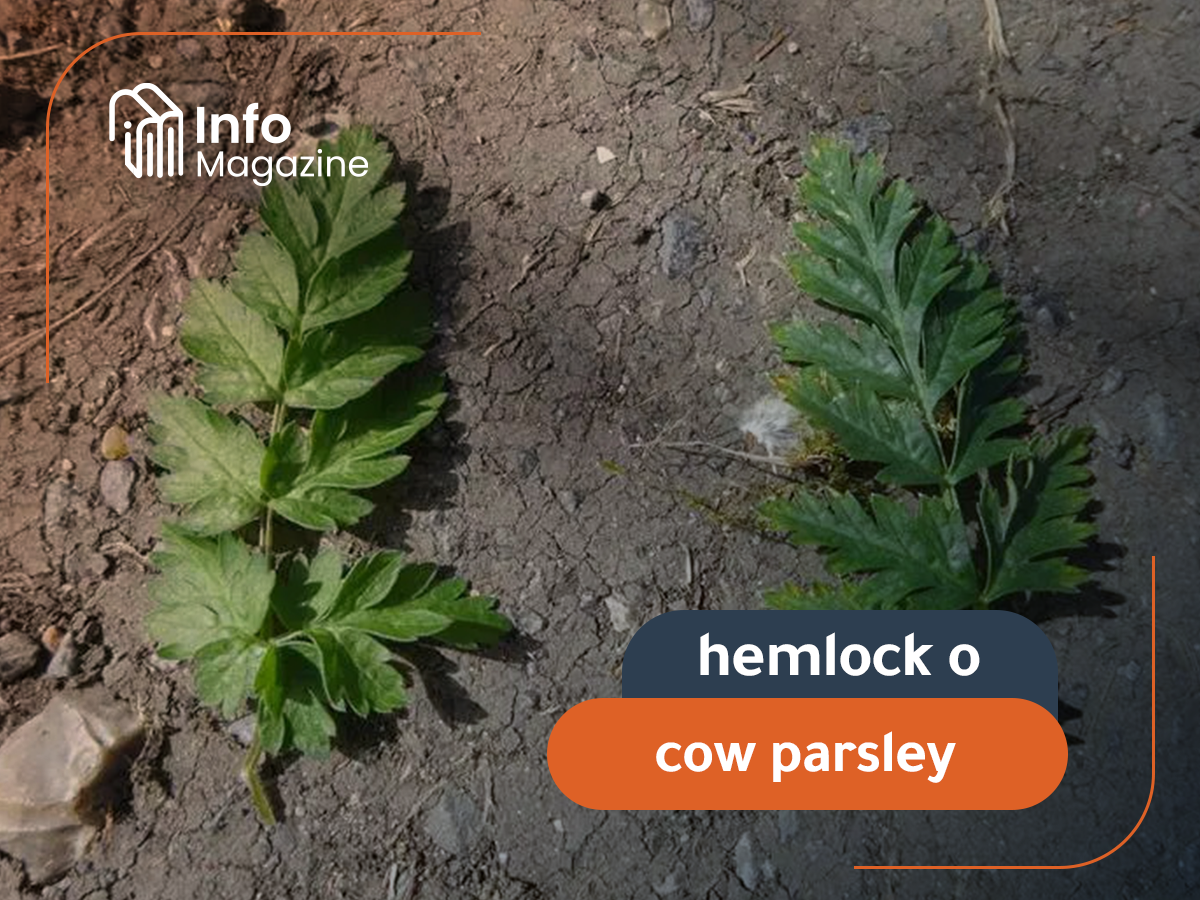
Understanding whether you are looking at hemlock or cow parsley is a critical skill for anyone who forages, hikes, or manages land in temperate regions.
Many people mistakenly believe these two white-flowered plants are nearly identical, yet one is a lethal poison while the other is a harmless edible herb.
This article will provide a clear, expert breakdown of the key botanical differences, including stem patterns, leaf structure, and habitat preferences, so you can confidently distinguish hemlock from cow parsley every time.
What Is Poison Hemlock?
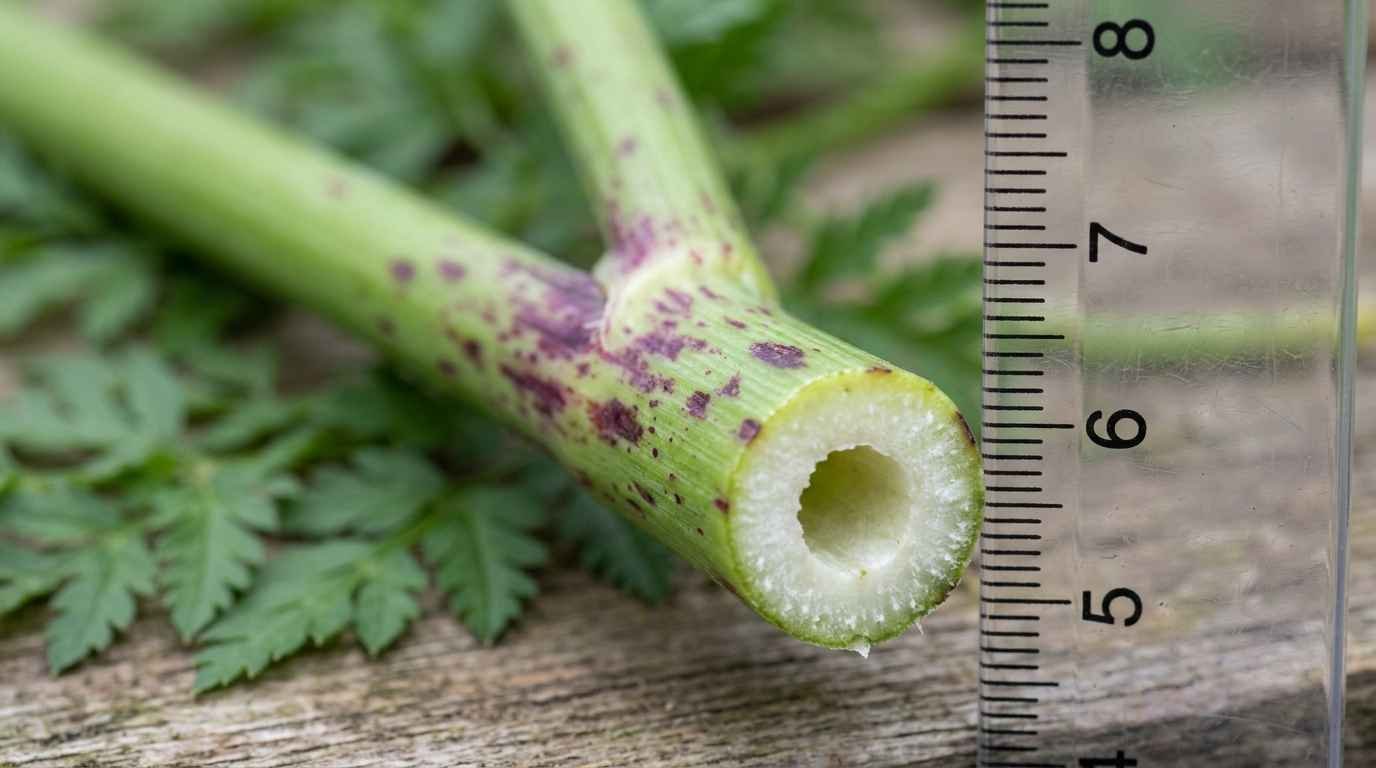
Poison hemlock (Conium maculatum) is a highly toxic biennial plant from the Apiaceae family, responsible for numerous accidental poisonings each year.
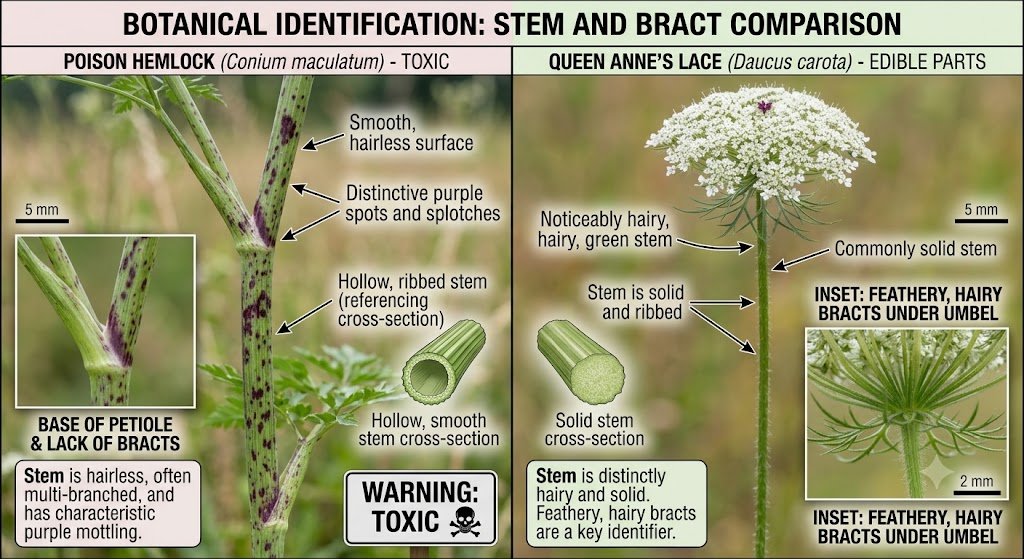
- Identify the stem: Look for smooth, hollow stems covered in distinctive reddish or purple blotches, No hairs present.
- Check the leaves: Finely divided, fern-like, and glossy green with a feathery appearance, Crushed leaves emit a musty, mouse-like odor.
- Examine the flowers: Small white blossoms arranged in umbrella-shaped clusters (umbels), typically blooming from late spring to early summer.
- Observe the roots: A thick, white taproot that resembles a carrot but lacks any carroty smell.
What Is Cow Parsley?
Cow parsley (Anthriscus sylvestris) is a common, edible wild herb also known as wild chervil, widely found in hedgerows and meadows across Europe and Asia.
Cow parsley identification starts with its stems: they are deeply grooved, slightly hairy, and solid (not hollow) with a green color that lacks purple spots, The leaves are soft, fern-like, and bright green with a slightly hairy underside, Cow parsley flowers appear in delicate, lacy umbels of white blooms that often have a subtle pinkish hue when first opening, The entire plant gives off a mild, pleasant parsley-like scent when crushed, a key clue for foragers, This plant typically grows up to 1.5 meters tall and thrives in damp, shaded environments.
Why Hemlock and Cow Parsley Are Often Confused
Both plants share nearly identical white umbel flowers and fern-like foliage, blooming in the same season along roadsides and ditches, creating a dangerous visual ambiguity.
The confusion is exacerbated by overlapping habitats and growth patterns, Foragers and hikers often encounter them side by side, and without careful attention to stems and leaf texture, the hemlock vs cow parsley dilemma can have deadly consequences, Cow parsley vs hemlock is not just a botanical exercise; it is a matter of life and death, especially for those who wildcraft food or medicine.
Key Identification Differences
Distinguishing poison hemlock from cow parsley hinges on three primary characteristics: stem markings, leaf taste/smell, and presence of hairs.
| Feature | Poison Hemlock | Cow Parsley |
|---|---|---|
| Stem | Smooth, hollow, with reddish-purple blotches | Grooved, solid, uniformly green, hairy |
| Leaf scent | Musty, mouse-like, unpleasant | Mild, parsley-like, pleasant |
| Flower bracts | Each umbel has 5-10 distinct bracts at base | No bracts (or very few, tiny ones) |
| Height | Up to 2.5 m | Typically up to 1.5 m |
These difference between hemlock and cow parsley markers are reliable even when the plants are young or damaged, Always cross-check at least two features before making an identification.
Comparing Flowers, Leaves, and Stems
Flowers and leaves can look nearly identical at a glance, but careful observation of stem structure and leaf arrangement reveals critical clues for safe foraging.
Flowers
Hemlock flowers grow in large, loose umbels up to 15 cm across, with 5-10 leaf-like bracts at the base of each umbrella, Cow parsley flowers are more compact, usually under 10 cm, and lack bracts entirely, Both have 5 white petals, The central flower in the umbel is often slightly darker or absent in cow parsley.
Leaves
Hemlock leaves are deeply divided, almost triangular in outline, with leaflets that are pointed and smooth-edged, Cow parsley leaves are softer, more rounded in outline, with blunt-toothed leaflets, When crushed, poison hemlock identification relies on the foul smell, while cow parsley smells herbal, Hemlock look alike plants often share leaf shapes, but the scent test is definitive.
Stems
This is the most reliable feature, Hemlock stems are hairless, hollow, and marked with purple splotches, Cow parsley stems are green with fine hairs, solid (or with a small pith), and have distinct ridges running lengthwise, A simple stem rub test: hemlock feels waxy and cold; cow parsley feels fuzzy and warm.
– Question: Is it safe to touch either plant?
– Answer: Touching poison hemlock leaves or stems is generally not dangerous unless you have an open wound or later ingest residue, Cow parsley is harmless on contact, However, always wash hands after handling any unknown wild plant.
Is Cow Parsley Safe?
Cow parsley is not toxic to humans, but its dangerous resemblance to poison hemlock means caution is essential for foragers.
- Step 1: Smell the crushed leaf, Cow parsley releases a fresh, herbal, parsley-like scent, Hemlock smells like mouse urine — musty and foul.
- Step 2: Rub the stem, Cow parsley stems feel fuzzy and slightly warm due to tiny hairs, Hemlock stems are cold, waxy, and hairless.
- Step 3: Check the root, Cow parsley has a small, fibrous root system, Hemlock has a thick white taproot that smells like parsnip — do not taste it.
The Dangers of Poison Hemlock
Poison hemlock is one of the most toxic plants in North America and Europe, causing respiratory failure within hours of ingestion.
| Factor | Poison Hemlock | Cow Parsley |
|---|---|---|
| Toxicity | Highly toxic to all mammals | Non-toxic, edible when correctly identified |
| Symptoms | Nausea, dilated pupils, muscle paralysis, respiratory arrest | None (mild digestive upset if overeaten) |
| Onset of symptoms | 15 minutes to 3 hours after ingestion | Not applicable |
Poison hemlock comparison with cow parsley must always include these toxicity factors, Hemlock flowers may look similar to cow parsley flowers, but the stakes are incomparably different, Never forage by flower alone.
What to Do If You Suspect Hemlock Exposure
If you or someone else has ingested any part of a plant suspected to be poison hemlock, immediate medical action is critical.
- Call emergency services right away, Tell them you suspect poison hemlock ingestion.
- Keep the person calm and still — movement accelerates the spread of alkaloids through the bloodstream.
- Monitor breathing, If the person stops breathing, begin CPR if you are trained, Hemlock causes respiratory paralysis.
- Do not give anything by mouth — no water, food, or milk, It will not dilute the toxin and may cause vomiting.
Survival depends on rapid supportive care, especially mechanical ventilation, There is no antidote for coniine poisoning, Hemlock look alike plants like cow parsley are harmless, but any plant suspected to be hemlock should be treated as a medical emergency.
Frequently Asked Questions About Hemlock and Cow Parsley
Common questions from foragers and hikers about distinguishing these two plants, with clear, direct answers.
– Answer: Check the stem, Hemlock stems are smooth, hollow, and have reddish-purple blotches, Cow parsley stems are green, ridged, solid, and covered with fine hairs, This is a 100% reliable field test.
– Answer: Not safely, Their leaves are very similar — both are fern-like and compound, Use the stem and scent test together, Difference between hemlock and cow parsley is most obvious in stem characteristics, not leaves.
– Answer: Yes, the root of poison hemlock smells like parsnip or carrot, but never taste it! Cow parsley roots have no distinct smell, This is a secondary confirmation only — never rely on smell alone for safety.
– Answer: Yes, young shoots of both plants look very similar, At this stage, the most reliable feature is the stem cross-section: hemlock is hollow, cow parsley is solid, Hemlock look alike plants include cow parsley, but also other Apiaceae members like wild carrot and fennel — always verify multiple features.
Understanding the critical distinctions between hemlock or cow parsley is not merely an academic exercise but a genuine matter of personal safety, as confusing these two very similar-looking plants can have fatal consequences for anyone who forages or spends time in the countryside.
Identifying the key visual differences such as the presence of purple blotches on the stem of poison hemlock, the distinctively different leaf shapes, and the timing of the plant’s lifecycle will empower you to confidently distinguish a deadly hemlock or cow parsley encounter before it is too late.
Always remember that the safest approach when you are uncertain about the identity of any wild plant is to never touch or ingest it, and you should consult a detailed field guide or a local botanical expert to confirm your identification of hemlock or cow parsley beyond any doubt.