Phosphorus toxicity in plants is a frequently overlooked yet damaging condition that can stunt growth and disrupt nutrient uptake even when gardeners believe they are providing adequate care.
This problem often arises from over-fertilization or excessive use of phosphorus-rich amendments, leading to chlorosis, leaf necrosis, and poor root development.
To help you maintain healthy plants and avoid costly mistakes, this article will explain the key symptoms of phosphorus toxicity, outline its primary causes, and offer practical strategies for diagnosis and correction.
What Is Phosphorus Toxicity in Plants?
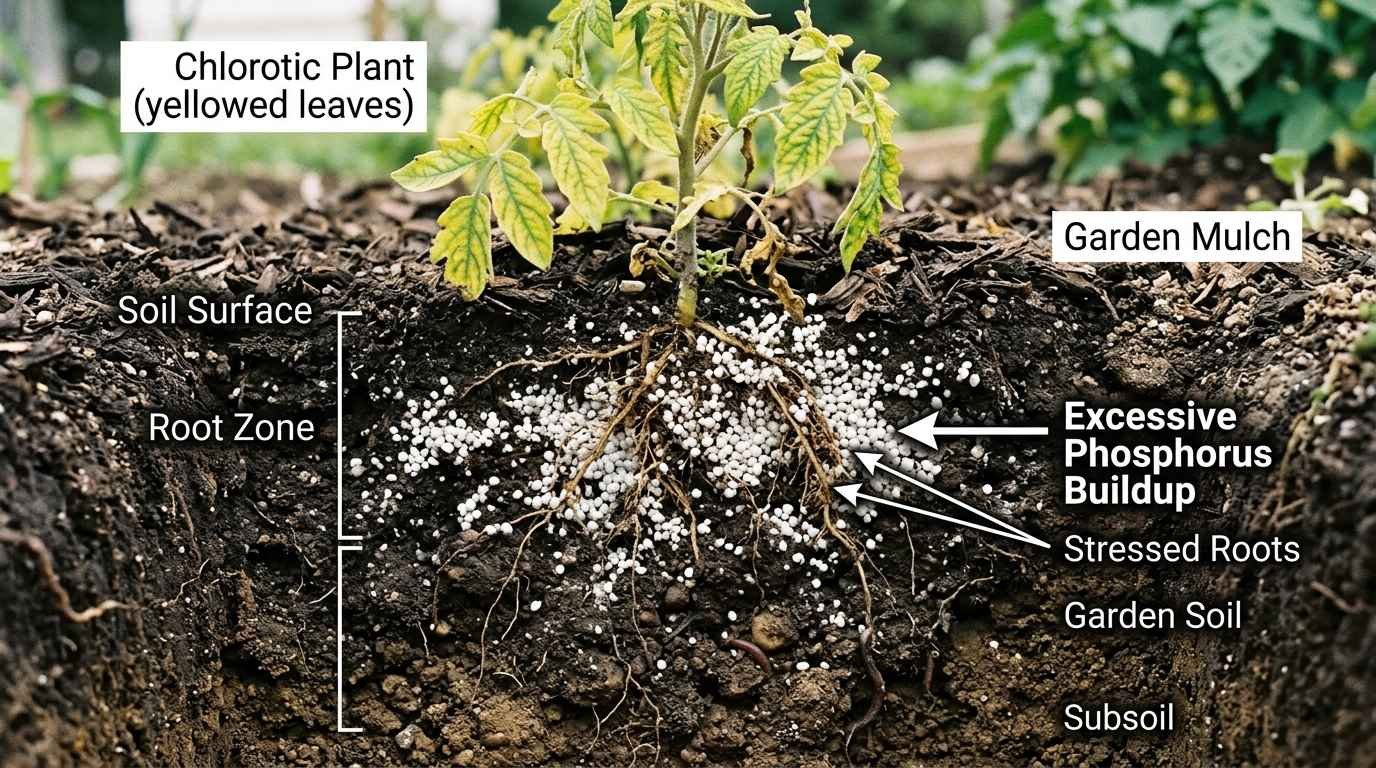
Phosphorus toxicity is a nutrient disorder where excessive phosphorus disrupts plant metabolism and locks out other essential elements.
At its core, this condition occurs when phosphorus buildup in soil reaches a threshold that interferes with micronutrient uptake—especially iron and zinc, The result is a cascading phosphorus nutrient imbalance that mimics deficiency symptoms, stunting growth and yellowing leaves.
What Causes Excess Phosphorus in Soil?
Excess phosphorus in soil arises from repetitive over-application of synthetic fertilizers, manure, or compost high in phosphates.
- Over-fertilization with NPK blends — Many commercial fertilizers contain high middle numbers (e.g., 10-20-10), Repeated use accelerates phosphorus buildup in soil.
- Manure and compost misuse — Poultry and hog manure are phosphorus-rich, Applying them yearly without soil tests leads to excess phosphorus in soil.
- Runoff and irrigation habits — Overwatering can concentrate phosphates near the root zone rather than leaching them away, worsening the phosphorus nutrient imbalance.
- Inherent geochemistry — Some regions naturally have high phosphorus levels in soil due to parent rock material.
How Too Much Phosphorus Affects Plant Growth
Excess phosphorus disrupts root signaling and blocks micronutrient absorption, leading to indirect nutrient starvation.
The primary mechanism is the formation of insoluble metal-phosphates in the root zone, For example, zinc phosphate precipitates out of solution, starving the plant of zinc, Simultaneously, excess phosphorus can inhibit mycorrhizal fungi, which normally help roots access nutrients, Over weeks, visible phosphorus toxicity plant symptoms emerge: older leaves turn reddish-purple, while new leaves appear pale and weak.
Common Symptoms of Phosphorus Toxicity in Plants
Phosphorus toxicity symptoms in plants include chlorosis, stunted growth, and premature leaf drop—often confused with deficiencies.
| Symptom | Description | Affected Part |
|---|---|---|
| Interveinal chlorosis | Yellowing between veins, especially on young leaves | Young leaves |
| Reddish-purple discoloration | Anthocyanin accumulation in older leaves | Older leaves |
| Stunted root growth | Short, brittle roots with few root hairs | Roots |
| Reduced flower/fruit yield | Fewer blooms and smaller fruits | Flowers & fruit |
These phosphorus toxicity plant symptoms often appear after months of unnoticed high phosphorus levels in soil, Early detection requires vigilant observation: if young leaves yellow while old leaves turn purple, suspect phosphorus toxicity in plants before reaching for more fertilizer.
Which Plants Are Most Sensitive to Excess Phosphorus?

Sensitive species like proteas, grevilleas, native Australian plants, and many ericaceous plants suffer quick damage from excess phosphorus.
- Question: Why are native and acid-loving plants so vulnerable to phosphorus toxicity symptoms in plants?
- Answer: These plants evolved in low-phosphorus soils and lack efficient phosphorus regulation mechanisms, Even moderate phosphorus toxicity treatment becomes difficult once symptoms appear, For example, many Proteaceae species can die from a single application of standard fertilizer with too much phosphorus in plants, For sensitive plants, always use low-phosphorus (P) fertilizers or specialized natives mixes to avoid triggering a phosphorus nutrient imbalance.
How to Diagnose Phosphorus Toxicity
Diagnosing phosphorus toxicity requires a combination of soil testing, leaf tissue analysis, and visual symptom assessment.
- Step 1: Conduct a soil test, Look for high phosphorus levels in soil above 50 ppm (Bray P1) or 25 ppm (Olsen), Most labs report these as ‘very high’ or ‘excessive.’
- Step 2: Perform a leaf tissue analysis, Collect mature leaves from multiple plants, If leaf phosphorus exceeds 1% dry weight in most plants, you likely have too much phosphorus in plants internally.
- Step 3: Rule out other causes, Check pH first—phosphorus becomes less available above pH 7.5, If pH is normal but symptoms persist, suspect phosphorus toxicity symptoms in plants.
- Step 4: Observe symptom progression, Track if chlorosis starts on young leaves while older leaves turn purple, This specific pattern is a hallmark of phosphorus toxicity in plants versus simple nutrient lockout.
Phosphorus Toxicity vs Other Nutrient Imbalances
Excess phosphorus uniquely mimics iron and zinc deficiencies while also producing anthocyanin buildup in older leaves.
| Condition | Key Differentiator | Leaf Position |
|---|---|---|
| Phosphorus toxicity | Purple older leaves + yellow young leaves | Both old and new |
| Nitrogen deficiency | Uniform yellowing from bottom upward | Old leaves only |
| Iron deficiency | Distinct interveinal chlorosis on new leaves only | Young leaves |
| Zinc deficiency | White or chlorotic bands at leaf base | Young & mid leaves |
How to Fix Phosphorus Toxicity in Plants
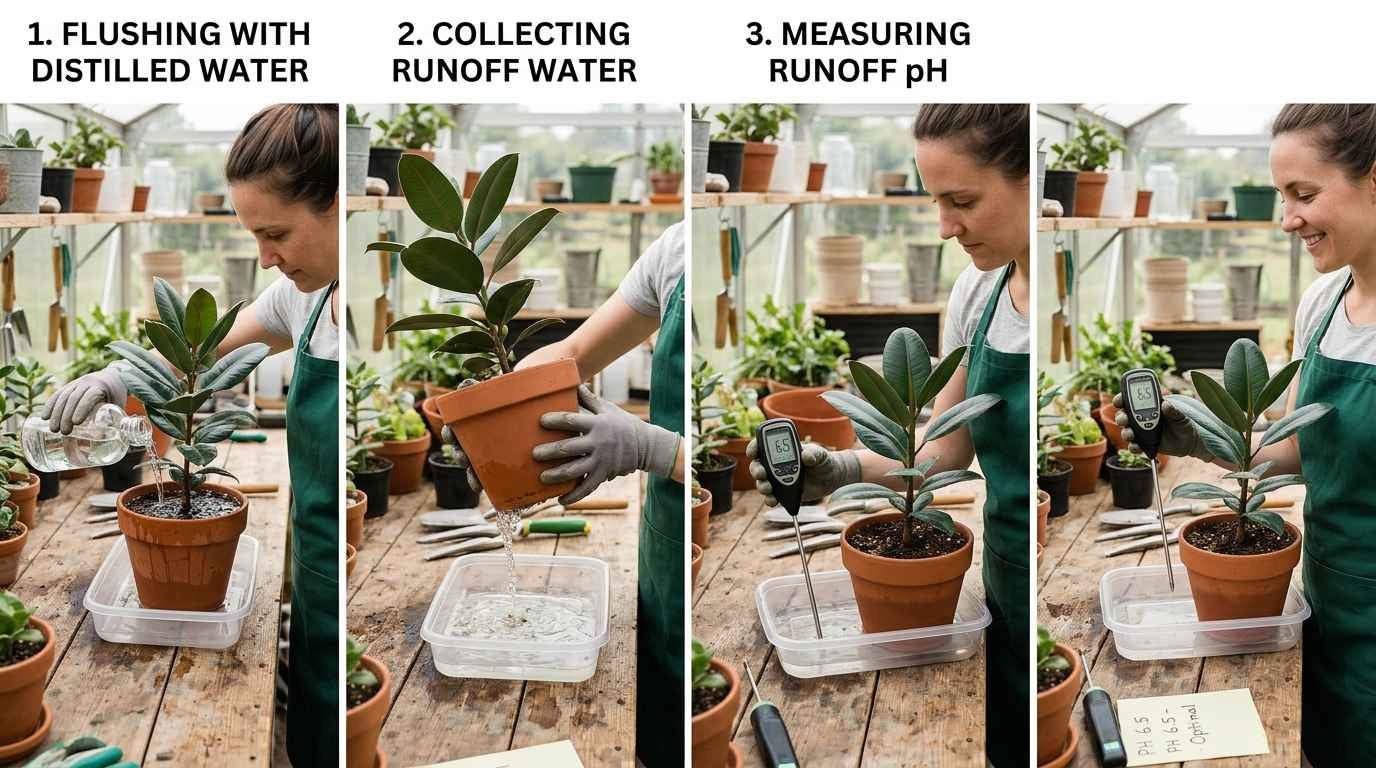
Correcting phosphorus toxicity requires flushing excess phosphorus from the root zone and restoring micronutrient availability.
For container plants, leach the soil by watering generously with distilled or rainwater—apply 3–4 times the pot volume over several hours, For garden beds, stop all phosphorus-containing fertilizers immediately, Add organic matter like aged leaf compost (low phosphorus) to bind free phosphates, Apply chelated iron or zinc foliar sprays to alleviate acute symptoms, The phosphorus toxicity treatment process can take 2–4 weeks; during this time, avoid any fertilizer containing the middle number (P), If the soil pH is above 7.0, acidify gradually with elemental sulfur to improve micronutrient solubility.
How to Prevent Phosphorus Buildup in Soil
Prevention hinges on soil testing, balanced fertilization, and choosing low-phosphorus amendments for sensitive plants.
For garden beds, rotate crops with phosphorus-scavenging plants like buckwheat, which can uptake and sequester excess, Avoid using manure unless tested; poultry manure can contain 2–3% P by weight, In lawns, use phosphorus-free (0-0-10) winterizers unless a soil test indicates otherwise, Always water deeply after any fertilization to prevent phosphorus buildup in soil near the surface, Implement a 3-year rotation of soil amendments to maintain phosphorus nutrient imbalance at bay.
Frequently Asked Questions About Phosphorus Toxicity in Plants
Common questions address symptom confusion, treatment duration, and whether excess phosphorus is permanent in soil.
Question: Can I reverse phosphorus toxicity symptoms in plants once they appear?
Answer: Yes, but recovery depends on severity, For mild cases (leaves slightly purple, minor chlorosis), stop all phosphorus inputs and leach the soil; new growth should be green within 10–14 days, For severe cases (brittle roots, widespread yellowing), damaged leaves will not recover—but the plant can grow new healthy tissue once high phosphorus levels in soil are corrected, Sensitive plants like grevilleas may need 4–6 weeks to show full recovery, In extreme phosphorus toxicity plant symptoms, consider replacing the top 6 inches of soil in critical areas to physically remove phosphorus buildup in soil.
Understanding phosphorus toxicity in plants is absolutely essential for any gardener or farmer who wants to maintain healthy and productive soil systems, Excessive phosphorus accumulation often occurs due to over-fertilization with synthetic products or manure, which then creates a nutrient imbalance that prevents the uptake of critical micronutrients like iron and zinc, The results of unchecked high phosphorus levels can therefore lead to stunted growth, interveinal chlorosis, and a general decline in plant vigor that mimics deficiencies of other elements,
To prevent this challenging condition, you should always conduct a thorough soil test before applying any fertilizer and choose low-phosphorus options when your baseline levels are already sufficient, If you already see symptoms of phosphorus toxicity in plants, the remedy involves stopping all phosphorus inputs and adding organic matter or mycorrhizal fungi to help restore proper biological balance in the root zone, By taking these careful steps to monitor and manage soil chemistry, you will protect your plants from nutrient lockout and ensure they can access the complete range of essential minerals for optimal development.