Understanding pokeweed toxicity is critical for anyone who spends time gardening, hiking, or foraging, as this common plant can cause severe reactions if mishandled or ingested. The primary search intent here is to learn the dangers and immediate steps to protect oneself or loved ones after exposure. Pokeweed toxicity primarily arises from its roots, berries, and leaves, which contain potent toxins that can lead to gastrointestinal distress, respiratory issues, or even more serious complications. This article will comprehensively cover identifying pokeweed, recognizing poisoning symptoms, and outlining essential first aid and prevention measures to keep you and your family safe.
What Is Pokeweed Toxicity?
Pokeweed toxicity refers to the harmful effects of ingesting or contacting the pokeweed plant, which contains potent toxins affecting humans and animals.
Understanding pokeweed poisoning is crucial for anyone living in regions where this plant thrives, as even small amounts can cause severe reactions.
Why Is Pokeweed Poisonous?
Pokeweed contains toxic compounds like phytolaccatoxin and phytolaccigenin, which are present in all plant parts and disrupt normal cellular function.
Phytolacca americana toxicity is due to saponins and lectins that irritate the gastrointestinal tract, damage red blood cells, and affect the nervous system when ingested.
🔍 Fact: Even young shoots, often mistaken for edible asparagus, contain dangerous levels of these toxins.
Which Parts of the Pokeweed Plant Are Toxic?
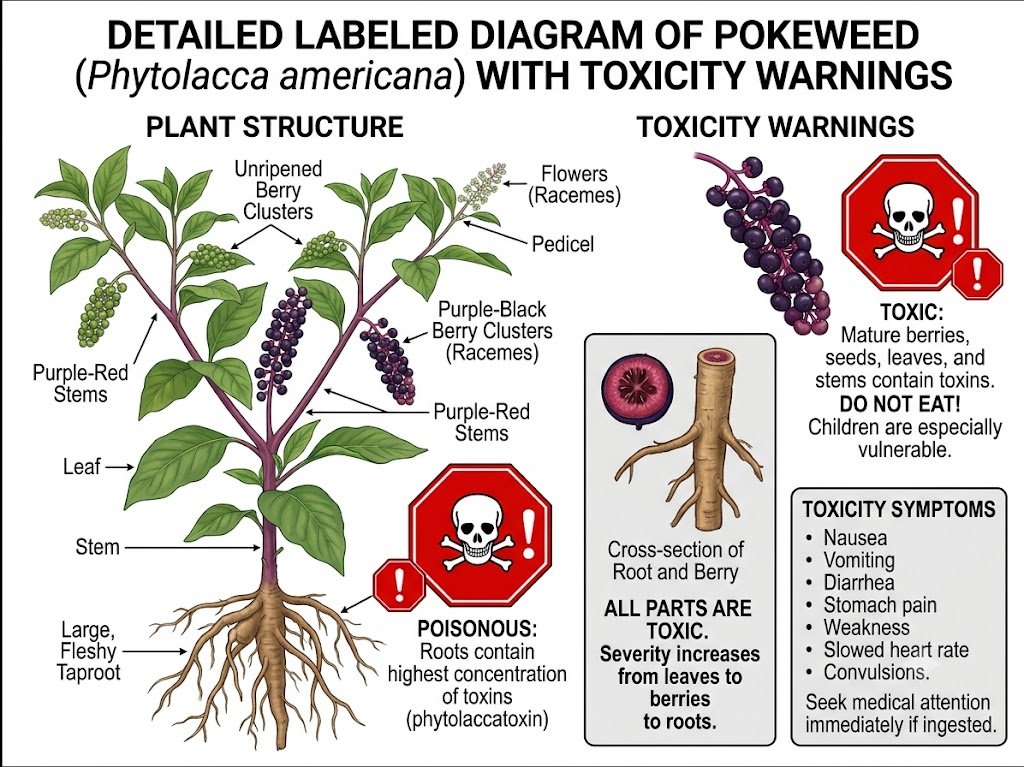
All parts of the pokeweed plant—roots, stems, leaves, berries, and seeds—are toxic, but concentration levels vary significantly.
| Plant Part | Toxicity Level | Common Misconception |
|---|---|---|
| Roots | Extremely high | Often mistaken for wild ginseng—deadly error |
| Leaves (mature) | High | “Boiling makes them safe” is dangerous advise |
| Berries (ripe, purple) | Moderate to high | Some believe only green berries are harmful—ripe are still toxic |
| Seeds | High (concentrated) | Often overlooked while chewing berries |
How Pokeweed Poisoning Happens
Pokeweed poisoning occurs through ingestion, skin contact, or inhalation of smoke when burning the plant.
- Ingestion of raw or improperly prepared parts—most common route, especially with berries mistaken for edible fruit or roots mistaken for medicinal herbs.
- Skin contact with sap or crushed leaves—can cause dermatitis in sensitive individuals, though gastrointestinal effects are unlikely through skin alone.
- Accidental consumption by children—bright purple berries attract kids, leading to pokeweed toxicity in children.
- Pets eating plant material outdoors—pokeweed toxicity in dogs and cats often occurs when they chew on fallen berries or dig up roots.
🔍 Note: Symptoms typically appear within 30 minutes to 4 hours after exposure, depending on the amount ingested.
Pokeweed Toxicity Symptoms in Humans
Pokeweed toxicity symptoms range from mild gastrointestinal discomfort to life-threatening organ failure, depending on the dose.
- Mild exposure: Nausea, vomiting, diarrhea, abdominal cramping, and a burning sensation in the mouth and throat.
- Moderate exposure: Severe vomiting and diarrhea leading to dehydration, along with low blood pressure and dizziness.
- Severe exposure: Respiratory depression, seizures, kidney failure, and cardiac arrest. Immediate medical attention is critical.
📌 Key Takeaway: If you suspect pokeweed poisoning, call poison control (1-800-222-1222) or go to the emergency room immediately—do not wait for symptoms to worsen.
Pokeweed Toxicity in Children and Pets
Children and pets are more vulnerable due to smaller body sizes and natural curiosity.
For children, the primary risk is from the appealing dark purple berries. For pets, especially dogs, chewing on the plant or eating fallen berries during walks is common.
🔍 FAQ-style:
Question: What should I do if my child eats a pokeweed berry?
Answer: Remain calm, remove any remaining plant material from their mouth, and immediately call Poison Control (1-800-222-1222). Do not induce vomiting unless instructed. Note the time of ingestion and the number of berries eaten for medical reference.
Always supervise children and pets in areas where pokeweed grows, and promptly remove the plant from your yard using gloves and protective gear.
How Long After Exposure Do Symptoms Appear?
The timeline for pokeweed toxicity symptoms varies by dose and route of exposure, but onset is typically within 30 minutes to 4 hours.
- 0–30 minutes: Initial burning sensation in mouth, throat irritation, and nausea. This is a common early sign of pokeweed poisoning.
- 30 minutes–2 hours: Severe vomiting, diarrhea, and abdominal cramping. Pokeweed toxicity symptoms often escalate rapidly during this window.
- 2–4 hours: Dehydration, low blood pressure, dizziness, and confusion may appear if medical help is delayed.
- 4+ hours (severe cases): Respiratory depression, seizures, kidney failure, or cardiac arrest can occur. Immediate emergency care is critical for pokeweed poisoning treatment.
What to Do After Contact With or Ingestion of Pokeweed
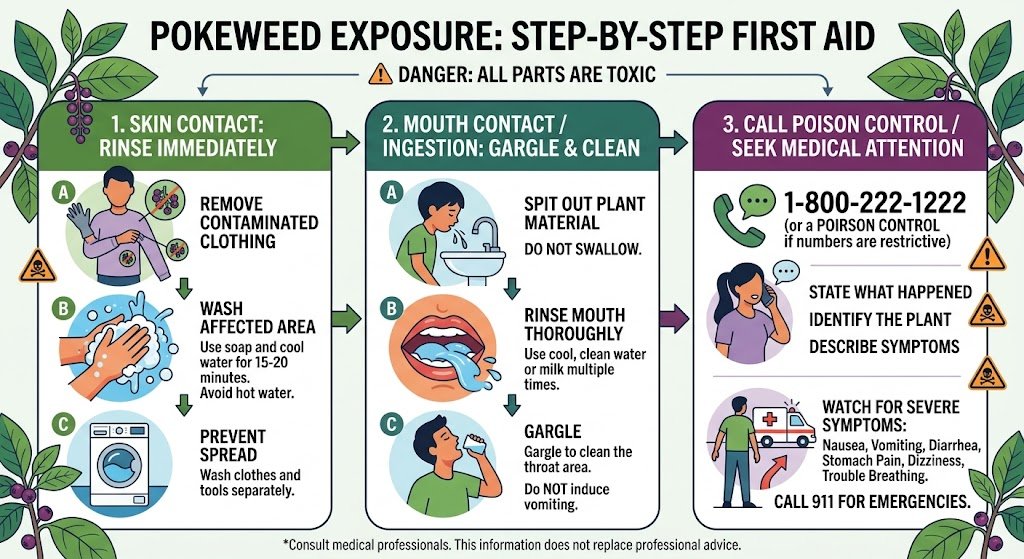
Immediate steps after pokeweed exposure can significantly reduce severity—act quickly and follow this first-aid sequence.
- Skin contact: Remove contaminated clothing and wash the area thoroughly with soap and cool water for at least 15 minutes. Avoid scrubbing to prevent further irritation.
- Ingestion: Remove any remaining plant material from the mouth. Rinse the mouth with water but do not swallow. Do not induce vomiting—this can worsen pokeweed toxicity.
- Call for help immediately: Dial 1-800-222-1222 (Poison Control) or 911. Inform them of the plant name (pokeweed, Phytolacca americana), the part ingested, and the amount if known.
- For pets: Remove the pet from the area, rinse their mouth gently, and call a veterinarian or an animal poison control hotline without delay. Pokeweed toxicity in dogs and cats requires professional care.
How Pokeweed Poisoning Is Diagnosed and Treated
Diagnosis of pokeweed toxicity relies on a detailed history and clinical signs—there is no specific blood test for the toxins.
Medical professionals will evaluate pokeweed poisoning symptoms like vomiting, diarrhea, and dehydration. In severe cases, they may monitor vital signs, run electrolyte panels, and check kidney and liver function. Pokeweed poisoning treatment is primarily supportive and symptom-based.
- Mild cases: Oral rehydration, activated charcoal (if within 1 hour of ingestion), and observation at home after medical clearance.
- Moderate cases: IV fluids for dehydration, antiemetics for vomiting, and monitoring of blood pressure and electrolytes in a hospital setting.
- Severe cases: Intensive care unit admission, respiratory support, dialysis for kidney failure, and medications for seizures or cardiac instability. Pokeweed poisoning treatment requires multidisciplinary oversight.
How to Identify and Avoid Pokeweed
Learning key identification features of pokeweed is the best prevention for pokeweed toxicity in humans and pets.
| Identification Feature | What to Look For | Common Look-Alikes |
|---|---|---|
| Stems | Thick, smooth, reddish-purple at maturity, hollow | Elderberry (but elderberry stems are woody and brown) |
| Leaves | Large, alternate, egg-shaped, up to 12 inches long, with pointed tips | Giant ragweed (but ragweed has smaller, more lobed leaves) |
| Berries | Dark purple to almost black, glossy, drooping clusters on red stalks | Elderberries (but elderberries grow in flat-topped clusters, not drooping) |
| Roots | Thick, fleshy, yellowish-brown with a distinct odor | Wild ginseng (but ginseng has a forked, humanoid shape) |
📌 Key Takeaway: If you are unsure, do not touch or taste any part of the plant. When clearing land, wear gloves, long sleeves, and eye protection. Bag all plant material and dispose of it in the trash—never compost pokeweed, as toxins persist.
Frequently Asked Questions About Pokeweed Toxicity
Quick answers to the most common questions about phytolacca americana toxicity and pokeweed poisoning symptoms.
Question: Can pokeweed toxicity be fatal to humans?
Answer: Yes, in rare cases of large ingestions, especially of roots or mature leaves, pokeweed poisoning can lead to respiratory failure or cardiac arrest. However, with timely medical care, fatalities are extremely uncommon. Pokeweed toxic to humans in small amounts causes significant distress but is rarely lethal.
Question: How many pokeweed berries are dangerous for a child?
Answer: As few as 3–5 ripe berries can cause moderate pokeweed toxicity symptoms in a small child, including vomiting and diarrhea. Ten or more berries can lead to severe poisoning requiring hospitalization.
Question: Are pokeweed berries less toxic when fully ripe?
Answer: No. While some people believe only green berries are poisonous, ripe purple berries still contain significant toxins, especially in the seeds. Chewing the seeds releases concentrated compounds that can cause pokeweed poisoning.
Question: What are the signs of pokeweed toxicity in cats versus dogs?
Answer: Pokeweed toxicity in cats and dogs presents similarly—vomiting, diarrhea, drooling, and lethargy. However, cats are more likely to hide symptoms, so any change in behavior after exposure warrants an immediate vet visit. Pokeweed toxicity in dogs may also include excessive panting or pacing.
Question: Can you develop an allergy to pokeweed from skin contact?
Answer: Yes, repeated skin contact with pokeweed sap can cause contact dermatitis (rash, blisters, redness) in some individuals. This is a separate reaction from ingestion toxicity, but it still indicates that pokeweed is phytolacca americana toxicity through the skin.
Understanding pokeweed toxicity is essential for anyone who spends time outdoors or manages landscapes where this plant commonly grows, as even small amounts of the roots or berries can cause severe gastrointestinal distress and neurological symptoms in both humans and animals. Recognizing the plant by its distinctive red stems, large pointed leaves, and purple-black berries is the first step in preventing accidental ingestion, particularly for children and pets who may be attracted to its appearance. Immediate medical attention should be sought if exposure occurs, and education about effective removal methods combined with proper disposal techniques remains the most reliable strategy for minimizing the risks associated with this dangerous weed.