Understanding the difference between poison ivy vs virginia creeper is absolutely essential for anyone who enjoys hiking or gardening in North America.
While both plants often grow side by side in similar wooded environments, one can cause an intensely painful rash, and the other remains a harmless ornamental vine.
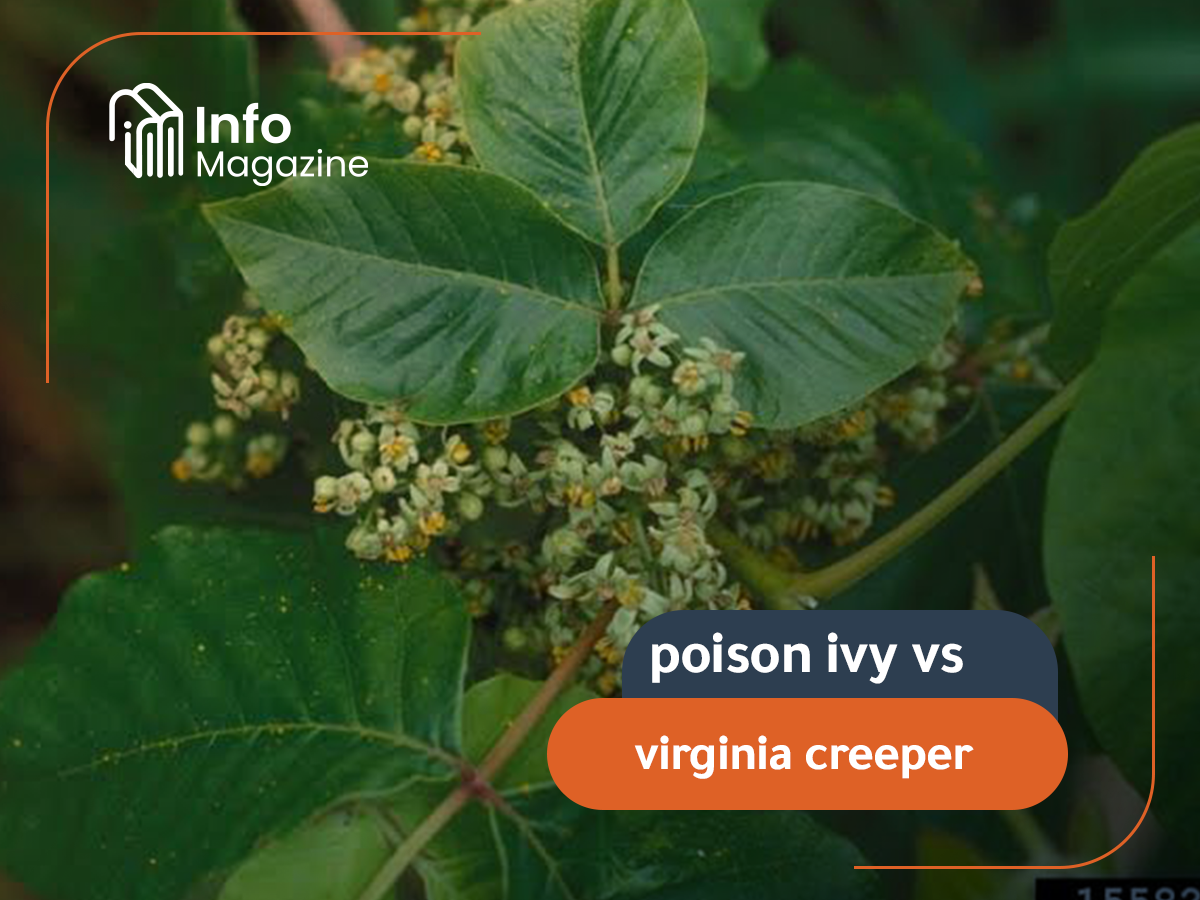
Many people mistakenly assume that all three-leafed vines are dangerous, but the notorious poison ivy can be reliably identified by its distinctive clusters of three leaflets.
In contrast, the non-toxic Virginia creeper features five leaflets and produces blue berries, offering a quick visual shortcut for confident outdoor navigation.
This article will detail the key physical traits, seasonal changes, and safe removal techniques for both plants, equipping you with expert knowledge to prevent an uncomfortable encounter.
What Is Poison Ivy?
Poison ivy (Toxicodendron radicans) is a notorious plant that causes itchy, blistering rashes due to its urushiol oil, It thrives across North America.
What Is Virginia Creeper?
Virginia creeper (Parthenocissus quinquefolia) is a fast-growing, woody vine known for its brilliant red fall foliage, It is often mistaken for poison ivy.
Key Differences Between Poison Ivy and Virginia Creeper
Understanding the difference between poison ivy and virginia creeper can prevent painful skin reactions, Focus on leaf count and berry color.
- Check Leaf Count: Poison ivy always has three leaflets per stem, Virginia creeper has five leaflets.
- Inspect Berry Color: Poison ivy berries are white or off-white, Virginia creeper berries are dark purple to black.
- Look for Aerial Rootlets: Poison ivy vines are hairy with fuzzy rootlets, Virginia creeper vines have smooth, light-brown tendrils with adhesive discs.
Leaf Comparison: Poison Ivy vs Virginia Creeper
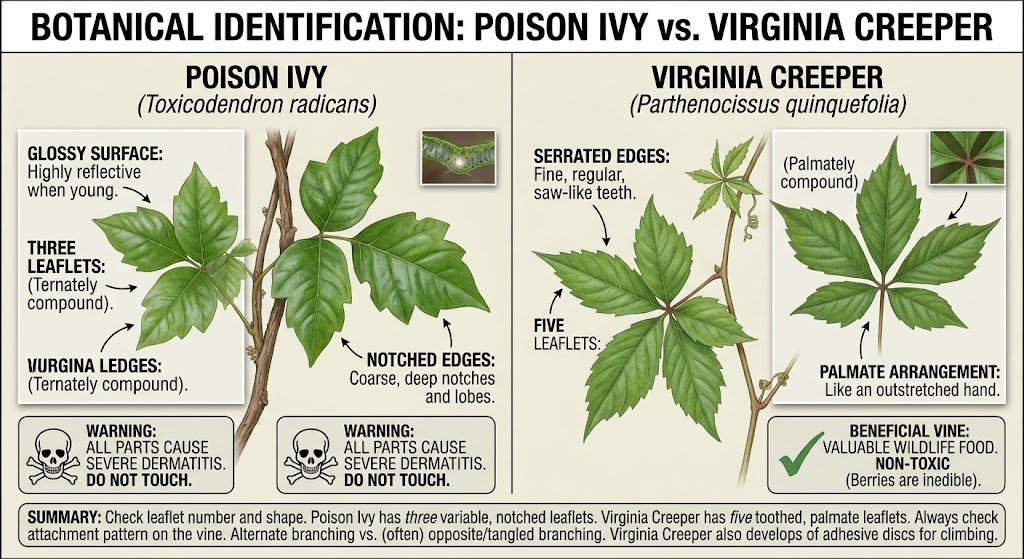
Leaf shape and arrangement are the most reliable methods for virginia creeper identification and poison ivy identification, Learn these traits to avoid confusion.
| Feature | Poison Ivy Leaves | Virginia Creeper Leaves |
|---|---|---|
| Number of leaflets | 3 | 5 (occasionally 3-7) |
| Leaf edge | Smooth to slightly toothed, often glossy | Coarsely serrated (toothed) along the entire edge |
| Leaf arrangement | Alternate on the stem | Palmate (all five leaflets radiate from one point) |
Growth Habits and Climbing Patterns
Both vines climb structures, but their methods differ dramatically, Recognizing these patterns helps when dealing with plants mistaken for poison ivy.
Question: Is virginia creeper poisonous to touch?
Answer: No, virginia creeper is not poisonous to touch, It does not contain urushiol, the compound that causes poison ivy rashes, However, the sap can cause minor skin irritation in sensitive individuals, and its berries are toxic if eaten.
Are Both Plants Harmful?
A common question is whether both plants pose a danger, The short answer is no.
Common Identification Mistakes
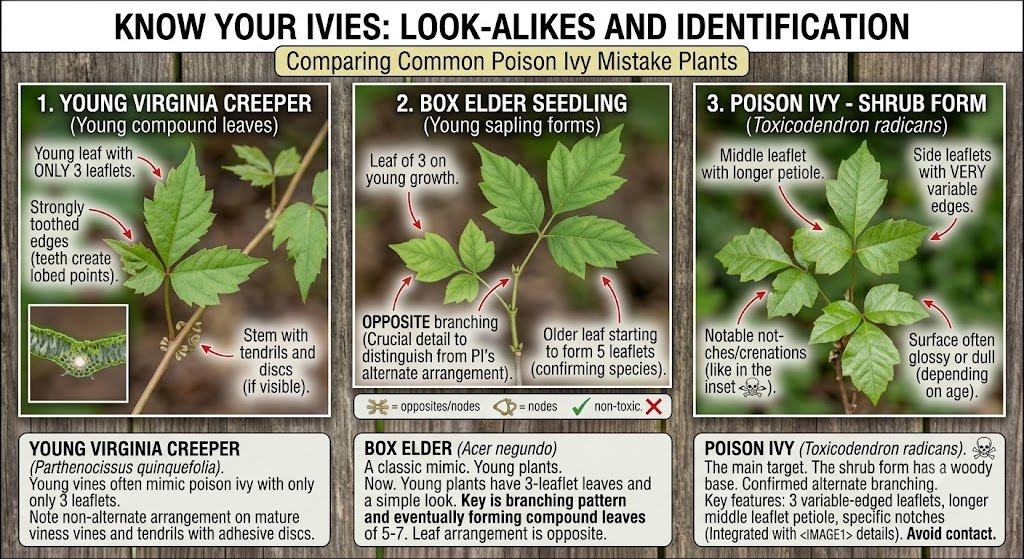
Even experienced hikers fall for look-alikes, These mistakes lead to accidental rashes.
- Mistaking a young Virginia creeper for poison ivy: Young virginia creeper leaves sometimes have only three leaflets before the fifth emerges, Look for the palmate pattern—if leaflets radiate from one central stem point, it is creeper.
- Assuming all three-leafed plants are poison ivy: Box elder (Acer negundo) seedlings have three leaflets and grow in similar areas, Check for opposite leaf arrangement (box elder) vs, alternate (poison ivy).
- Thinking poison ivy only grows as a vine: It also grows as a low shrub in some regions, Always check leaf edges: glossy, slightly notched vs, coarsely serrated for virginia creeper vs poison ivy.
How to Safely Remove These Plants
Removing these vines requires different safety levels, Poison ivy demands extreme caution.
For Virginia creeper, simply clip the vine at the base and pull it down, Since it is not poisonous to touch, you can handle it with gardening gloves, The most effective approach for virginia creeper identification before removal: count leaflets—if it has five, you are safe.
Frequently Asked Questions About Poison Ivy vs Virginia Creeper
We answer the most common reader questions to help you stay safe.
| Question | Answer |
|---|---|
| Is virginia creeper poisonous? | No—it is not poisonous to touch, Its berries are toxic if eaten, and the sap can irritate very sensitive skin, but it does not cause an urushiol rash like poison ivy. |
| Can poison ivy have five leaves? | Rarely—some mutant varieties show four or five leaflets, but the vast majority (99.9%) have three, When you see five leaflets, assume it is Virginia creeper unless proven otherwise. |
| What is the best way to tell poison ivy vs virginia creeper at a glance? | Count leaves: three = poison ivy, five = Virginia creeper, Check vine surface: hairy rootlets = poison ivy; smooth tendrils with suction pads = creeper. |
| Which grows faster? | Virginia creeper grows much faster (up to 10 feet per year in ideal conditions), Poison ivy is slower, spreading at about 1–3 feet annually. |
Understanding the key differences in leaf structure, growth patterns, and berry color is essential when attempting to master the identification process for poison ivy vs virginia creeper in any outdoor environment, By always remembering that poison ivy has three leaflets with occasional tiny teeth and a hairy vine while virginia creeper has five leaflets and smooth tendrils with adhesive discs, you can significantly reduce your risk of an uncomfortable allergic reaction, Regularly checking your garden and hiking paths for these distinguishing features will empower you to confidently avoid the toxic plant while appreciating the harmless beauty of its lookalike companion in nature.