Iron toxicity in plants represents a hidden but devastating threat that can silently cripple crop yields and destroy entire gardens when submerged soils trigger dangerous nutrient imbalances, Understanding this specific physiological disorder is critical because it often mimics other deficiencies, yet its primary cause stems from excessive iron uptake in waterlogged or acidic conditions,
The most effective solution involves improving soil drainage and managing pH levels to restrict iron availability while ensuring balanced micronutrient uptake, This article will explore the key symptoms, underlying causes, and proven management strategies for combating iron toxicity to safeguard your plants.
What Is Iron Toxicity in Plants?
Iron toxicity in plants occurs when roots absorb excessive iron, disrupting nutrient balance and damaging tissues, It can severely reduce crop yields.
- 1, Micronutrient Overload: Iron accumulates beyond what the plant can store or use, interfering with manganese and phosphorus uptake.
- 2, Cell Damage: Free iron ions trigger oxidative stress, leading to leaf bronzing and root browning.
- 3, Stunted Growth: Affected plants show reduced root elongation and poor overall vigor.
What Causes Excess Iron in Soil?
High iron levels in soil often result from acidic conditions, poor drainage, or over-application of iron-rich fertilizers, Identifying the root cause is key to prevention.
How Iron Toxicity Affects Plant Growth
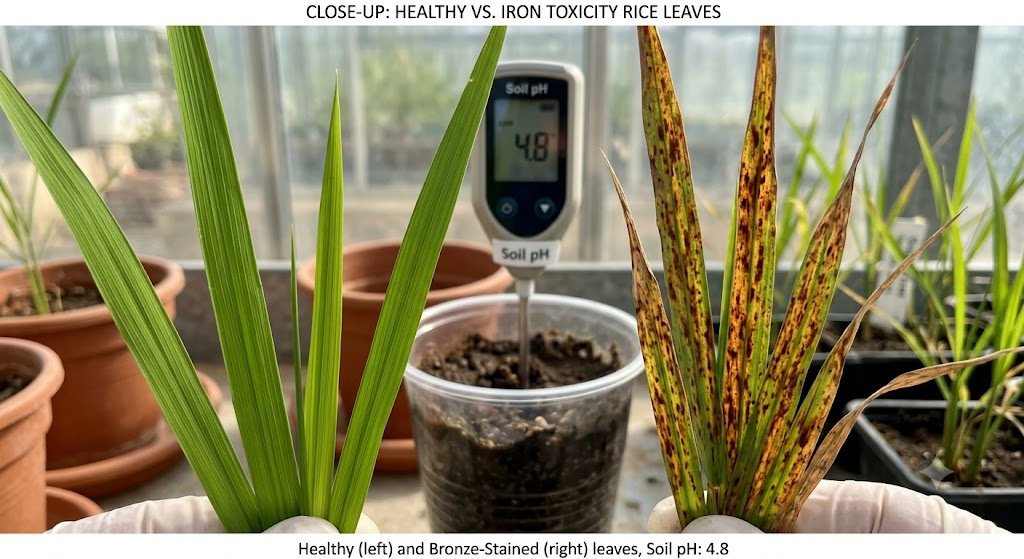
Excess iron disrupts photosynthesis and nutrient transport, causing leaves to bronze and roots to rot, Growth slows, and yield potential plummets.
Common Symptoms of Iron Toxicity in Plants
Iron toxicity plant symptoms start with tiny brown spots on lower leaves, progressing to full bronzing and leaf drop, Early detection is critical for effective iron toxicity treatment.
| Symptom | Appearance | Affected Part | Severity |
|---|---|---|---|
| Leaf bronzing | Reddish-brown patches | Lower leaves first | Moderate to severe |
| Stunted roots | Short, brown, thickened | Root system | Severe |
| Necrotic spots | Tiny dark lesions | Leaf margins | Advanced |
Which Plants Are Most Sensitive to Iron Toxicity?
Rice, sugarcane, and many legumes are highly sensitive to high iron levels in soil, Ornamentals like azaleas also suffer quickly.
How to Diagnose Iron Toxicity
A quick visual check and soil test can reveal high iron levels, Look for bronzing on older leaves first.
- 1, Visual Inspection: Examine the lowest foliage for tiny brown speckles or bronze staining that spreads upward.
- 2, Soil pH & Iron Test: Use a digital meter to measure pH and a colorimetric kit for soluble iron, Levels above 500 ppm are toxic.
- 3, Tissue Analysis: Send leaf samples to a lab; iron concentrations over 500 mg/kg confirm excess iron in soil.
Iron Toxicity vs Other Nutrient Disorders
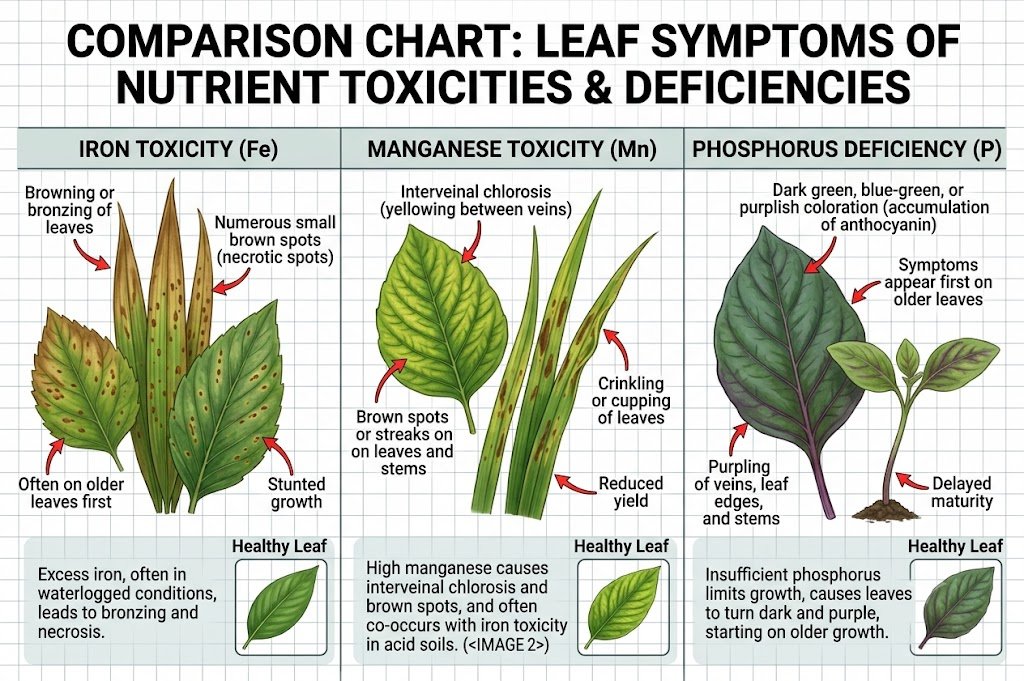
Differentiating iron toxicity from manganese or phosphorus deficiency is key for correct treatment, Symptoms overlap but have distinct triggers.
| Disorder | Key Symptom | Affected Leaves | Soil pH |
|---|---|---|---|
| Iron toxicity | Bronzing, tiny brown spots | Lower leaves first | Below 5.5 |
| Manganese toxicity | Interveinal chlorosis, crinkling | Young leaves | Below 5.0 |
| Phosphorus deficiency | Dark green, purple stems | Entire plant | Neutral to alkaline |
How to Treat Iron Toxicity in Plants
Treat high iron levels in soil by flushing roots and adjusting pH promptly, Act fast once you spot iron toxicity treatment needs.
How to Prevent Excess Iron Buildup in Soil
Prevent high iron levels in soil through drainage improvement and careful pH management, Smart planning avoids toxicity.
- 1, Drainage: Install subsurface drains in clay soils to prevent waterlogging that releases iron.
- 2, pH Monitoring: Test soil every season and keep pH above 6.0 using lime, Never let pH drop below 5.5.
- 3, Organic Matter: Incorporate compost to bind iron and improve soil structure.
Frequently Asked Questions About Iron Toxicity in Plants
Common concerns answered quickly for gardeners and farmers dealing with iron toxicity in plants.
– Question: Can iron toxicity in plants be reversed after leaves turn completely brown?
Answer: Yes, if caught early, Remove severely damaged leaves, leach the soil with water, and apply lime, New growth often recovers within 10–14 days, This is how to fix iron toxicity in plants effectively.
– Question: Are organic amendments effective for iron toxicity soil management?
Answer: Absolutely, Compost, well-rotted manure, and biochar bind free iron and improve aeration, They are safe tools for managing high iron levels in soil without chemicals.
– Question: Is iron toxicity in plants the same as iron chlorosis?
Answer: No—they are opposite problems, Iron chlorosis is a deficiency causing yellow leaves, while iron toxicity causes bronzing and stunting, Correct diagnosis starts with iron toxicity leaf symptoms.
Understanding the primary indicators of iron toxicity in plants is crucial for any gardener or farmer who wishes to maintain healthy soil and robust crop yields, This condition, often triggered by waterlogged or highly acidic soils, can silently stunt root development and block the uptake of essential nutrients like phosphorus and zinc, By carefully monitoring your soil pH and ensuring proper drainage, you can significantly reduce the risk of iron toxicity in plants before it causes irreversible damage to your garden or field, Implementing a regular soil testing schedule and avoiding over-application of iron-rich fertilizers are practical steps that every grower should adopt to protect their vegetation, Ultimately, the key to managing this issue lies in a proactive approach that combines scientific knowledge with consistent observation of plant health and soil conditions.
When you do encounter symptoms such as bronzing of leaves or stunted growth, it is essential to act quickly by adjusting the soil pH to a more neutral range using lime applications, Further mitigation can be achieved by improving aeration through raised beds or adding organic matter that helps to chelate excess iron, This multifaceted strategy not only addresses the immediate toxicity but also strengthens the overall resilience of the soil ecosystem against future imbalances, Remember that prevention through careful water management and balanced fertilization remains the most effective long-term solution for avoiding iron toxicity in plants, By integrating these evidence-based practices, you can ensure that your plants receive the precise mineral nutrition they need without the harmful effects of iron overload.