Encountering a list of toxic mushrooms is the first critical step for any forager or nature enthusiast who wishes to avoid a potentially fatal mistake, Understanding which fungi contain lethal amatoxins or other dangerous compounds can literally mean the difference between life and death after an outdoor excursion,
This comprehensive guide will provide you with an expert-curated rundown of the most notorious poisonous species, detail their distinguishing features, and explain exactly what makes them so dangerous to human health.
What Are Toxic Mushrooms?
Toxic mushrooms are fungal species containing chemical compounds that can cause severe illness or death in humans when ingested.
These toxins are part of the mushroom’s natural defense against predators, For humans, even minimal exposure to certain toxic mushroom species can result in acute kidney failure or neurological damage.
How to Identify Poisonous Mushrooms
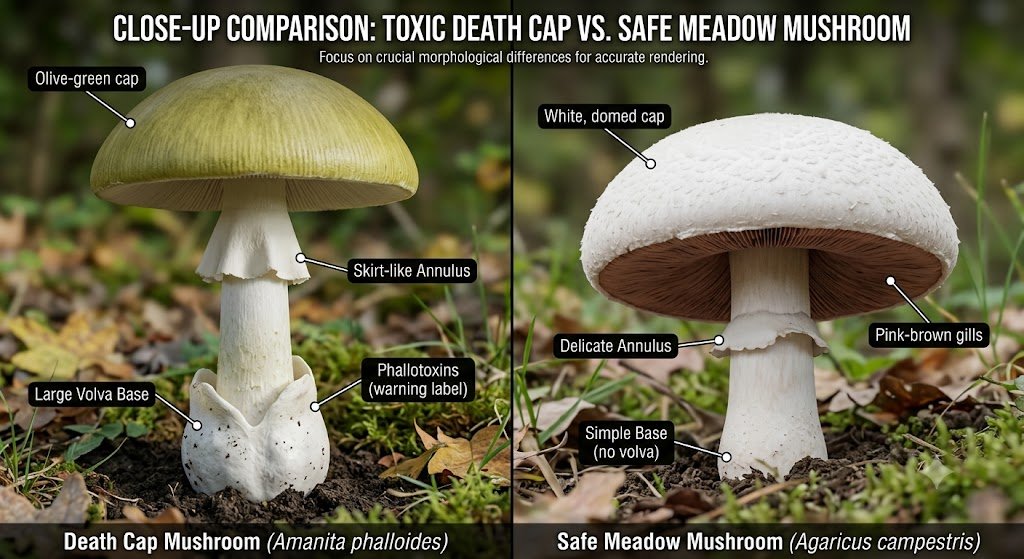
Identifying dangerous mushrooms requires attention to visual cues and habitat specifics; no single rule guarantees safety.
Learning how to identify toxic mushrooms involves examining cap shape, gill color, spore print, stem ring, and bulbous base, Always use a reputable field guide and never trust a single trait—many edible lookalikes exist.
Why Some Mushrooms Are Dangerous to Humans
Certain mushrooms produce potent toxins that attack specific organs, making them deadly even in small amounts.
These chemical compounds, like amatoxins and orellanine, are heat-stable, meaning cooking does not neutralize them, The danger often lies in delayed onset of symptoms—liver damage can progress silently for hours or days after ingestion.
- Liver toxins (e.g., amatoxins) cause cell death and organ failure.
- Neurotoxins (e.g., muscimol) alter brain function, leading to hallucinations or coma.
- Cytotoxins destroy cells directly, affecting kidneys and gastrointestinal tract.
- Lack of effective antidotes for many deadly compounds makes early medical intervention critical.
Understanding dangerous mushrooms is key—some even mimic the taste of edible species, increasing the risk of accidental poisoning.
Most Toxic Mushrooms Found Worldwide
Dozens of species pose serious threats; here is a data comparison of the top toxic mushroom species by lethality and geographical range.
| Species | Primary Toxin | Lethal Dose (adult) | Geographic Range |
|---|---|---|---|
| Death Cap (Amanita phalloides) | Amatoxins | ~30 g of cap | Europe, North America, Australia |
| Destroying Angel (Amanita virosa) | Amatoxins | ~15 g of cap | North America, Europe, Asia |
| Deadly Webcap (Cortinarius rubellus) | Orellanine | ~50 g of cap | Europe, North America |
| Fool’s Webcap (Cortinarius orellanus) | Orellanine | ~30 g of cap | Europe |
| Autumn Galerina (Galerina marginata) | Amatoxins | ~10–20 caps | Worldwide |
These deadly wild mushrooms account for the majority of fatalities worldwide, with the death cap alone responsible for over 90% of mushroom-related deaths in many regions.
Death Cap Mushroom
Also known as Amanita phalloides, the death cap is the most notorious deadly mushrooms species globally.
Its appearance is deceptively plain: a pale green to yellow cap, white gills, and a cup-like volva at the base, It often grows near oak or pine trees and is frequently mistaken for edible puffballs or straw mushrooms.
Destroying Angel Mushroom
This brilliant white poisonous mushrooms species (Amanita virosa and relatives) lives up to its terrifying name.
It contains the same amatoxins as the death cap but with an even more potent concentration, The caps are smooth and pure white, often with a distinctive skirt-like ring on the stem, Toxic chemicals here cause extreme vomiting, diarrhea, and liver failure within 12–24 hours.
Q: How can I tell a Destroying Angel from a safe button mushroom?
A: Look for the bulbous sack-like volva at the base of the stem (edible store mushrooms lack this), Also, Destroying Angels have white gills and a ring, whereas button mushrooms have pink to brown gills and a more rounded cap, If you see a pure white mushroom with a volva, avoid it immediately—it is one of the most poisonous mushrooms known.
Deadly Webcap Mushroom
The deadly webcap (Cortinarius rubellus) is a much less famous but equally lethal list of toxic mushrooms member.
Its slow-acting toxin, orellanine, attacks the kidneys, with symptoms often delayed 3–14 days after ingestion, An olive-brown cap and rust-colored gills, along with a cobweb-like partial veil (the “webcap”), help identify it, Initial signs include headache, chills, and extreme thirst—often misdiagnosed as a virus, allowing kidney failure to progress untreated.
This species demonstrates why the list of toxic mushrooms is essential reading for foragers: the webcap’s delayed action makes it uniquely treacherous.
Funeral Bell Mushroom
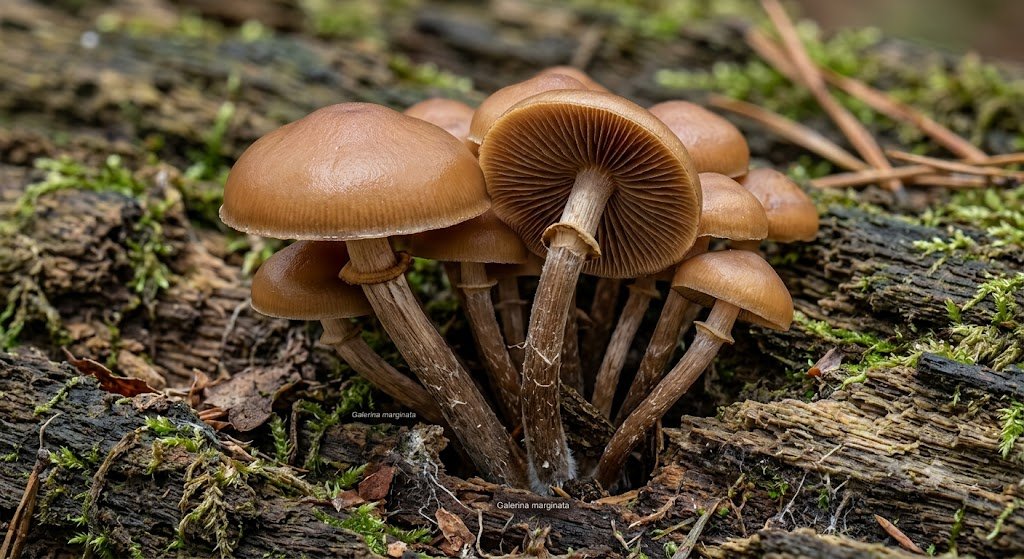
The funeral bell (Galerina marginata) is a small, brown, unassuming mushroom that is among the most dangerous mushrooms due to its amatoxin content.
This mushroom grows in dense clusters on rotting wood, especially conifer stumps, Its brown cap, tan to cinnamon gills, and fragile, ringed stem fool even experienced pickers, The key is to check the spore print: funeral bells produce a rusty brown print, while safe lookalikes often have white or cream spores, Learning how to identify toxic mushrooms like this one requires careful study of habitat and microscopic features.
False Morel Mushroom
The false morel (Gyromitra esculenta) is a brain-shaped, reddish-brown mushroom that is deadly wild mushrooms posing a dual risk of poisoning.
- Preheat the mushroom incorrectly: Many assume parboiling removes the toxin gyromitrin, but this is never guaranteed safe.
- Ingest even a small raw piece: Raw false morels contain high levels of gyromitrin, which converts to monomethylhydrazine (rocket fuel) in the body.
- Ignore delayed symptoms: Headache, dizziness, and vomiting can begin 6–12 hours after eating, mimicking a stomach virus.
- Repeat consumption: The toxin accumulates; multiple exposures increase the chance of neurological damage or death.
The false morel cap is irregular, wrinkled, and often lobed like a brain, ranging from reddish-brown to dark mahogany, Unlike true morels, which have honeycomb-pitted caps attached at the bottom, false morels have a cap that hangs free from the stem at the top edge, Avoid all brain-shaped morel-like mushrooms unless you are 100% certain of your identification using a professional guide.
Jack-O’-Lantern Mushroom
The jack-o’-lantern mushroom (Omphalotus illudens) is a bright orange, bioluminescent species that causes severe gastrointestinal distress, though it is rarely fatal.
Question: What makes this toxic mushroom species different from the edible chanterelle that looks so similar?
Answer: Jack-o’-lanterns have true gills that run down the stem (decurrent), whereas chanterelles have blunt, fork-like ridges that are not true gills, Additionally, jack-o’-lanterns grow in dense clusters on wood stumps and emit a faint greenish glow at night due to bioluminescence, Chanterelles grow singly or in scattered groups on forest soil and have a fruity, apricot-like scent, If you see a bright orange mushroom growing in a tight cluster on a stump, do not eat it—it is one of the most poisonous mushrooms when consumed in quantity, causing intense vomiting and diarrhea lasting 8 to 12 hours.
Common Symptoms of Mushroom Poisoning
Recognizing mushroom poisoning symptoms early is critical—delayed reactions often lead to permanent organ damage or death.
| Symptom Onset | Common Symptoms | Possible Toxin Group | Risk Level |
|---|---|---|---|
| 15 minutes – 2 hours | Nausea, vomiting, sweating, blurred vision | Muscarine (e.g., Inocybe spp.) | Moderate (treatable) |
| 2 – 6 hours | Hallucinations, confusion, fatigue, euphoria | Ibotenic acid / Muscimol (e.g., Amanita muscaria) | High (medical care needed) |
| 6 – 12 hours | Intense abdominal cramps, diarrhea, bloody urine | Amatoxins (e.g., death cap, destroying angel) | Critical (liver failure possible) |
| 24 hours – 14 days | Extreme thirst, reduced urination, flank pain | Orellanine (e.g., deadly webcap) | Critical (kidney failure possible) |
This data comparison shows the broad timeline of toxicity of mushrooms, If you experience any of these mushroom poisoning symptoms after foraging, do not wait—seek emergency care immediately.
What to Do If You Eat a Toxic Mushroom
If you suspect you have ingested a dangerous mushrooms species, immediate action can save your life.
- Stop eating the mushroom immediately and remove any remaining pieces from your mouth.
- Call Poison Control (in the U.S.: 1-800-222-1222) or go to the nearest emergency room, Do not wait for symptoms to appear.
- Collect a sample of the mushroom (wrap in wax paper, not plastic) and take it with you to the hospital, This helps doctors identify the toxin quickly.
- Do not induce vomiting unless directly instructed by a medical professional, Some toxins cause more damage on re-exposure to the esophagus.
- Bring all other mushrooms from the same picking basket to the ER—even if you didn’t eat them, the species may be needed for analysis.
Remember that mushrooms and food poisoning can mimic other illnesses, A delay of even a few hours can drastically reduce treatment options for deadly wild mushrooms like the death cap or destroying angel.
Frequently Asked Questions About Toxic Mushrooms
Quick answers to common concerns about deadly mushrooms and how to stay safe while foraging.
Q: Are all mushrooms with white gills poisonous?
A: No, but many deadly mushrooms (like the destroying angel) have pure white gills, The rule of thumb is: any wild mushroom with white gills, a volva (cup at the base), and a ring on the stem should be treated as potentially lethal unless identified by an expert, This is a key part of the list of toxic mushrooms knowledge for beginners.
Q: Can cooking destroy mushroom toxins like amatoxins?
A: Absolutely not, Amatoxins, orellanine, and many other mycotoxins are heat-stable, Cooking does not reduce their toxicity, The deadly chemicals will remain fully active even after boiling, frying, or drying the mushroom.
Q: How quickly do mushroom poisoning symptoms appear?
A: It depends on the toxin, Some gastrointestinal toxins cause symptoms within 30 minutes; amatoxins trigger vomiting and diarrhea only after 6 to 12 hours, creating a dangerous false sense of security, Orellanine from the deadly webcap may not show kidney damage for a week or more, This variability is why learning mushroom poisoning symptoms for all categories is essential.
Q: What is the most poisonous mushroom in the world?
A: The death cap (Amanita phalloides) is widely considered the most dangerous due to its high amatoxin content, palatable taste, and wide distribution, It accounts for 90% of all mushroom-related fatalities worldwide, In Australia, the death cap has become invasive and causes the majority of lethal poisonings there, In terms of raw toxicity per gram, the destroying angel is even more concentrated, but the death cap causes more deaths overall.
Staying informed about the toxicity of mushrooms is a lifelong learning process for any forager, Always cross-reference your finds with expert mycologists or verified field guides.
Understanding the complete list of toxic mushrooms is absolutely essential for anyone who ventures into foraging, as misidentification can lead to severe and often fatal consequences even for experienced enthusiasts, Recognizing the distinct physical characteristics of each deadly species, such as the green cap of the death cap or the white gills of the destroying angel, provides critical protection against accidental ingestion during outdoor excursions, Consulting this comprehensive list of toxic mushrooms alongside verified field guides and local expert advice significantly reduces the risk of encountering these poisonous fungi in the wild.
Every forager must commit to rigorous study and absolute caution because the potential for liver failure or organ damage from species like the deadly webcap cannot be overstated in any safety discussion, Prioritizing verified knowledge over guesswork ensures that your foraging adventures remain rewarding and free from the devastating health emergencies associated with consuming toxic mushrooms.