Saponin toxicity is a critical concern for anyone incorporating herbal supplements or plant-based foods into their daily routine, as these natural compounds can cause significant health issues when consumed inappropriately.
While many people assume all plant compounds are safe, the reality is that saponins, found in quinoa, legumes, and certain herbs, can damage red blood cells and irritate the gastrointestinal lining at high doses.
This article will cover the key mechanisms of saponin toxicity, safe dosage thresholds, and practical strategies to mitigate risks while still enjoying the beneficial properties of these compounds.
What Is Saponin Toxicity?
Saponin toxicity refers to the adverse effects caused by consuming or contacting saponins—naturally occurring plant compounds, These effects range from mild irritation to severe poisoning.
What Are Saponins and Where Are They Found?
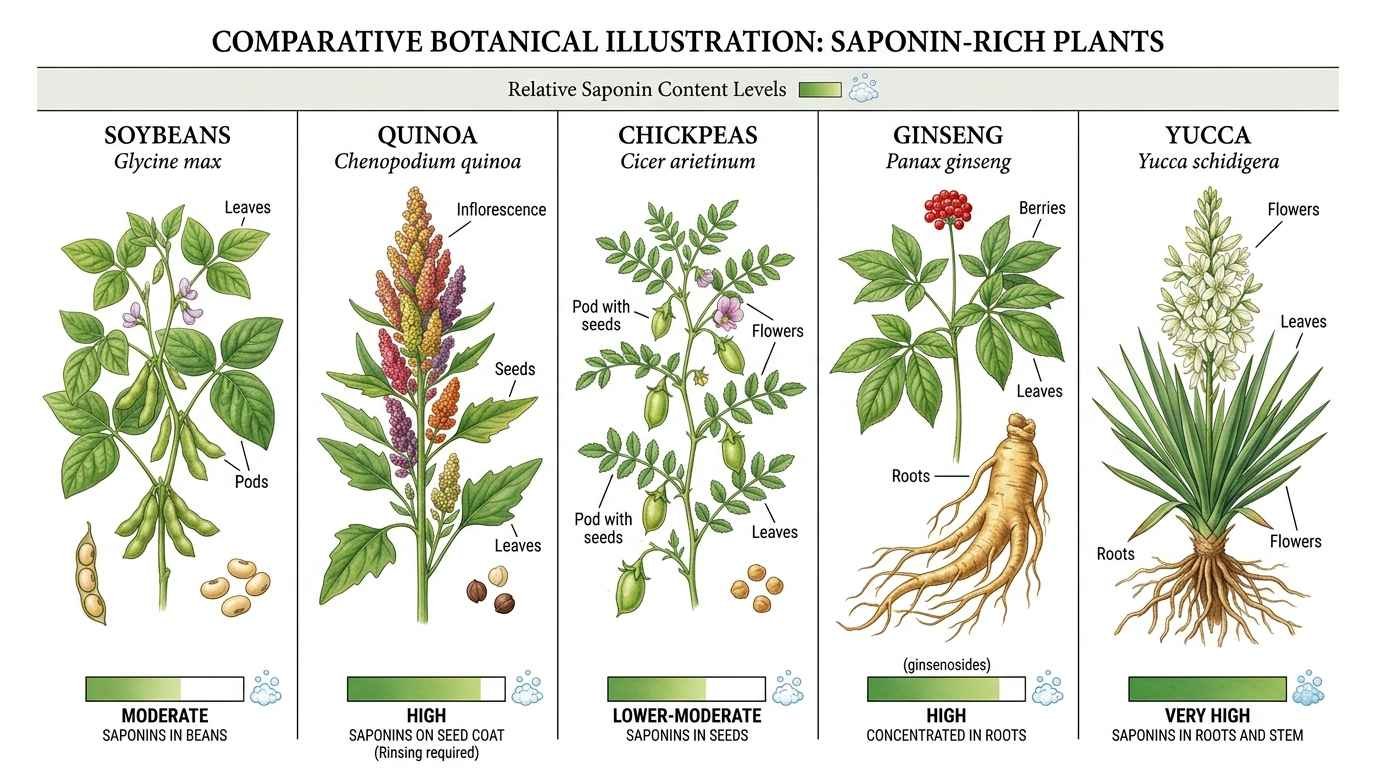
Saponins are bitter-tasting, soap-like compounds produced by plants as a defense mechanism, They are widespread in nature and many common foods.
You encounter saponins daily in legumes (soybeans, chickpeas), grains (quinoa), herbs (ginseng, licorice root), and soapbark tree, Plants containing saponins are common in both diet and traditional medicine, The concentration varies greatly; supplements often contain extracted, high-dose forms.
How Saponin Exposure Occurs
- Dietary intake: Eating raw or improperly cooked foods rich in saponins (e.g., undercooked beans, unrinsed quinoa).
- Supplement use: Taking concentrated herbal extracts (e.g., ginseng, fenugreek, yucca) in capsule or liquid form.
- Skin contact: Handling soapy plant sap (e.g., from soapwort or ivy) or topical products with high saponin content.
- Inhalation: Breathing fine dust from saponin-containing plant powders (rare, usually occupational).
Are Saponins Toxic to Humans?
Generally, low dietary saponins are safe, but concentrated forms can be toxic, The answer depends on dose, individual sensitivity, and preparation method.
Saponin Toxicity Symptoms
Recognizing early signs of saponin poisoning is vital, Symptoms often appear within minutes to hours after exposure and vary by route.
| Exposure Type | Common Saponin Poisoning Symptoms | Severity |
|---|---|---|
| Ingestion | Nausea, vomiting, diarrhea, abdominal cramps, hemolysis (rare with high doses) | Mild to severe |
| Skin contact | Irritation, redness, itching, blisters | Mild |
| Inhalation | Sneezing, coughing, respiratory irritation, asthma-like symptoms | Moderate |
Saponin toxicity symptoms may also include dizziness, headache, and in extreme cases of saponin poisoning, damage to red blood cells, Saponin toxicity in animals can be more pronounced, especially in livestock grazing on saponin-rich plants, For saponin poisoning treatment, stop exposure immediately, rinse mouth/skin, and seek medical help if symptoms are severe or persistent.
Saponin Toxicity in Pets and Livestock
Saponin toxicity in animals can be more severe than in humans due to smaller body sizes and unique metabolic pathways.
Pets like dogs and cats are especially vulnerable due to their curiosity, Common exposures include chewing on plants containing saponins (e.g., aloe vera, English ivy, or soapwort) or ingesting unrinsed quinoa-based pet food, Symptoms of saponin toxicity in animals include excessive drooling, vomiting, diarrhea, lethargy, and in extreme cases, tremors or seizures, Immediate veterinary care is critical if you suspect poisoning, Always secure saponin-rich plants and supplements out of paw’s reach.
Which Plants Contain High Levels of Saponins?
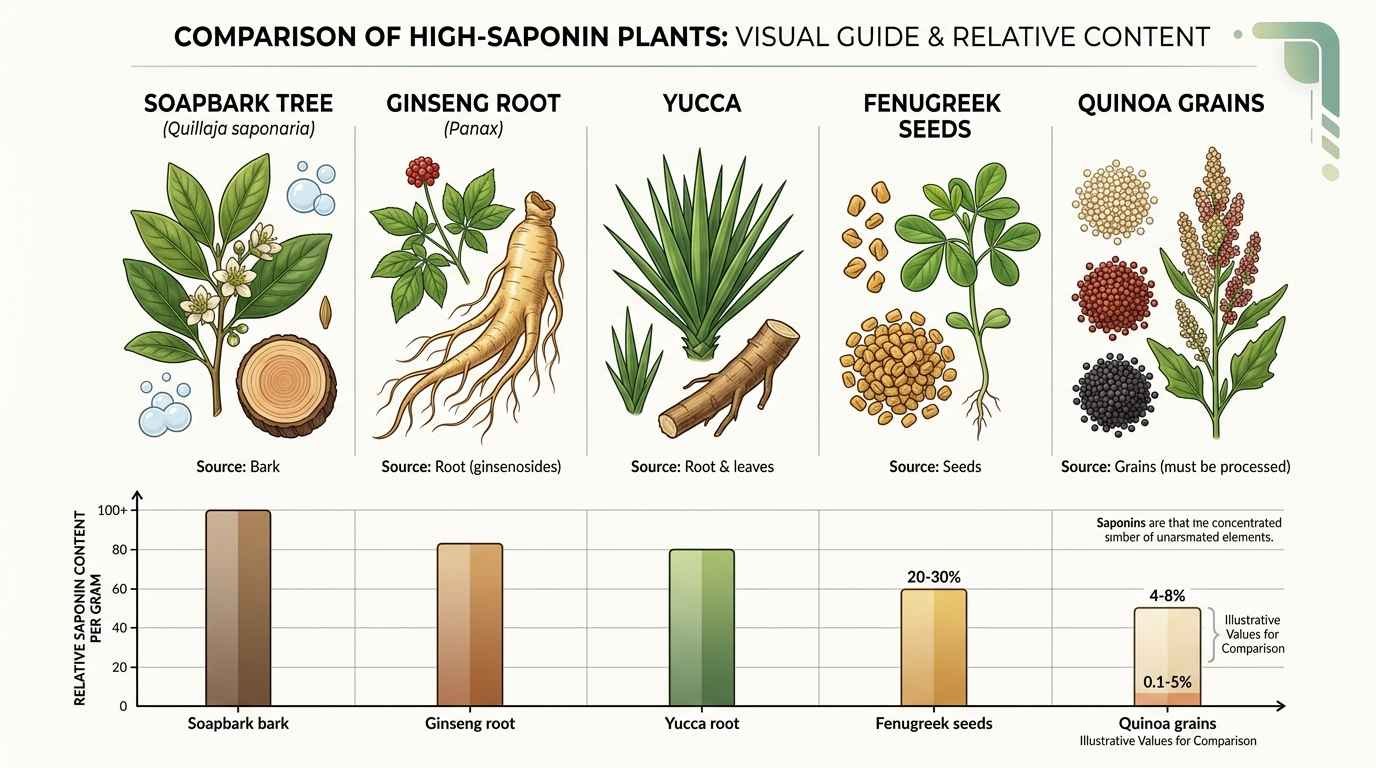
This section details plants containing saponins with the highest concentrations that demand caution during use or supplementation.
Here is a ranked comparison of the top sources to help you understand where saponin side effects are most likely:
| Plant Source | Saponin Content (Dry Weight %) | Common Use | Risk Level |
|---|---|---|---|
| Soapbark Tree (Quillaja) | 10–15% | Food additive, pharmaceuticals | High |
| Ginseng (Panax) | 2–6% | Herbal supplements | Moderate |
| Yucca (Yucca schidigera) | 4–8% | Joint supplements, pet food | Moderate |
| Fenugreek | 1–3% | Supplement, spice | Low–Moderate |
| Quinoa (raw, unrinsed) | 0.5–1.5% | Grain | Low |
Knowing these levels helps you gauge saponin toxicity in humans and animals based on the source and dose, For safe supplement use, always check label concentrations and consult a healthcare provider, especially if you combine multiple saponin-rich herbs.
How Saponin Toxicity Is Diagnosed and Treated
Diagnosis relies on exposure history and symptom assessment; treatment focuses on supportive care and symptom management.
- Step 1: Clinical History – A doctor asks about recent food, supplement, or plant contact, Blood work may check for hemolysis or electrolyte imbalances from saponin poisoning symptoms.
- Step 2: Symptom Confirmation – If nausea, vomiting, or skin irritation aligns with exposure to plants containing saponins, diagnosis is often presumptive, Lab tests are rarely needed for mild cases.
- Step 3: Decontamination – For ingestion, rinse the mouth with water and drink milk or water to dilute, Do not induce vomiting unless directed by poison control.
In hospital settings, treatment may include IV fluids, antiemetics, and steroids for severe hemolytic reactions, Prognosis is generally good if exposure is stopped quickly.
How to Reduce the Risk of Saponin Exposure
Minimizing contact with high-dose saponins in supplements and foods is straightforward with these preventive measures.
Prioritize these three actions:
- Rinse and Cook Thoroughly – Always rinse quinoa under cold water for 30 seconds before cooking to remove surface saponins, Soaking legumes (e.g., chickpeas, soybeans) overnight and discarding the water reduces saponin content by up to 30%.
- Use Trusted Supplements – Choose brands that specify saponin content per serving (e.g., standardized extracts), Avoid homemade or unregulated herbal preparations where saponin side effects are unpredictable.
- Start Low and Monitor – When trying a new saponin-rich supplement (like ginseng or yucca), begin with half the recommended dose for 3 days, Note any saponin toxicity symptoms such as stomach upset or dizziness, and stop if they appear.
For households with pets, store supplements in sealed containers and keep houseplants like aloe or ivy out of reach, Awareness of saponin poisoning risks in children is equally important—keep high-dose herbal extracts safely away.
Frequently Asked Questions About Saponin Toxicity
This FAQ addresses common concerns about safety, symptoms, and practical management of saponin exposure.
💬 Answer: No, tiny amounts in properly prepared foods (e.g., boiled chickpeas or rinsed quinoa) are safe, Saponin toxicity in humans only becomes a concern with concentrated extracts or large raw portions that overwhelm the body’s protective mechanisms.
💬 Answer: The first signs from ingestion are nausea, vomiting, and diarrhea within 2–4 hours, Skin contact causes redness and itching, If you notice these saponin poisoning symptoms after using a new supplement or plant, stop exposure immediately and drink plenty of water.
💬 Answer: No reliable home test exists, Diagnosis is based on history and symptoms, If you suspect saponin poisoning, contact a poison control center or your doctor, They may recommend observation or treatment based on dose and severity.
💬 Answer: There is no specific antidote, Treatment is supportive—stop exposure, manage symptoms (e.g., anti-nausea meds, IV fluids), and in severe cases, blood transfusions for hemolysis, Prognosis is excellent with prompt care.
Understanding saponin toxicity is absolutely critical for anyone considering the use of herbal supplements, as the difference between a therapeutic dose and a dangerous one can be alarmingly narrow.
A thorough review of the scientific literature clearly demonstrates that while dietary saponins offer certain health benefits, their potential for causing red blood cell hemolysis and severe gastrointestinal distress should never be underestimated by consumers or healthcare providers.
Every responsible supplement user must therefore prioritize products from reputable manufacturers who provide clear dosage instructions and third-party testing results to mitigate the serious risks associated with saponin toxicity.