If you have ever wondered what is the deadliest flower in the world, you might be surprised to learn that even the most beautiful garden ornament can kill an adult within hours.
The answer is the Nerium oleander, a deceptively lovely shrub containing cardiac glycosides that disrupt heart function and can cause fatal arrhythmias.
Our expert analysis will cover the deadliest flowers, their toxicity mechanisms, historical poisoning cases, and safety precautions for gardeners and hikers.
How Flower Toxicity Is Measured
Understanding how scientists rank dangerous flowers involves evaluating chemical potency, dosage, and delivery method.
- LD50 Value: The median lethal dose in milligrams per kilogram of body weight; a lower number means higher toxicity.
- Toxin Type: Alkaloids, glycosides, or proteins that disrupt cellular function or neurological signals.
- Exposure Route: Ingestion, skin contact, or inhalation determine how quickly symptoms appear.
- Bioavailability: How efficiently the body absorbs the toxin affects overall danger level.
The Deadliest Flower in the World Explained

The deadliest flower in the world is the Nerium oleander, commonly known as oleander, a shrub that disguises lethal toxins behind beautiful blossoms.
What Makes This Flower So Dangerous?
This dangerous flower for humans owes its lethal reputation to potent cardiac glycosides that attack the heart and nervous system simultaneously.
| Toxin Component | Effect on Humans | Lethal Dose |
|---|---|---|
| Oleandrin | Blocks sodium-potassium pumps, causing arrhythmia | 0.2–0.5 mg/kg |
| Nerioside | Increases heart contractility, leading to arrest | Similar range |
| Cardiac glycosides | Causes nausea, vomiting, confusion, and coma | Very small |
Where the World’s Most Dangerous Flower Grows
The world’s most dangerous flower flourishes in warm, subtropical regions across the globe, often used as ornamental landscaping.
- Native Range: Mediterranean basin, Middle East, and Indian subcontinent.
- Invasive Spread: Now naturalized in Southern USA, Australia, and parts of South America.
- Preferred Habitat: Roadsides, coastal areas, and well-drained sandy soils full sun.
Despite widespread cultivation, many people remain unaware of its deadly nature.
Symptoms of Flower Poisoning
Symptoms from ingesting toxic flowering plants like oleander emerge quickly and escalate without prompt medical intervention.
- Immediate (0–2 hours): Nausea, vomiting, and intense abdominal pain with diarrhea.
- Progressive (2–6 hours): Blurred vision, dizziness, irregular heartbeat, and confusion.
- Critical (6–12 hours): Bradycardia (slow heart rate), seizures, and cardiac arrest.
These deadly flowers cause severe dehydration and electrolyte imbalance. Immediate emergency care is vital.
How Much Exposure Is Harmful?
Even a single leaf can be fatal to a child. For adults, the threshold is surprisingly low.
- Ingestion of 1–2 leaves: Causes severe gastrointestinal distress and early cardiac symptoms in children.
- 5–10 leaves: Can trigger life-threatening arrhythmias in an average adult within hours.
- Burning wood: Inhaling smoke from just one branch can lead to respiratory failure and cardiac arrest.
- Skin contact: Prolonged handling without gloves may cause dermatitis, but ingestion remains the primary danger.
Other Deadly Flowers Around the World
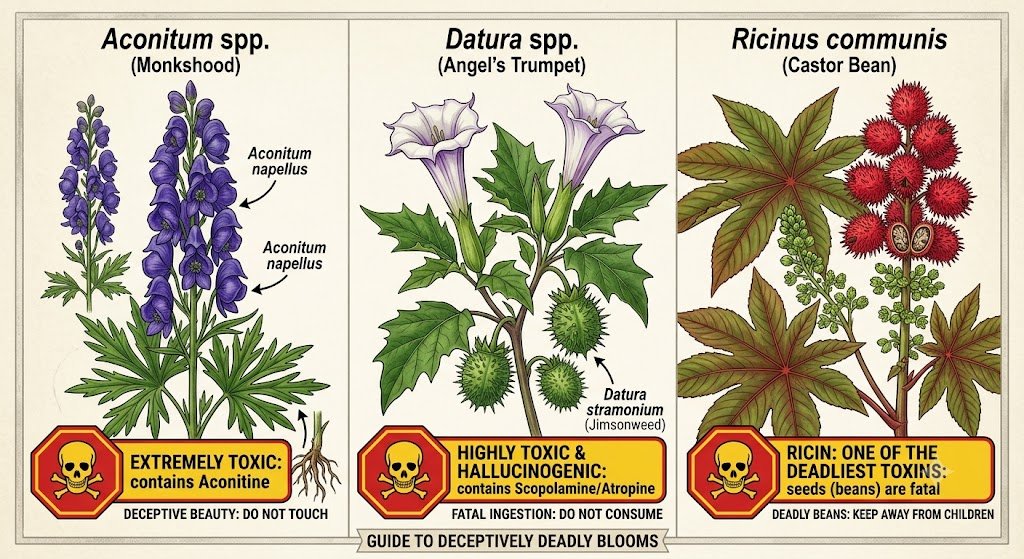
Many toxic flowering plants share the spotlight with the deadliest flower in the world. Here are notable examples.
| Flower Name | Common Toxin | Lethal Dose (Ingestion) | Unique Danger |
|---|---|---|---|
| Aconitum (Monkshood) | Aconitine | 1–2 mg | Causes rapid paralysis of the heart and respiratory system |
| Datura stramonium (Angel’s Trumpet) | Atropine, scopolamine | 15–25 seeds | Induces delirium, hallucinations, and coma |
| Ricinus communis (Castor Bean) | Ricin | 1–2 seeds (chewed) | Causes massive organ failure within 36 hours |
What to Do After Exposure to a Most Poisonous Flower
Immediate action can mean the difference between life and death after contact with a most poisonous flower. Follow these steps urgently.
- Call emergency services: Dial your local poison control center or 911 immediately. Do not wait for symptoms to appear.
- Remove contaminated clothing: If skin contact occurred, wash the area vigorously with soap and cool water for 15 minutes.
- Do not induce vomiting: Unless directed by a medical professional, vomiting can cause further damage from aspiration.
- Collect a sample: Take a photo or secure a piece of the plant for identification. This helps doctors choose the right antidote (e.g., digoxin-specific Fab fragments for oleander).
- Monitor vital signs: Note changes in pulse, breathing, and consciousness to report to the medical team.
How to Stay Safe Around Poisonous Flowers
Prevention is your best defense against the world’s most dangerous flower and its botanical cousins.
- Learn to identify: Study images of the world’s most dangerous flower and other toxic flowering plants. Teach children never to put leaves or petals in their mouths.
- Wear gloves: When gardening near known toxic flowering plants, use thick gardening gloves and wash hands thoroughly afterward.
- Proper disposal: Never burn the most toxic flower wood or leaves. Bag them securely and dispose of with household waste in a sealed container.
- Keep away from pets: Many deadly flowers are extremely toxic to dogs, cats, and horses. Fence off areas where these plants grow.
Frequently Asked Questions About the Deadliest Flower in the World
Here are answers to common questions about the most toxic flower and related poisonous flowers.
Question: What is the deadliest flower in the world exactly?
Answer: The deadliest flower in the world is Nerium oleander (oleander). Its cardiac glycosides (especially oleandrin) make it the most poisonous flower in the world for humans and animals. Just one leaf can be fatal to a small child.
Question: Can you touch the world’s most dangerous flower safely?
Answer: Brief, casual contact is usually not fatal, but the sap can cause skin irritation and dermatitis. If you have cuts or open wounds, absorption can occur. Always wash hands thoroughly after any contact with toxic flowering plants.
Question: Are there any antidotes for most poisonous flowers?
Answer: Yes, for oleander (the most toxic flower), doctors use digoxin-specific Fab antibody fragments (Digibind) to neutralize the cardiac glycosides. For other deadly flowers like monkshood, treatment is mainly supportive, focusing on heart rhythm stabilization.
Question: Which other dangerous flowers for humans are common in gardens?
Answer: Beyond the deadliest flower in the world, common garden plants like foxglove (Digitalis purpurea), lily of the valley (Convallaria majalis), and autumn crocus (Colchicum autumnale) are also highly toxic.
When considering what is the deadliest flower in the world, the Nerium oleander stands as a leading candidate because every single part of this beautiful shrub contains potent cardiac glycosides that can cause fatal arrhythmias in humans and animals even after minimal ingestion.
Understanding what is the deadliest flower in the world also requires acknowledging the Aconitum genus, commonly known as monkshood or wolfsbane, which delivers a lethal dose of aconitine through skin contact or consumption, quickly paralyzing the nervous system and leading to respiratory failure.
Ultimately, while many flowers possess dangerous toxins, the title of what is the deadliest flower in the world is contested between oleander and monkshood due to their widespread availability and the rapid, often irreversible progression of poisoning they trigger.