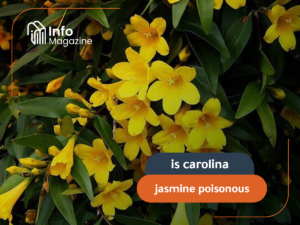
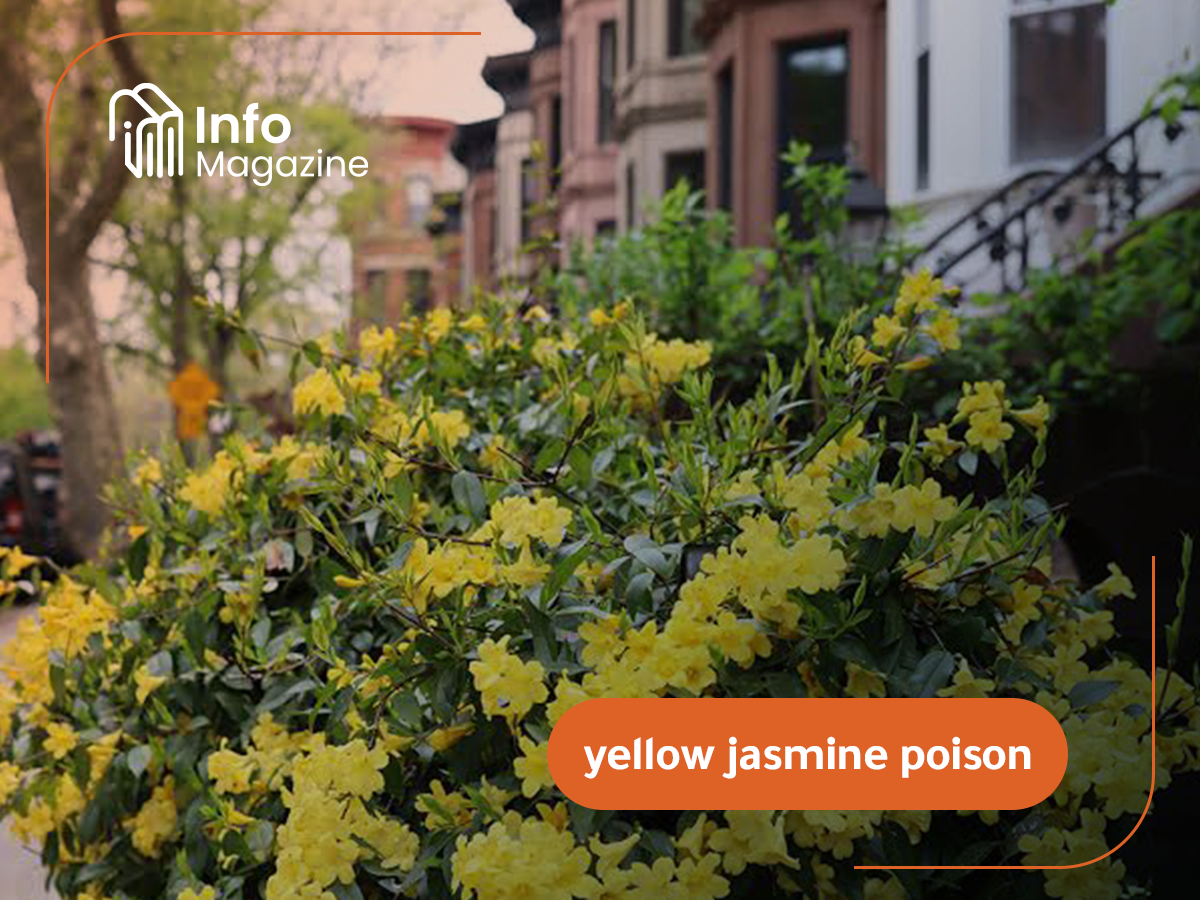
Yellow jasmine poison represents a significant yet frequently underestimated risk for gardeners and pet owners alike, Understanding the toxic properties of this deceptive plant is crucial because its fragrant flowers can mask the severe health threats posed by its roots and foliage.
This article will explain how exposure often leads to dangerous symptoms including paralysis and respiratory failure, while providing critical identification techniques and immediate first aid steps for poisoning emergencies.
What Is Yellow Jasmine Poisoning?
Yellow jasmine poisoning refers to the toxic reaction caused by ingesting or contacting parts of the Gelsemium sempervirens plant, which contains potent alkaloids.
Why Is Yellow Jasmine Poisonous?
The plant produces toxic alkaloids, primarily gelsemine, that disrupt the nervous system by blocking neurotransmitter receptors.
- Alkaloid Action: Gelsemine binds to glycine receptors in the spinal cord, causing muscle paralysis.
- Dose-Dependent Risk: Even 2–3 flowers can be fatal for small children or animals due to yellow jasmine toxicity.
- Species Susceptibility: Humans, dogs, and cats are highly sensitive; livestock may show yellow jessamine poisoning symptoms after grazing.
Which Parts of Yellow Jasmine Are Toxic?
Every part of the yellow jasmine plant contains toxic alkaloids, though concentration varies by tissue and season.
| Plant Part | Alkaloid Concentration | Risk Level |
|---|---|---|
| Flowers | High | Extreme |
| Leaves | Moderate–High | High |
| Roots | Highest | Extreme (rarely ingested) |
| Stems & Seeds | Low–Moderate | Moderate |
Data compiled from clinical toxicology reports on gelsemium poisoning cases.
How Yellow Jasmine Poisoning Occurs
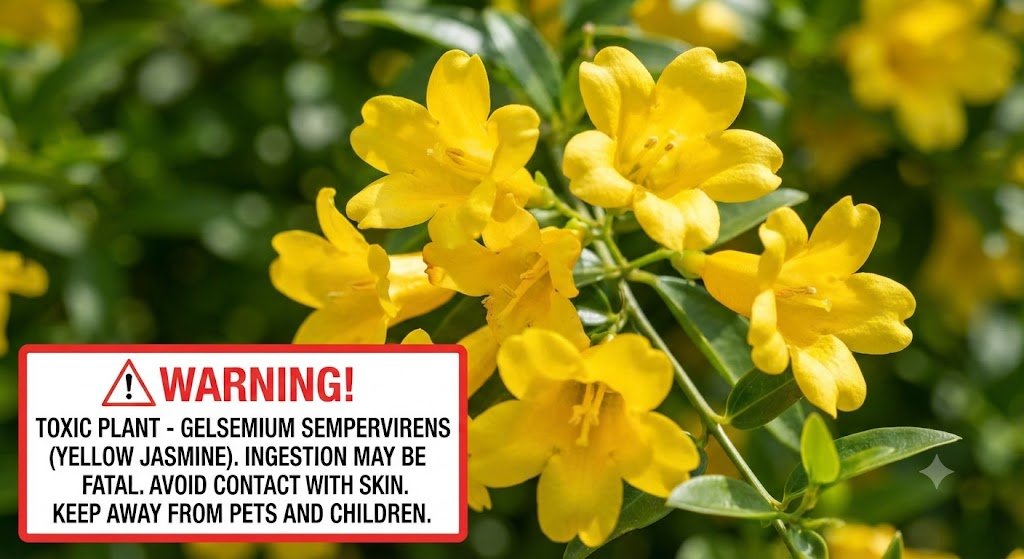
Poisoning typically happens through accidental ingestion, but skin contact with sap can also cause mild irritation.
Symptoms of Yellow Jasmine Poisoning
Symptoms can appear within 30 minutes of exposure and rapidly progress to severe neurological and respiratory issues.
- Early Signs: Nausea, drooling, muscle weakness, and blurred vision.
- Moderate Stage: Difficulty breathing, dilated pupils, tremors, and confusion from yellow jasmine poisoning symptoms.
- Severe Stage: Seizures, respiratory paralysis, and coma—reported in yellow jasmine toxic to humans cases.
If you suspect exposure, call poison control immediately, Do not induce vomiting unless told to do so.
Is Yellow Jasmine Dangerous to Humans?
Yes, this plant poses a severe threat to humans due to its powerful neurotoxic alkaloids.
- Accidental Ingestion: Children often mistake the bright yellow flowers for edible blossoms, leading to severe yellow jasmine toxicity.
- Skin Contact: Sap can cause dermatitis and if hands touch the mouth afterward, the alkaloids enter the body.
- Herbal Misuse: Some people mistakenly brew teas from this plant, unaware it is yellow jasmine poisonous in all forms.
- Dose Severity: As few as 2–3 flowers can cause life-threatening respiratory depression in adults.
Is Yellow Jasmine Toxic to Pets and Livestock?
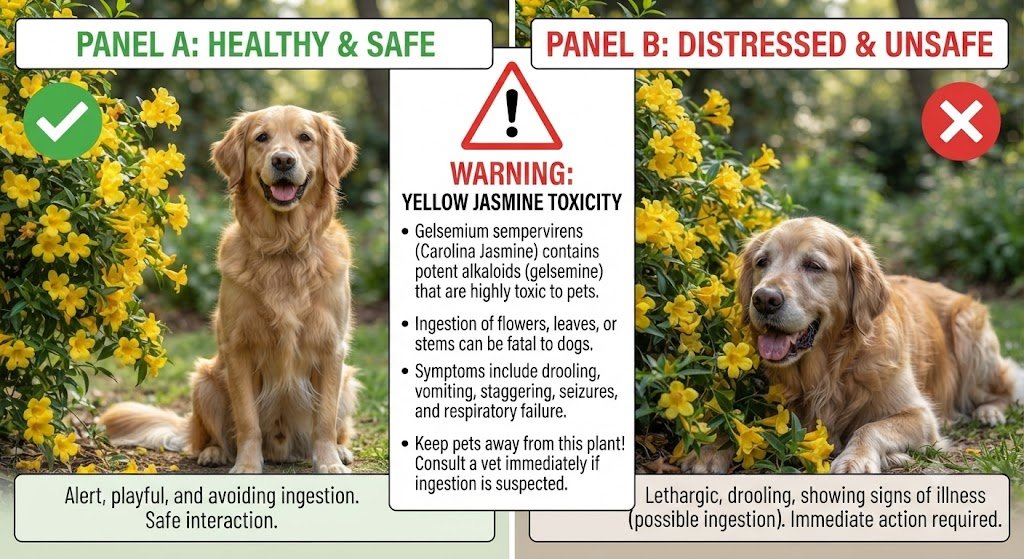
Pets and livestock face extreme danger from this plant, often with fatal outcomes.
| Animal Type | Risk Level | Primary Symptoms |
|---|---|---|
| Dogs | Extreme | Drooling, vomiting, tremors, respiratory failure |
| Cats | Extreme | Lethargy, dilated pupils, seizures |
| Horses & Cattle | High | Muscle weakness, colic, yellow jessamine toxicity |
| Small Pets (Rabbits, Hamsters) | Fatal | Rapid onset paralysis, death within hours |
Data from veterinary toxicology reports on yellow jessamine poisoning cases.
What to Do After Yellow Jasmine Exposure
Immediate, correct actions can dramatically reduce the severity of poisoning and save lives.
- Remove from Source: Take the person or pet away from the plant immediately.
- Check Mouth and Skin: Remove any plant pieces from the mouth; wash skin with soap and water to prevent dermal absorption of gelsemium poisoning toxins.
- Do Not Induce Vomiting: Vomiting can cause aspiration and worsen yellow jasmine toxicity.
- Call for Help: Dial 1-800-222-1222 (US Poison Control) or your local emergency vet.
- Collect Evidence: If possible, bring a sample of the plant to the hospital or clinic to confirm yellow jasmine poisoning symptoms.
How Yellow Jasmine Poisoning Is Treated
Medical treatment focuses on supportive care because there is no specific antidote for gelsemine.
- Airway Management: Patients often require intubation and mechanical ventilation due to respiratory paralysis from yellow jasmine toxic to humans alkaloids.
- Activated Charcoal: Given within one hour of ingestion to absorb remaining toxins in the digestive tract.
- Seizure Control: Benzodiazepines (e.g., diazepam) are administered to manage convulsions caused by yellow jasmine poisoning symptoms.
- Hydration & Monitoring: IV fluids and continuous ECG monitoring are standard to prevent cardiac complications.
Frequently Asked Questions About Yellow Jasmine Poison
Question: Can yellow jasmine poison kill a healthy adult?
Answer: Yes, absolutely, The yellow jasmine poison can cause fatal respiratory paralysis in a healthy adult if enough plant material is ingested, There are documented cases of death from as few as 4–5 flowers, The toxin gelsemine has no antidote, so any exposure should be considered a medical emergency requiring immediate professional evaluation.
Finally, we strongly recommend that you bookmark this article and share its life-saving information with everyone in your community, because awareness is the single most powerful tool we have against yellow jasmine poison incidents and their terrible consequences.
If you have any remaining questions about identification, first aid protocols, or safe removal techniques, please consult a certified poison control center or a local horticultural expert who can provide guidance tailored to your specific geographic region and circumstances, Your vigilance today can prevent a tragedy tomorrow, and that is a responsibility every gardener, parent, and pet owner must take seriously without exception.