When you encounter a poison oak flower during a hike, it might look harmless, yet recognizing its distinct features is essential for preventing severe skin irritation, Understanding the unique characteristics of the poison oak flower, including its small white or greenish petals and clustered growth pattern, empowers outdoor enthusiasts to steer clear of this dangerous plant altogether,
This comprehensive guide will explain how to identify poison oak by its flowers, where these blooms typically appear across different seasons, and what immediate steps you should take if you accidentally touch them.
Does Poison Oak Produce Flowers?
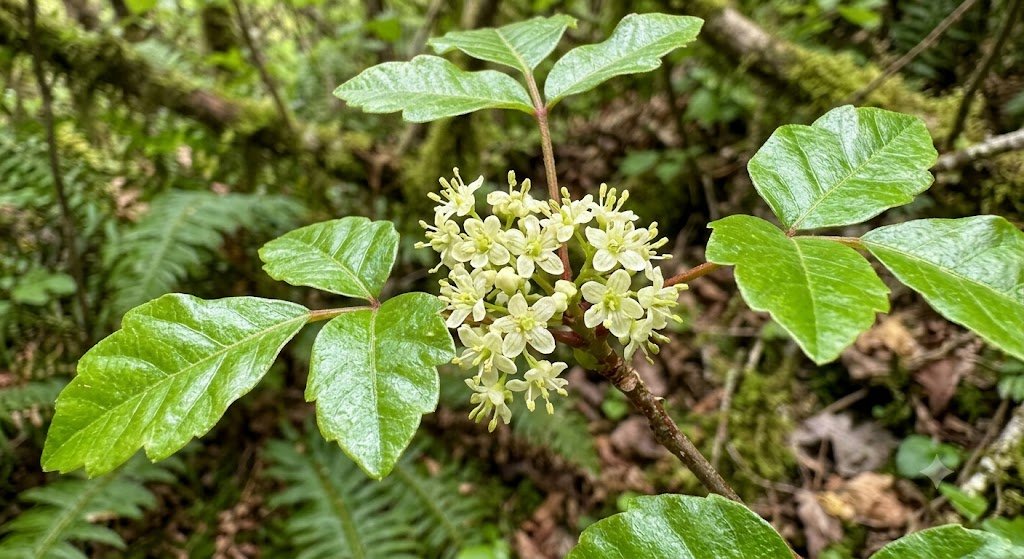
Yes, poison oak is a flowering plant, and its blooms are a key part of its life cycle.
While many hikers focus on the plant’s notorious three-leaf clusters, the poison oak flowers are often overlooked, This shrub or vine produces small, inconspicuous blossoms that appear in the spring and early summer, Understanding their presence is crucial for poison oak identification, especially since the flowers can be a visual cue before the leaves fully develop or after they change color.
What Do Poison Oak Flowers Look Like?
Poison oak flowers are tiny, delicate, and easily mistaken for other harmless wildflowers.
- Shape and Size: Each individual flower is about 2–4 millimeters wide, with 5 petal-like lobes, They grow in loose, branching clusters called panicles, emerging from the leaf axils (where the leaf meets the stem).
- Color Variation: Initially, the blossoms are a pale greenish-white, As they mature, they often turn a creamier white, sometimes with a slight yellow or ivory tint, In rare cases, older flowers may appear faintly pinkish.
- Comparison to Poison Ivy: The poison oak blossom is very similar to poison ivy flowers, but poison oak flowers tend to have a slightly more rounded petal shape and grow on more hairy-looking stems, Both are easily confused with the flowers of Virgin’s Bower (Clematis), which is harmless.
When Does Poison Oak Bloom?
Poison oak typically blooms from late spring to early summer, depending on your region.
After pollination, the flowers are replaced by small, whitish-green berries (drupes) that mature into a tan color by late summer, The poison oak in bloom stage is relatively short — typically lasting 3 to 5 weeks — making it a narrow window for using flowers as an exclusive identification marker, However, during this period, the blossoms are highly visible before leaf growth fully obscures them.
How to Identify Poison Oak During Flowering Season
During bloom time, a combination of leaf and flower features makes poison oak identification more reliable.
| Feature | Poison Oak | Harmless Lookalike (e.g., Clematis) |
|---|---|---|
| Leaf shape | Lobed, resembling oak leaves; 3 leaflets | Compound leaves with more than 3 leaflets; often serrated |
| Flower cluster | Dense, poison oak flowers grow in leaf axils | Flowers at the tip of stems or on long stalks |
| Stem hairiness | Slightly fuzzy or hairy stems | Smooth or only lightly hairy |
| Berries | Whitish-green, waxy-looking | Fluffy seed heads (Clematis) or red berries |
Remember that the poison oak appearance can vary by region, In the eastern U.S., it often grows as a low shrub; in the west, it frequently climbs as a vine, When in doubt, the ‘leaves of three, let it be’ rule still applies, but during the flowering season, also look for those creamy clusters.
Are Poison Oak Flowers Dangerous?
The flowers themselves contain the same rash-causing oil as the rest of the plant.
- Urushiol oil is present: All parts of poison oak, including the flowers, stems, leaves, and roots, contain urushiol, the sticky oil that triggers allergic contact dermatitis.
- Pollen is not the main threat: Although urushiol can be carried on pollen grains in rare cases, the primary danger is direct contact with the flower petals, stems, or the fine hairs on the flower stalks.
- Touch transfer risk: Even if you brush against the poison oak plant flowers lightly, the oil can transfer to your skin, clothing, or gear, The oil is stable and potent for months or even years on dry surfaces.
FAQ: Can poison oak flowers cause a rash without touching the leaves?
Yes, Touching any part of the plant that has urushiol — including the flowers — can cause a rash, The flowers are often less recognizable, so people sometimes touch them thinking they are harmless, Always avoid any part of the plant.
Can You Get a Rash From Flowering Poison Oak?
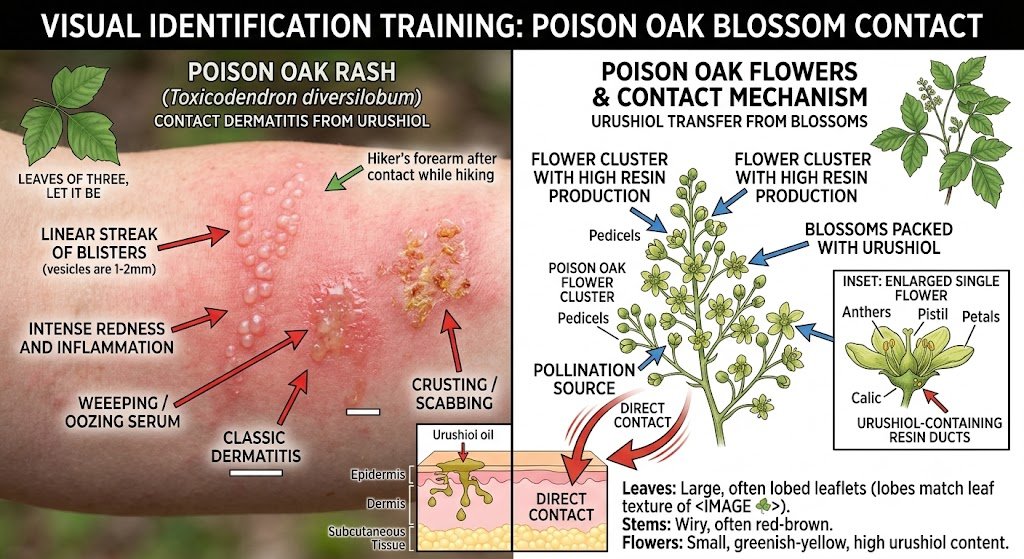
Yes, touching any part of a flowering poison oak plant can cause an itchy, blistering rash.
The risk is especially high during the poison oak blooming window because the flowers are less recognizable than the leaves, Hikers often touch the creamy-white clusters out of curiosity, mistaking them for harmless wildflowers, Remember that the oil is potent even on dried flowers that have fallen to the ground, so avoid touching any plant parts that look like the poison oak blossom.
Poison Oak Flowers vs Similar Plants
Several harmless plants produce flowers that look nearly identical to poison oak blossoms.
- Virgin’s Bower (Clematis virginiana): This vine has clusters of small, creamy-white flowers very similar to the poison oak flower, The key difference: Clematis leaves are compound with 3–5 leaflets (not 3), and its flower clusters grow at the tips of stems, not in leaf axils, Clematis also develops fluffy, silvery seed heads in late summer.
- Wild Hydrangea (Hydrangea arborescens): Its flat-topped clusters of small white flowers can be confused with poison oak plant flowers, However, wild hydrangea has large, broad, opposite leaves with serrated edges (not lobed like oak leaves), and the shrub grows much taller (up to 6 feet) without a climbing vine form.
- Blackberry (Rubus species): Blackberry flowers are also white with five petals, but they are larger (1–2 cm wide) and grow singly or in small groups at the end of canes, Blackberry stems have sharp thorns, while poison oak stems are only hairy, never thorny.
How to Avoid Poison Oak Exposure
Use a four-step routine to stay safe during peak poison oak blooming season.
- Learn visual cues: Practice identifying the poison oak flower before your hike, Study images of the creamy clusters in leaf axils, the hairy stems, and the oak-like leaf lobes, Print a pocket guide with side-by-side comparisons.
- Wear protective clothing: Long pants, long sleeves, closed-toe shoes (not sandals), and garden gloves, Tuck pants into socks to prevent skin contact, Wash all clothing separately after the hike in hot water with detergent.
- Use barrier creams: Apply an over-the-counter barrier cream containing bentoquatam (IvyBlock) to exposed skin 15 minutes before entering the woods, This product has been shown to reduce rash severity by up to 70%.
- Post-hike decontamination: Upon returning home, remove clothes carefully (turning them inside out) and place directly into the wash, Shower with cold water and a specific urushiol-removing wash (like Tecnu or Zanfel) or dish soap, Do not use hot water, which opens pores and allows deeper oil penetration.
Frequently Asked Questions About Poison Oak Flowers
Quick answers to common safety concerns about flowering poison oak.
– Question: Do poison oak flowers have a scent?
Answer: Not typically, The flowers are very small and produce no noticeable fragrance, Some people report a faint, slightly sweet smell if they crush a large cluster, but it is not a reliable poison oak identification feature.
– Question: Can burning poison oak flowers release toxic smoke?
Answer: Yes, Never burn any part of poison oak, including the flowers and dried blossoms, When burned, urushiol vaporizes and can travel through smoke, causing severe lung inflammation and widespread skin rashes if inhaled or settled on skin.
– Question: What does poison oak flower look like after it dies?
Answer: Dried poison oak flowers turn a pale brown or tan color and remain attached to the stem well into winter, They still contain active urushiol, so avoid touching them even when the plant appears dead, The dried flower clusters look like small, papery, brownish tufts in the leaf axils.
Identifying the poison oak flower is a critical skill for anyone who enjoys hiking, camping, or simply exploring natural landscapes, as this unassuming bloom can lead to severe allergic reactions upon contact, Understanding that the poison oak flower typically appears as small, white or greenish-yellow clusters in the spring and early summer allows outdoor enthusiasts to steer clear of the plant before its leaves change color in autumn, By learning to recognize the plant’s characteristic three-leaf pattern and its preference for wooded edges and disturbed soil, you can significantly reduce the risk of encountering this hazardous species during your adventures,
Even when the leaves are not present, the poison oak flower can deliver the same irritating urushiol oil, so vigilance during the blooming season is absolutely essential for safe exploration, Always carry a field guide or a reliable plant identification app to double-check suspicious vegetation, and remember that washing exposed skin with soap and water within two hours can prevent a painful rash from developing, Staying informed about the local flora and sharing this knowledge with fellow hikers ensures that everyone can enjoy nature without suffering the consequences of a poison oak encounter.