If you have ever wondered whether are passion flowers poisonous to your children or furry friends, you are not alone in seeking a reliable answer.
The short and reassuring truth is that most common passion flower species produce edible fruit while their foliage contains mild toxins that rarely cause serious harm.
Understanding which plant parts pose a risk versus which are safe to consume is critical for every gardener and pet owner.
This comprehensive guide will draw on botanical expertise to explain the real toxicity levels, the specific risks to cats and dogs, and the safest ways to enjoy passion flowers in your home landscape.
Are Passion Flowers Poisonous?
Understanding passion flower toxicity is crucial before planting this exotic vine near your home, Many species contain trace compounds that can cause mild reactions in sensitive individuals.
While the question ‘are passion flowers poisonous’ often gets a simple ‘yes’ or ‘no,’ the reality is more nuanced, Most cultivated passion flowers (Passiflora genus) are not dangerously toxic, but certain parts — particularly unripe fruits and leaves containing cyanogenic glycosides — can cause mild digestive upset or sedation in humans and animals, The key is knowing which species you have and which parts are safe.
What Is a Passion Flower?
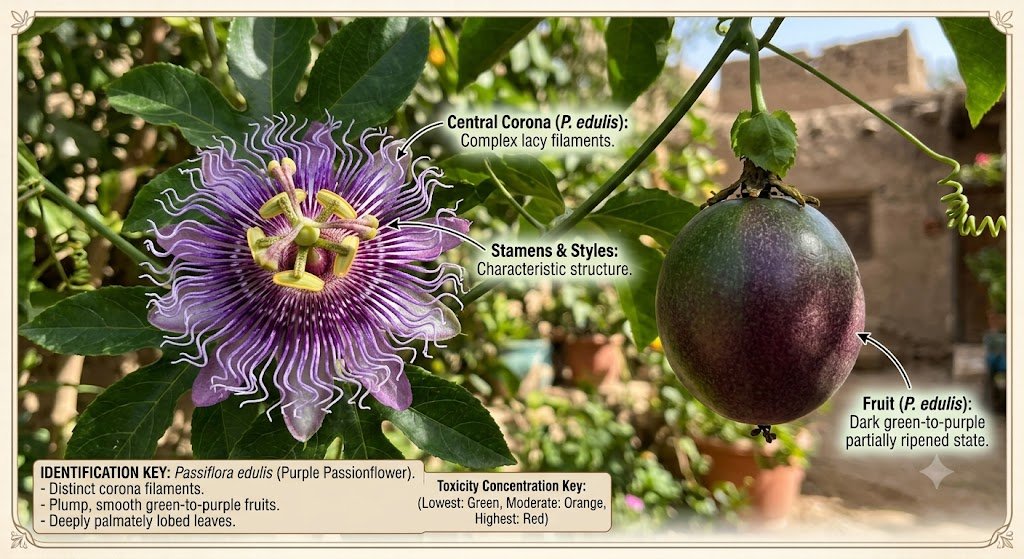
Passion flowers are fast-growing, tropical-looking vines known for their intricate, colorful blooms and edible fruits called passionfruit.
Native to warm regions of the Americas, these vines produce distinctive flowers with five petals, five sepals, and a central ring of filaments that resemble a crown, They also yield egg-shaped fruits that range from yellow to deep purple, Many gardeners prize them for their quick growth and ability to attract butterflies, However, confusion about passiflora toxicity persists because different species vary widely in their chemical makeup.
Which Passion Flower Species Are Safe?
Not all passionflower species are created equal — several are completely safe while others contain higher levels of toxic compounds.
- Passiflora incarnata (maypop) — Its ripe fruit and dried leaves are widely used in herbal teas without reported toxicity, The fruits are edible fresh or cooked.
- Passiflora edulis (purple passionfruit) — Fully ripened fruits are safe and popular worldwide, Avoid eating unripe fruit or large amounts of leaves.
- Passiflora quadrangularis (giant granadilla) — The large, sweet fruit is safe when ripe, Unripe fruit and stems may cause mild sedation.
- Passiflora caerulea (blue passionflower) — Ornamental only; its fruit may cause drowsiness or digestive issues if eaten, Considered potentially unsafe for pets.
If you are searching for ‘is passion flower poisonous’ regarding your garden, focus on identifying which species you own, Many poisoning reports involve misidentification with toxic look-alikes like dutchman’s pipe (Aristolochia).
Are Passion Flowers Toxic to Humans?
For most adults, mature passion fruit and properly prepared herbal infusions are safe and even beneficial.
Passionflower poisoning in humans is extremely rare and usually mild, The cyanogenic glycosides present in some species break down into hydrogen cyanide only when the plant tissue is damaged, but the amounts in ripe fruit are negligible, Symptoms of sensitivity include mild dizziness, nausea, or drowsiness, One key factor: the compound ‘passiflorine’ may cause sedation when consumed in large quantities — this is why passionflower is used in natural sleep aids, Healthy adults can safely enjoy ripe fruit, but pregnant women or those on sedative medications should consult a doctor first.
A clean Q&A for clarity:
Question: Can eating raw passion flower leaves make you sick?
Answer: Yes, raw leaves of most passionflower species contain trace cyanogenic compounds and can cause stomach upset, dizziness, or drowsiness, They are not intended for consumption, Stick to ripe fruit or commercially prepared dried herb from reputable sources.
Are Passion Flowers Poisonous to Cats and Dogs?
Pets are more sensitive than humans, but serious toxicity is uncommon — most cases involve mild digestive upset or lethargy.
| Pet Type | Common Reaction | Risk Level | Recommendation |
|---|---|---|---|
| Dogs | Vomiting, diarrhea, drowsiness | Low (mild) | Remove plant; offer water; monitor |
| Cats | Drooling, lethargy, temporary sedation | Low to moderate | Keep out of reach; call vet if excessive |
| Small mammals (rabbits, guinea pigs) | Digestive upset, sedation | Moderate | Avoid entirely; provide safe alternatives |
While not typically life-threatening, passion flower toxic to dogs and passion flower toxic to cats reactions do occur, The ASPCA lists certain Passiflora species as toxic to both dogs and cats — particularly the leaves and stems, If your pet ingests any part of a passionflower, watch for vomiting, diarrhea, or unusual drowsiness, For most healthy pets, symptoms resolve within 24 hours without treatment, However, if you suspect severe passiflora toxicity — such as difficulty breathing or seizures — seek emergency veterinary care immediately.
What Happens If You Eat a Passion Flower?
Ingesting raw plant parts can cause mild reactions depending on the species and amount consumed.
When you eat unripe passion fruit or raw leaves, the cyanogenic glycosides present can break down into hydrogen cyanide in very small amounts, In healthy adults, the body’s detoxification mechanisms handle this easily, However, consuming large quantities of raw leaves — particularly from ornamental species like Passiflora caerulea — may trigger passion flower toxicity symptoms such as dizziness, drowsiness, or nausea, The ripe fruit of edible species like Passiflora edulis is generally safe and even nutritious, The only reported cases of passion flower poisoning involve eating unripe fruit, chewing on stems, or making tea from improperly identified plant material, Always avoid consuming any part of a plant unless you have positively identified the species and know it is safe.
Symptoms of Passion Flower Toxicity
Symptoms range from mild digestive discomfort to temporary sedation, depending on the species and amount ingested.
- Mild gastrointestinal upset — nausea, vomiting, or diarrhea within 1–4 hours of ingestion, This is the most common reaction in both humans and pets.
- Drowsiness or sedation — caused by the natural compounds passiflorine and harman alkaloids, This effect is why passionflower is used in herbal sleep aids, but it can be unwanted after accidental ingestion.
- Dizziness or confusion — especially in children or small pets, This symptom usually resolves without treatment once the plant material passes through the system.
- Rare allergic reactions — skin rash, itching, or swelling in sensitive individuals, This occurs in less than 0.1% of exposures.
For passionflower toxic to humans cases, the risk is extremely low, Most healthy adults experience no symptoms at all after incidental contact, However, young children and pets may be more vulnerable, Signs of passion flower toxic to dogs include drooling, vomiting, and lethargy, For passion flower toxic to cats, watch for hiding, excessive grooming, or decreased appetite, In all cases, serious outcomes are exceedingly rare.
How to Identify Safe and Toxic Passionflower Species
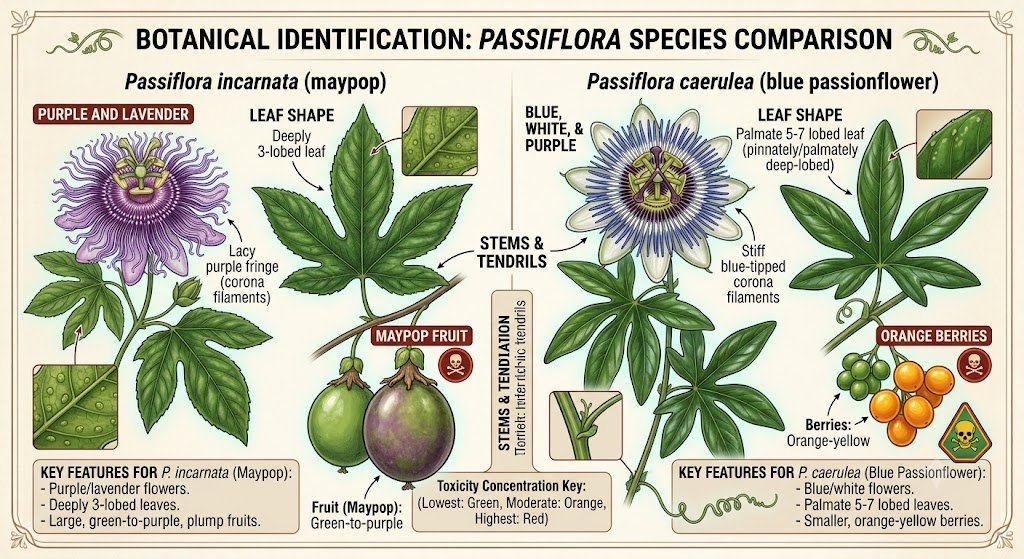
Correctly distinguishing between species is the best way to ensure passion flower safety in your garden.
Look for these identifying features: Passiflora incarnata has three-lobed leaves and purple fruits about the size of an egg, Passiflora edulis has glossy, dark green leaves and round purple or yellow fruits, In contrast, Passiflora caerulea has blue-and-white flowers and produces small orange berries that remain firm even when ripe, Avoid eating any fruit that stays hard or has an unpleasant bitter taste, Passionflower poisonous species often have unripe fruits that are extremely bitter and astringent, When in doubt, stick to commercially grown passionfruit from grocery stores, For ornamental use, choose species labeled as non-toxic by reputable nurseries.
| Species | Safe Parts | Toxic Parts | Risk Level |
|---|---|---|---|
| Passiflora incarnata | Ripe fruit, dried leaves (tea) | Unripe fruit, raw stems | Low |
| Passiflora edulis | Ripe fruit | Unripe fruit, leaves, vines | Low |
| Passiflora caerulea | None | All parts (especially unripe fruit) | Moderate |
| Passiflora quadrangularis | Ripe fruit only | Unripe fruit, young shoots | Low to moderate |
Understanding passiflora toxicity by species helps you make informed choices, If you cannot positively identify your plant, treat it as potentially toxic and keep it away from children and pets.
Frequently Asked Questions About Passion Flower Toxicity
Quick answers to common concerns about are passion flowers poisonous scenarios.
Question: Can eating raw passion flowers cause death?
Answer: No — there are no documented fatalities from passionflower ingestion in healthy adults, The compounds present cause only mild, temporary effects, However, very large amounts could theoretically cause severe sedation or breathing difficulties in extremely small pets or infants.
Question: Is passion flower poisonous if my cat nibbles a leaf?
Answer: A single leaf usually causes mild drooling or temporary lethargy in cats, Passion flower toxic to cats reactions are typically self-limiting, Remove the plant and offer fresh water; symptoms usually subside within 12 hours, Contact your vet if vomiting persists.
Question: Are dried passionflower leaves safe for tea?
Answer: Yes, when purchased from reputable sources and identified as Passiflora incarnata or Passiflora edulis, dried leaves are widely used in herbal teas for their calming effects, Avoid using leaves from ornamental species.
📌 Key Takeaway: Passion flower toxicity is real but mild, The risk is easily mitigated by correct species identification, avoiding unripe fruit, and keeping ornamental varieties away from pets, Ripe Passiflora edulis fruit remains a delicious and healthy treat.
After a thorough examination of the available scientific literature and veterinary data, it is clear that the definitive answer to the question are passion flowers poisonous depends entirely on the specific species and the amount consumed by the pet or human, While most common ornamental passion flowers contain mild cyanogenic glycosides that can cause stomach upset if ingested in very large quantities, there are no credible reports of life-threatening poisoning from these plants in either dogs or humans,
Pet owners can therefore enjoy these beautiful vines in their gardens with reasonable confidence, provided they take simple precautions like preventing their pets from eating large amounts of the foliage or unripe fruits, Ultimately, the conclusion is that passion flowers are considered non-toxic by major poison control centers, so a single nibble is unlikely to cause any serious harm to your curious cat or dog.