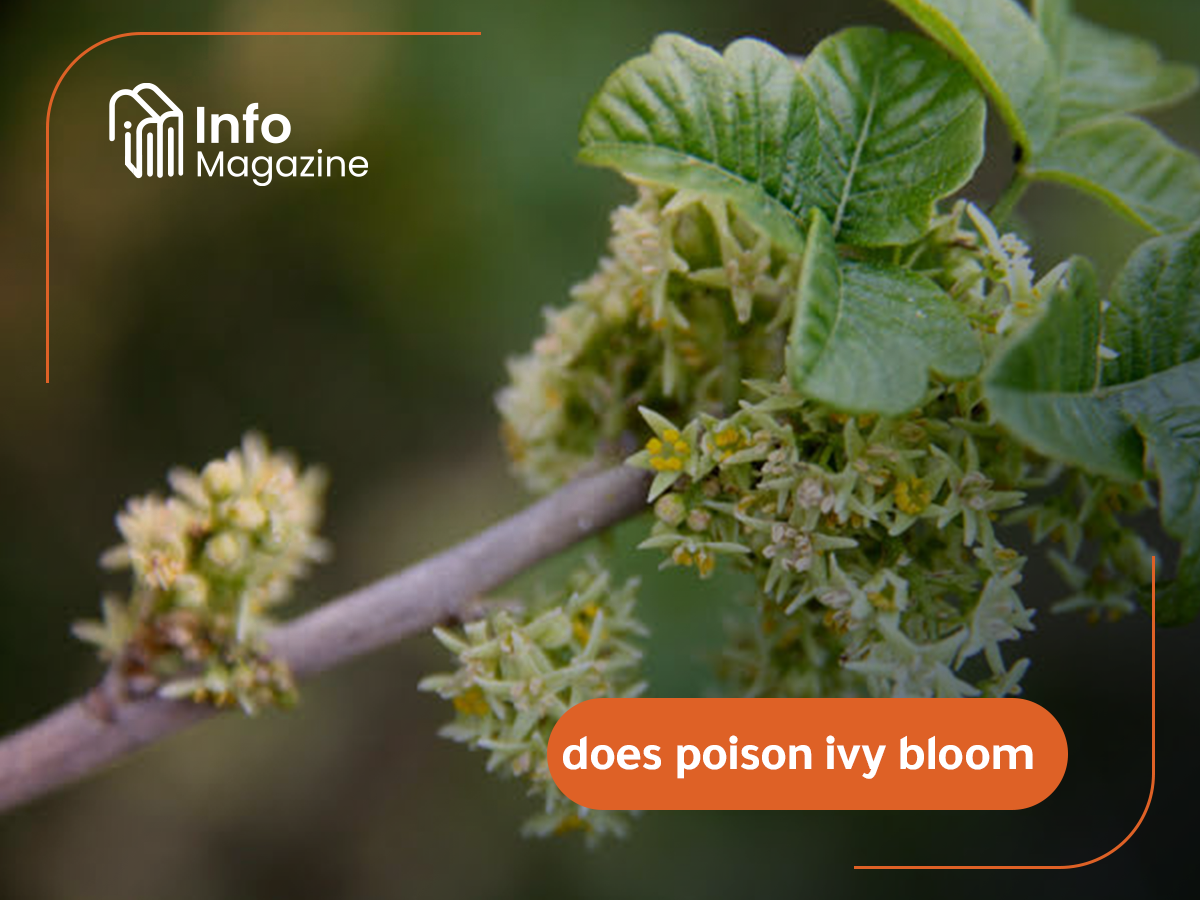
Understanding exactly when and how does poison ivy bloom is essential for anyone who spends time outdoors during spring and summer months.
This detailed guide will answer that key question by covering the plant’s flowering timeline, its subtle bloom appearance, and how flowering relates to the plant’s overall growth cycle and toxicity.
You will also learn how to distinguish poison ivy blooms from harmless look-alike plants and when you are most likely to encounter the blooming stage in different regions, ensuring you stay safe during every season.
Does Poison Ivy Produce Flowers?
Yes, poison ivy does produce flowers, though many people overlook them due to their small size and subtle appearance.
The plant is dioecious, meaning male and female flowers grow on separate plants, Only female plants produce the white berries (drupes) that follow successful pollination, Understanding that poison ivy flowers exist is a crucial step in safe identification, as mistaking them for harmless blooms can lead to accidental contact.
When Does Poison Ivy Bloom?
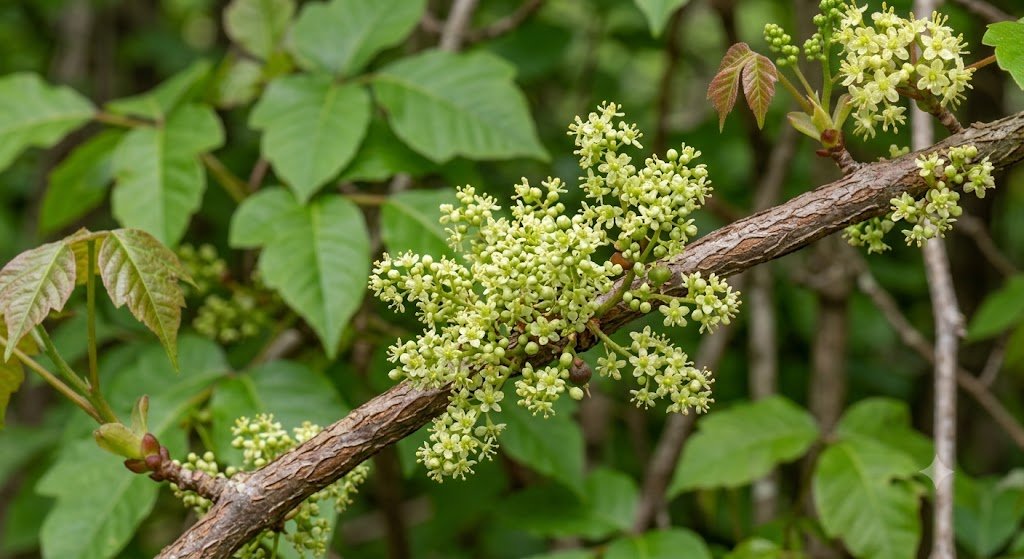
Poison ivy typically blooms from late spring through early summer, depending on your geographic location and local climate conditions.
- Early Bloomers (Zone 4-5): Flowers appear from mid-May to late June, often after the leaves have fully unfurled.
- Mid-Season (Zone 6-7): Peak poison ivy blooming occurs from late May through early July, with flowers remaining visible for 3-4 weeks.
- Late Bloomers (Zone 8-9): In warmer southern regions, blooming can start as early as April and continue sporadically into September.
- Environmental Factors: Shaded vines bloom later than those in full sun; drought can delay or reduce flowering entirely.
What Do Poison Ivy Flowers Look Like?
Poison ivy blossoms are inconspicuous, measuring only 2-5 mm across, with five pale petals arranged in small, rounded clusters.
Each flower has a slightly creamy or yellowish-white hue, sometimes with a faint green tint, The petals are rounded and slightly cupped, surrounding a central cluster of stamens (on male flowers) or a greenish ovary (on female flowers), When observing what do poison ivy flowers look like, note that they lack fragrance and do not produce nectar, unlike many look-alike species, The entire inflorescence is typically 5-10 cm long, drooping slightly under its own weight.
How to Identify Poison Ivy During Blooming Season
Combining flower traits with leaf and stem characteristics is essential for safe identification during the poison ivy flowering season.
| Feature | Poison Ivy | Common Look-alike (e.g., Virginia Creeper) |
|---|---|---|
| Leaf arrangement | Three leaflets per stem | Five leaflets per stem |
| Flower color | Greenish-white to creamy white | Greenish-yellow (Virginia creeper) |
| Flower cluster shape | Loose panicle from leaf axil | Tight, flat-topped clusters (e.g., elderberry) |
| Berry appearance | White, waxy drupes in clusters | Dark purple or blue berries |
Always look for the classic ‘leaflets of three’ rule, If you see tiny greenish-white blossoms growing from the stem where leaves attach, and the leaves are in groups of three, you have likely found poison ivy, Never touch the plant to confirm.
Do Poison Ivy Flowers Cause a Rash?
Yes, poison ivy flowers contain urushiol oil, just like the leaves, stems, and roots, so they can cause an allergic rash upon contact.
Question: Can you get poison ivy from touching only the flowers?
Answer: Absolutely, The flowers, though small, are coated with the same urushiol oil that triggers contact dermatitis, Even brushing against them lightly can transfer enough oil to cause a reaction, The rash may appear within 12 to 72 hours and typically results in red, itchy bumps or blisters, Never assume that because the plant is blooming and looks ‘pretty’, it is safe, The poison ivy plant flowers are just as dangerous as any other part.
Remember that dead or dried flowers still contain active urushiol for up to five years, Therefore, poison ivy identification must remain cautious throughout all seasons.
What Happens After Poison Ivy Flowers Bloom?
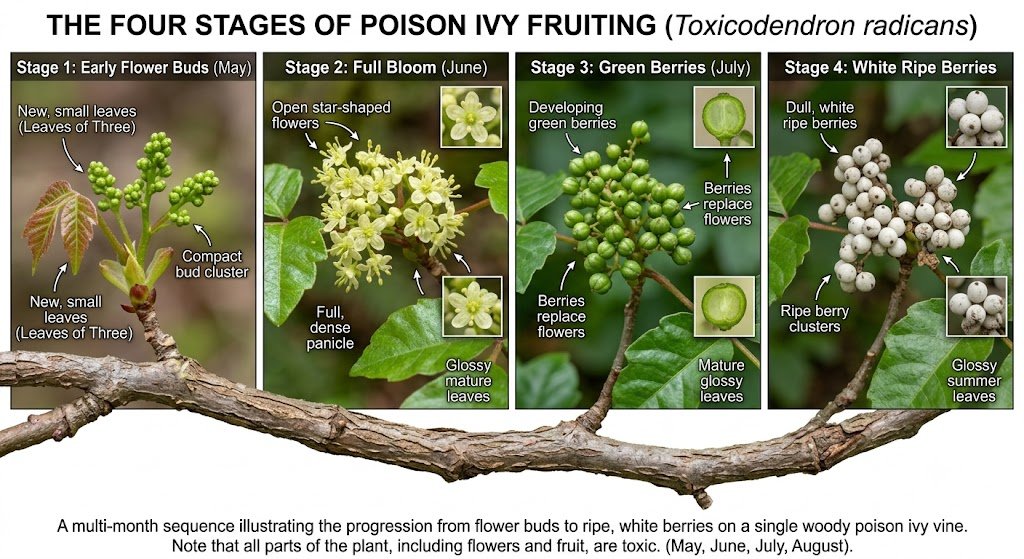
Once the flowers are pollinated, the female plants develop clusters of white, waxy berries known as drupes.
- 1, Pollination occurs via wind and small insects, leading to fertilization within 1–2 weeks.
- 2, Green berries appear in mid-summer, ripening to a pale white or ivory color by late summer.
- 3, The berries persist through winter, serving as a food source for birds but remaining toxic to humans.
- 4, Each berry contains a single seed; when birds eat the fruit, they disperse the seeds in new locations.
Understanding what happens after poison ivy flowers helps hikers and gardeners avoid accidentally brushing against ripe fruit clusters that still carry urushiol oil.
Poison Ivy Flowers vs Similar Plants
Many harmless plants produce flowers that look confusingly similar to the poison ivy blossom, making careful observation critical.
| Plant Species | Flower Color | Leaf Arrangement | Key Distinction |
|---|---|---|---|
| Poison Ivy | Greenish-white to creamy yellow | 3 leaflets | Flowers in loose panicles from leaf axils |
| Virginia Creeper | Greenish-yellow | 5 leaflets | Tight, flat-topped flower clusters |
| Wild Strawberry | White with yellow center | 3 serrated leaflets (low-growing) | Single flowers on long stalks; no vine |
| Poison Sumac | Pale yellow-green | 7–13 paired leaflets | Drooping panicles with red stems |
How to Avoid Poison Ivy Exposure
Knowing what to do before and after potential contact drastically reduces the risk of developing an itchy rash.
- Wear protective gear: Long sleeves, pants, gloves, and boots when hiking or gardening in wooded areas, especially during the poison ivy flowering season.
- Use barrier creams: Products containing bentoquatam (e.g., Ivy Block) can be applied to skin 15 minutes before exposure to block urushiol absorption.
- Clean tools and clothing: Wash all gardening tools, hiking gear, and clothing with soap and water after potential contact, Urushiol can remain active on surfaces for months.
- Learn look-alike plants: Study images of what do poison ivy flowers look like versus harmless species before going outdoors.
- Avoid burning: Never burn poison ivy plants, vines, or wood, The urushiol particles can become airborne and cause severe lung irritation if inhaled.
Frequently Asked Questions About Poison Ivy Blooming
Readers commonly ask about timing, safety, and visual clues during the blooming stage of this notorious plant.
Understanding the answer to the question does poison ivy bloom is essential for anyone who spends time outdoors and wants to avoid the painful rash this plant causes during spring and summer months, Recognizing the small yellowish-green flowers on a woody vine with three leaflets provides the earliest visual clue that poison ivy is actively growing and producing seeds in your environment, Mastering these identification facts helps you steer clear of the plant before it develops into its later growth stages with berries or red leaves in the autumn season.
The simple ability to confirm that does poison ivy bloom occurs from May to June each year allows you to remain vigilant during the most common exposure periods for hikers and gardeners alike, By incorporating this knowledge into your outdoor routine you significantly reduce your risk of accidental contact with urushiol oil which remains potent on flowers stems and leaves throughout the blooming phase.