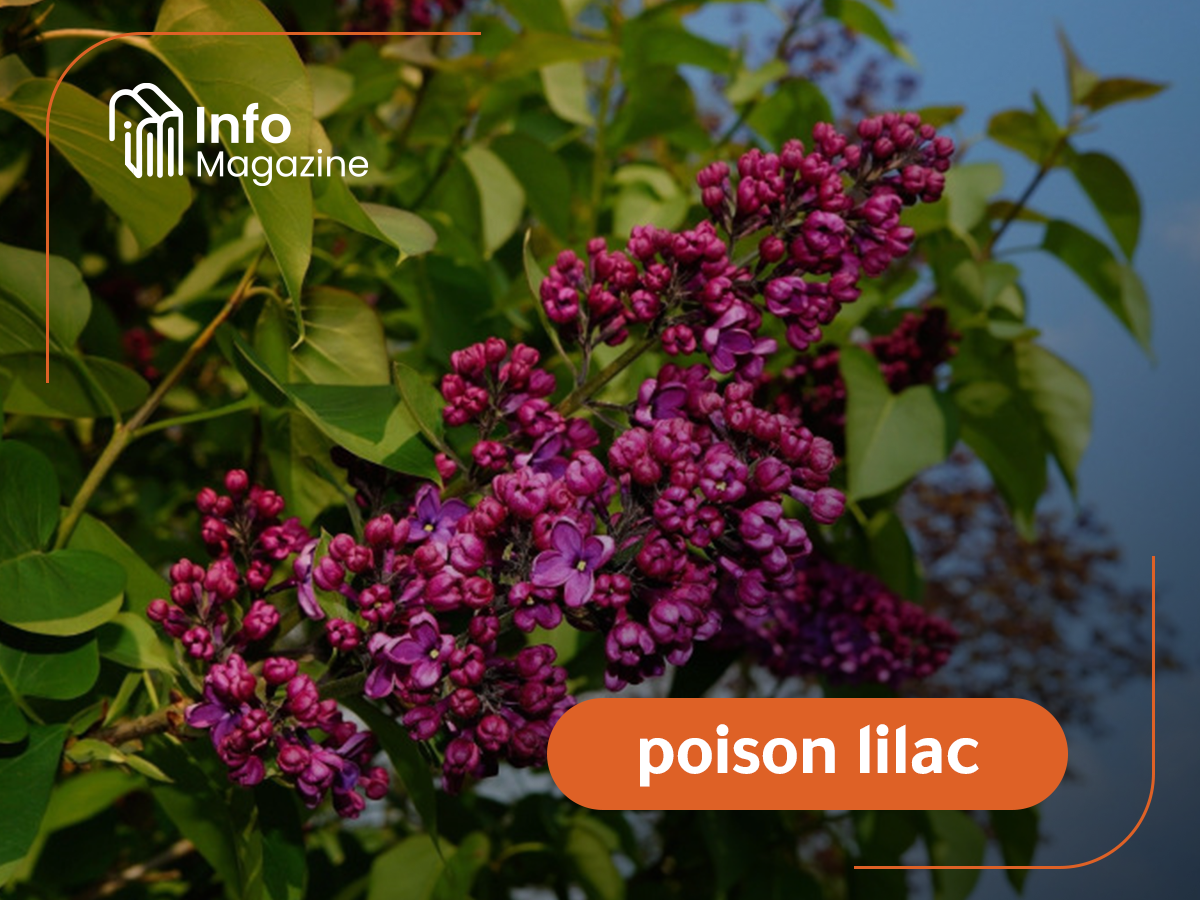
Poison lilac is a deceptive shrub that many gardeners mistake for common lilacs but harbors highly toxic berries capable of causing severe illness, Understanding the distinct physical characteristics of poison lilac is essential because accidental ingestion can lead to critical health emergencies requiring immediate medical intervention,
This article will explore the key identifying features of poison lilac, its toxic effects, safe removal techniques, and crucial first aid steps for exposure.
Are Lilacs Poisonous?
Lilac toxicity is a common concern, but the answer is reassuring for most households, The common lilac plant is not considered poisonous to humans or pets in typical exposure scenarios.
While lilac plant safety is generally high, some subtle risks exist regarding certain plant parts, especially blossoms and sap, Understanding the difference between are lilacs poisonous and potential mild irritants is key to safe enjoyment.
What Is a Lilac Plant?
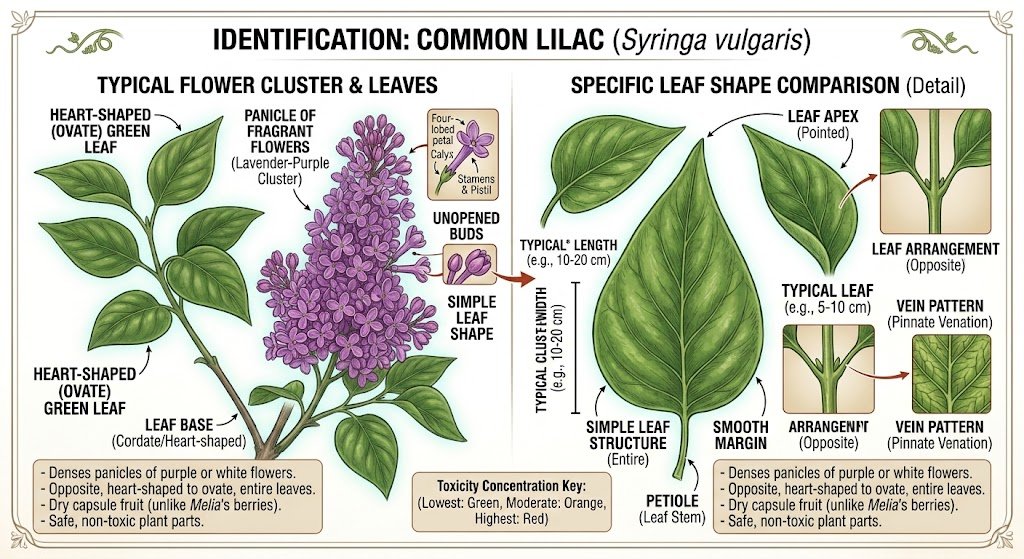
Lilac is a flowering woody shrub known for its fragrant, cone-shaped clusters of purple, pink, white, or blue blossoms, It belongs to the Oleaceae family, which includes olives, jasmine, and ash trees.
The common lilac (Syringa vulgaris) typically grows 8 to 15 feet tall, with heart-shaped leaves and bark that matures from grayish-brown to darker tones, Its blossoms appear in late spring, often used in cut flower arrangements and perfumes, The plant’s defining feature is its intense, sweet scent, which is generally non-toxic.
Is Lilac Toxic to Humans?
Lilac is not toxic to humans, The ASPCA and many poison control centers classify common lilac as non-toxic, However, mild reactions can occur in sensitive individuals.
Consumption of flowers, leaves, or stems may cause minor gastrointestinal discomfort like nausea or stomach ache, especially in children, Some people may experience skin irritation from the sap, The plant contains syringin, a compound that in large quantities could theoretically cause mild muscle weakness, but cases of lilac poisoning in humans are extremely rare and typically require ingestion of massive amounts.
Is Lilac Poisonous to Cats and Dogs?
Lilac is generally safe for pets, but cautions apply for cats and dogs regarding specific plant parts, The ASPCA lists lilac toxic to cats and lilac toxic to dogs as false for the common lilac variety.
However, the Persian lilac (Melia azedarach), often confused with true lilac, is highly toxic to pets and humans, To clarify safety differences, here is a comparison of common types:
| Plant Type | Scientific Name | Toxicity to Pets | Notes |
|---|---|---|---|
| Common Lilac | Syringa vulgaris | Non-toxic (mild upset possible) | Safe for cats and dogs |
| Persian Lilac | Melia azedarach | Highly toxic (gastro, neurological) | Can cause severe poisoning |
| Wild Lilac (Ceanothus) | Ceanothus spp. | Non-toxic | Safe, but not true lilac |
Symptoms of Lilac Exposure
Symptoms from true common lilac are mild and rarely require medical intervention, In contrast, exposure to toxic look-alikes can cause serious issues.
For common lilac, possible symptoms include mild nausea, drooling, or loose stool after ingesting large amounts of flowers, Skin contact with sap may cause mild irritation or a rash, For Persian lilac, symptoms include excessive drooling, vomiting, diarrhea, weakness, tremors, and potentially seizures, Always monitor pets and children after plant exposure.
- Common Lilac Exposure: Observe for mild gastric upset—nausea, slight vomiting, or soft stool—within 2-4 hours, Offer water and monitor, Symptoms typically resolve without treatment.
- Persian Lilac Exposure: Watch for severe vomiting, labored breathing, muscle tremors, or collapse, This is an emergency—immediately contact a veterinarian or poison control.
- Skin Contact: For common lilac sap, wash the area with mild soap and water, Apply cool compress if irritation persists.
- When to Act: If you suspect any toxic lilac variety (Persian, Chinaberry) or if symptoms worsen, call the ASPCA Animal Poison Control (888-426-4435) or a local emergency clinic without delay.
What Happens If Someone Eats Lilac?
Ingesting common lilac rarely causes serious issues, but understanding the potential effects helps you respond appropriately.
- First 30 minutes: If a child or adult eats flowers or leaves, they may experience a bitter taste and mild nausea, Offer water to rinse the mouth, No immediate medical action is needed for true lilac.
- Within 2-4 hours: Some individuals, especially those with sensitive stomachs, might develop slight vomiting or loose stool, This is self-limiting and usually resolves without treatment, The plant contains syringin, which in large quantities could theoretically cause mild muscle weakness, but lilac poisoning from common lilac is virtually unheard of.
- If symptoms escalate: If severe vomiting, difficulty breathing, or altered consciousness occurs, this indicates possible ingestion of a toxic look-alike like Persian lilac, In that case, call poison control immediately—do not wait.
Common Plants Confused With Lilac
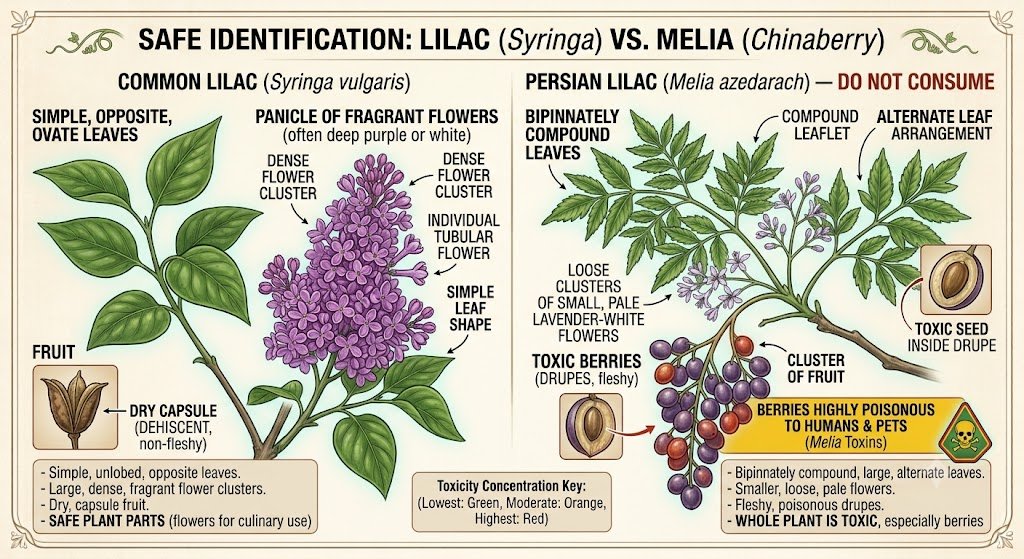
Several plants share visual similarities with lilac, but their toxicity profiles differ dramatically—correct identification prevents accidental poisonings.
| Plant Name | Key Identifying Features | Toxicity Level | How to Tell Apart |
|---|---|---|---|
| Common Lilac | Heart-shaped leaves, cone-shaped purple/white/pink flower clusters, gray-brown bark | Non-toxic | Leaves are opposite, smooth-edged; flowers have 4 petals in dense panicles |
| Persian Lilac (Chinaberry) | Compound leaves with serrated leaflets, small purple flowers in loose clusters, yellow berries | Highly toxic to humans and pets | Leaves are divided into many leaflets; berries are round and yellow when ripe |
| Wild Lilac (Ceanothus) | Small oval leaves with fine teeth, tiny blue/white flower clusters, dark seed capsules | Non-toxic | Leaves are alternate, not opposite; flowers are smaller and less fragrant |
| Deadly Nightshade (Belladonna) | Dull green oval leaves, bell-shaped purple flowers, shiny black berries | Extremely toxic (atropine) | Leaves are alternate, flowers are solitary and bell-shaped; berries are large, glossy black |
How to Grow Lilacs Safely Around Pets
You can enjoy beautiful lilacs in your garden without endangering your cats or dogs by following a few simple precautions.
- 1, Choose the right variety: Only plant true common lilac (Syringa vulgaris), Avoid Persian lilac (Melia azedarach) entirely, Check nursery labels carefully—some garden centers may mislabel toxic look-alikes as ‘lilac.’ Lilac toxic to dogs and lilac toxic to cats risks only apply to impostor species, not true lilac.
- 2, Placement matters: Position lilacs away from pet play areas and vegetable gardens, If your dog digs or chews on plants, consider using a decorative barrier or fence around the base, For lilac plant safety, keep cut flowers out of reach—while non-toxic, petals can cause mild stomach upset if eaten in large amounts.
- 3, Monitor fallen debris: Rake up dropped blossoms and leaves promptly, Decomposed plant material can harbor mold or bacteria that may cause digestive issues if pets scavenge them, This is not lilac poisoning per se, but a general hygiene concern.
- 4, Know your pet’s habits: Cats that nibble plants for fiber may be more interested in lilac leaves, Provide cat grass or catnip as a safe alternative, If you’re still wondering are lilacs poisonous for your specific pet, consult your veterinarian for personalized advice based on your pet’s breed and health.
Frequently Asked Questions About Lilac Toxicity
Quick answers to the most common questions about lilac safety help you make informed decisions.
Understanding the critical importance of correctly identifying poison lilac can save you from severe dermatological reactions and potential systemic toxicity that require immediate medical attention,
By consistently applying the practical identification and safe handling techniques detailed throughout this comprehensive guide you will dramatically reduce your risk of encountering this hazardous plant in both wild and cultivated environments,
Always remember that the most reliable protection against poison lilac comes from proactive education combined with vigilant prevention strategies that prioritize your long-term health and outdoor safety.