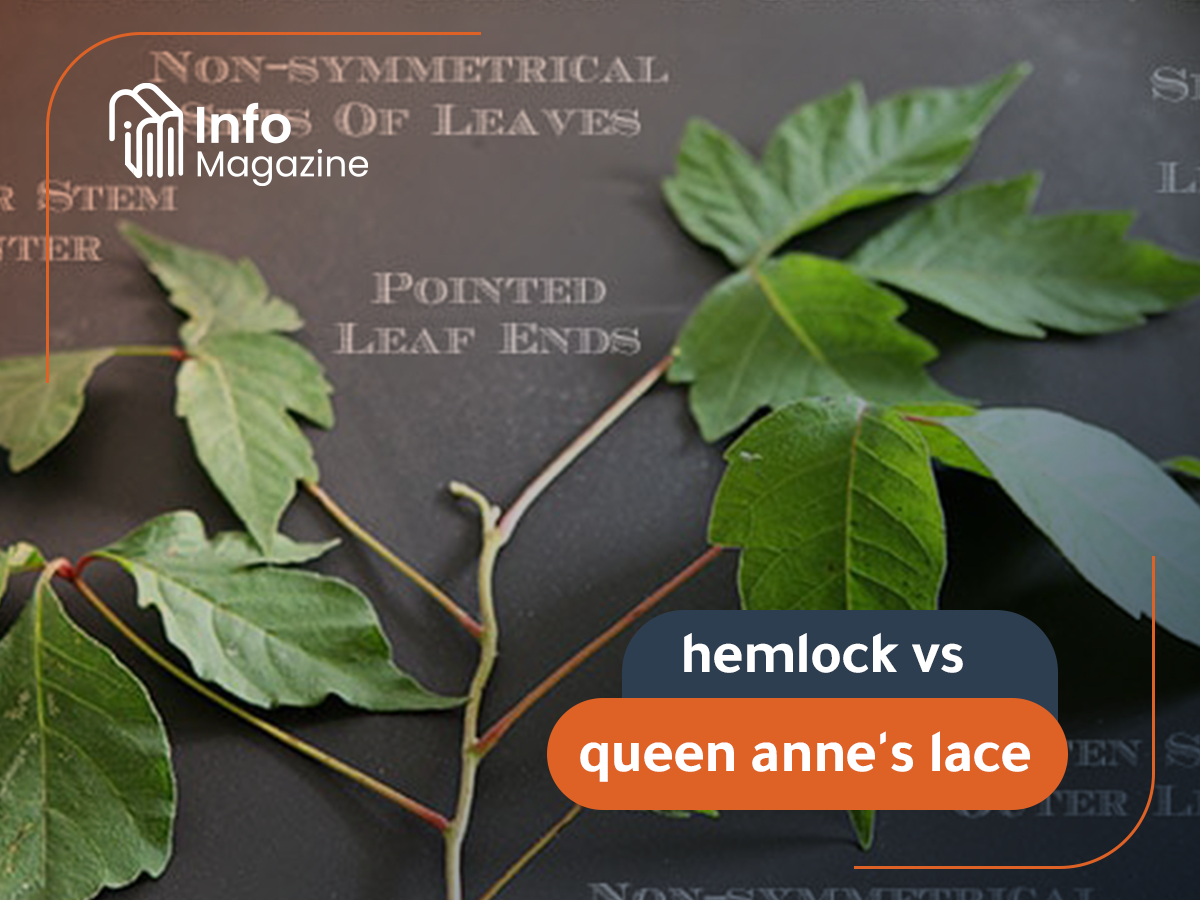
Understanding the critical differences in the hemlock vs queen anne’s lace identification is not merely a botanical curiosity but a vital skill for foragers, hikers, and gardeners alike, Mistaking the highly toxic poison hemlock for its edible cousin, the wild carrot, can lead to devastating consequences, making accurate visual confirmation your most important tool in the field,
This article will first establish the key visual distinctions between these two dangerous look-alikes, then provide you with a practical identification checklist, and finally share expert tips for foraging safely in the wild.
What Is Poison Hemlock?
Poison hemlock (Conium maculatum) is a highly toxic biennial plant from the Apiaceae family, responsible for fatal poisonings throughout history.
Identifying poison hemlock correctly is crucial because it can be easily mistaken for edible plants, Look for smooth, hairless stems covered in purple spots, The leaves are finely divided, fern-like, and emit a musty, unpleasant odor when crushed, This toxic plant often grows in moist, disturbed areas like roadsides and ditches, Understanding the difference between hemlock and queen anne’s lace starts with knowing the dangers of hemlock first.
What Is Queen Anne’s Lace?
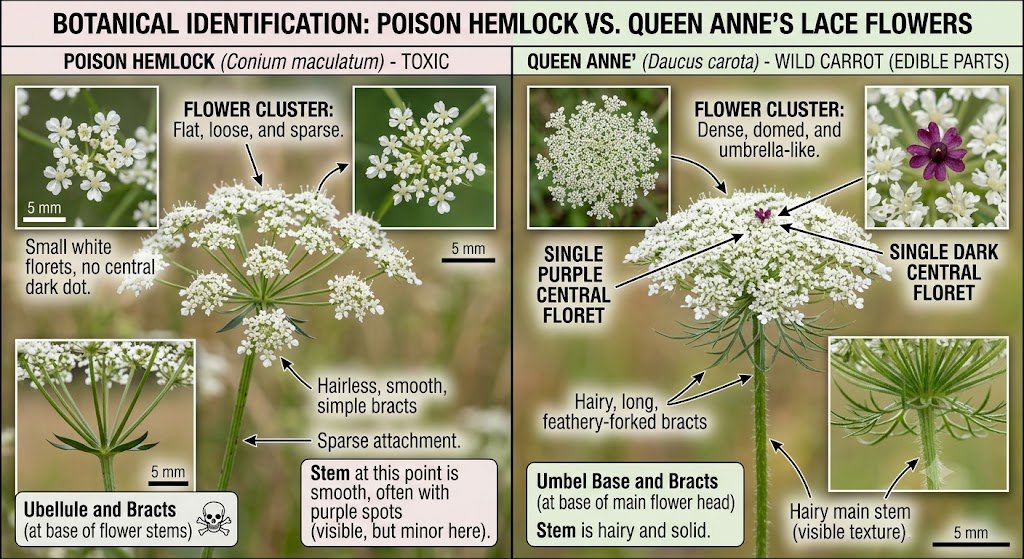
Queen Anne’s lace (Daucus carota) is a common wildflower and the ancestor of the cultivated carrot, known for its delicate white flower umbels.
Queen Anne’s lace is also called wild carrot and is generally safe for consumption in its first year (the root), Its stems are green, solid, and finely hairy, never with purple spots, The most telling feature for queen anne’s lace identification is the tiny dark purple floret at the center of the flower cluster, along with the hairy, bird’s nest-like bracts under the umbel, This plant prefers sunny fields and dry soils, often blooming from June through August.
Why These Plants Are Commonly Confused
Both plants belong to the same botanical family (Apiaceae) and produce large, umbrella-shaped clusters of small white flowers, making them classic hemlock look alike species.
- Similar Flower Structure: Both bloom in flat-topped or slightly domed umbels at the top of tall stems, with numerous tiny white flowers radiating from a central stalk.
- Shared Season and Habitat: They overlap in blooming time (late spring through summer) and often grow in similar disturbed areas, though hemlock favors wetter spots.
- Fern-Like Leaves: Both have finely divided, feathery leaves that look quite similar at first glance, especially to a novice forager.
- Height Overlap: While Queen Anne’s lace is usually shorter (1-3 feet), poison hemlock can tower up to 10 feet, yet young specimens are similar in stature to mature wild carrot.
Because of these similarities, many people rely on a single trait like the flower shape, However, the safest approach involves examining multiple features, When you search for hemlock or queen anne’s lace, always prioritize stem and bract characteristics over flower color alone.
Key Differences in Flowers, Stems, and Leaves
Distinguishing these two plants requires careful inspection of their stems, leaves, and flowers, Below is a clear data table for quick reference.
| Feature | Poison Hemlock | Queen Anne’s Lace (Wild Carrot) |
|---|---|---|
| Stem | Smooth, hairless, with prominent purple or reddish spots and streaks. | Green, solid, finely hairy, with no purple discoloration, Often ridged. |
| Leaves | Dark green, thick, fern-like, with a distinct, musty, mousy odor when crushed. | Bright green, thin, delicate, with a carrot-like scent when crushed. |
| Flowers | Flat-topped, loose umbels (often with 3-5 small, linear bracts at base, no purple center). | Dense, domed umbels with a distinct, dark purple floret in the center (occasionally absent), Bracts are feathery, divided, and hairy. |
| Height | Can grow 4-10 feet tall (mature). | Typically 1-3 feet tall (rarely 4 feet). |
How to Identify Poison Hemlock Safely
Always use multiple, clear visual clues—never rely on a single feature—and prioritize stem characteristics for definitive poison hemlock identification.
Question: How can I tell them apart quickly without touching?
Answer: Look at the stem from a few feet away, If it has any purple or red spots and appears hairless, it is likely poison hemlock, If the stem is uniformly green and fuzzy with fine hairs, it is Queen Anne’s lace, Also, check for a single dark purple dot in the center of the flower umbel—this is a hallmark of Queen Anne’s lace.
Foraging for wild plants requires utmost caution, The hemlock comparison is not complete without emphasizing that no part of poison hemlock is safe, Even a single leaf can be lethal, When in doubt, leave the plant alone, Share photos with local extension offices or master naturalists to get an expert opinion.
How to Identify Queen Anne’s Lace
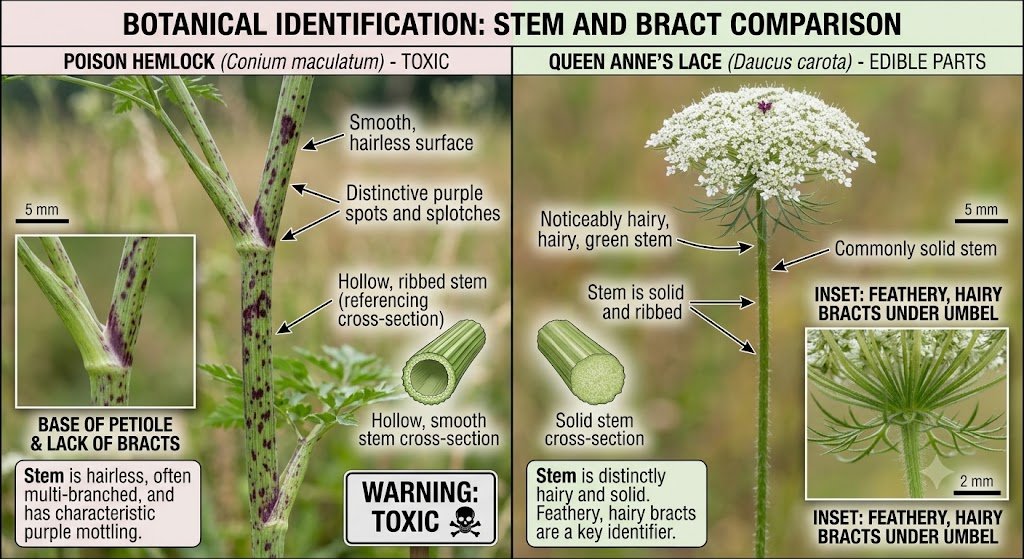
Queen Anne’s lace has distinct, reliable traits that separate it from its toxic look-alike, Focus on stems, bracts, and scent for safe queen anne’s lace identification.
- Check the Stem: Gently inspect the stem a few inches above the ground, It should be green, solid, and covered in fine, downy hairs, There will be no purple spots or streaks whatsoever.
- Examine the Bracts: Below the main flower umbel, look for a whorl of feathery, divided, hairy bracts that curl upward like a bird’s nest, This is a signature clue for queen anne’s lace flowers.
- Look for the Dark Center: In most (but not all) flower heads, you’ll find a single tiny, dark purple or maroon floret at the very center of the white cluster, This is a classic marker for the wild carrot.
- Smell the Leaf: Crush a leaf gently between your fingers (if you are confident the stem is hairy and green), It should smell distinctly like a garden carrot, not like a musty or mousy odor.
Dangers of Mistaking Hemlock for Queen Anne’s Lace
The consequences of confusing poison hemlock with Queen Anne’s lace can be severe and swift, Even a small mistake when foraging leads to life-threatening poisoning.
When people search for wild carrot vs poison hemlock, they often underestimate the speed of toxicity, The alkaloids in hemlock (coniine and gamma-coniceine) act as neurotoxins, blocking nerve signals to muscles, Early symptoms include nervousness, tremors, salivation, and dilated pupils, As poisoning progresses, the victim experiences muscular weakness, slowed heart rate, and eventual respiratory collapse, Even handling the plant with bare skin can cause dermatitis in sensitive individuals, The greatest risk occurs when the root of poison hemlock is mistaken for a wild carrot or parsnip, because the root looks deceptively similar, Always rely on the stem and bract clues first, not the root shape or flower color alone, The difference between hemlock and queen anne’s lace is truly a matter of life and death.
What to Do If You Touch or Ingest Poison Hemlock
Immediate action can save a life if exposure occurs, Poison hemlock is fast-acting, so do not wait for symptoms to appear.
If you have touched the plant: wash the area immediately with soap and cool water for at least 10 minutes, Remove any contaminated clothing and place it in a sealed plastic bag, If you have ingested any part: call your local poison control center (1-800-222-1222 in the US) or go to the nearest emergency room without delay, Do not induce vomiting unless instructed by a medical professional, If possible, take a clear photo of the plant for identification—but do not risk any further contact, Bring a sample of the plant (sealed in a bag) to the hospital if you can do so safely, Even if you feel fine initially, symptoms can develop quickly, Never underestimate the danger, This article about hemlock vs queen anne’s lace is a preventative guide, but if you suspect poisoning, seek medical help immediately.
Frequently Asked Questions About Hemlock vs Queen Anne’s Lace
Here are the most common questions from readers about these confusing look-alikes.
Answer: Queen Anne’s lace itself is not toxic, but it can sometimes hybridize with other toxic Apiaceae species in the wild, Always confirm stem hairiness and bract structure before consuming any part of a wild carrot, Even Queen Anne’s lace can cause mild skin irritation in some people due to photosensitizing compounds (furanocoumarins), but it is not life-threatening.
Answer: Besides Queen Anne’s lace, other common hemlock look alikes include cow parsley (Anthriscus sylvestris), wild chervil (Anthriscus caucalis), and even young fennel plants (Foeniculum vulgare), Cow parsley has finely hairy stems but lacks the purple center floret; fennel smells strongly of licorice, Always cross-reference multiple features.
Answer: Yes, the poison hemlock plant (Conium maculatum) is the same species used to execute the Greek philosopher Socrates in 399 BCE, It remains one of the most infamous poisons in human history due to its potent alkaloids and rapid action, The hemlock comparison to Queen Anne’s lace is critical for modern foragers who may unknowingly repeat ancient tragedies.
Understanding the critical differences in hemlock vs queen anne’s lace is absolutely paramount for anyone who forages or spends time outdoors and might encounter these dangerous look-alikes, Mastering the identification of hemlock vs queen anne’s lace requires careful examination of the stem texture, leaf shape, and floral characteristics to avoid a potentially fatal mistake,
This definitive guide has equipped you with the necessary visual and botanical clues to confidently distinguish between the deadly poison hemlock and its harmless but deceptive twin in the wild, Remember always that when any doubt remains about the identity of a plant, the safest approach is to leave it completely untouched and never consume an unknown specimen, By applying the knowledge contained within this guide you can enjoy foraging with much greater safety and awareness of the plants that surround you each day.