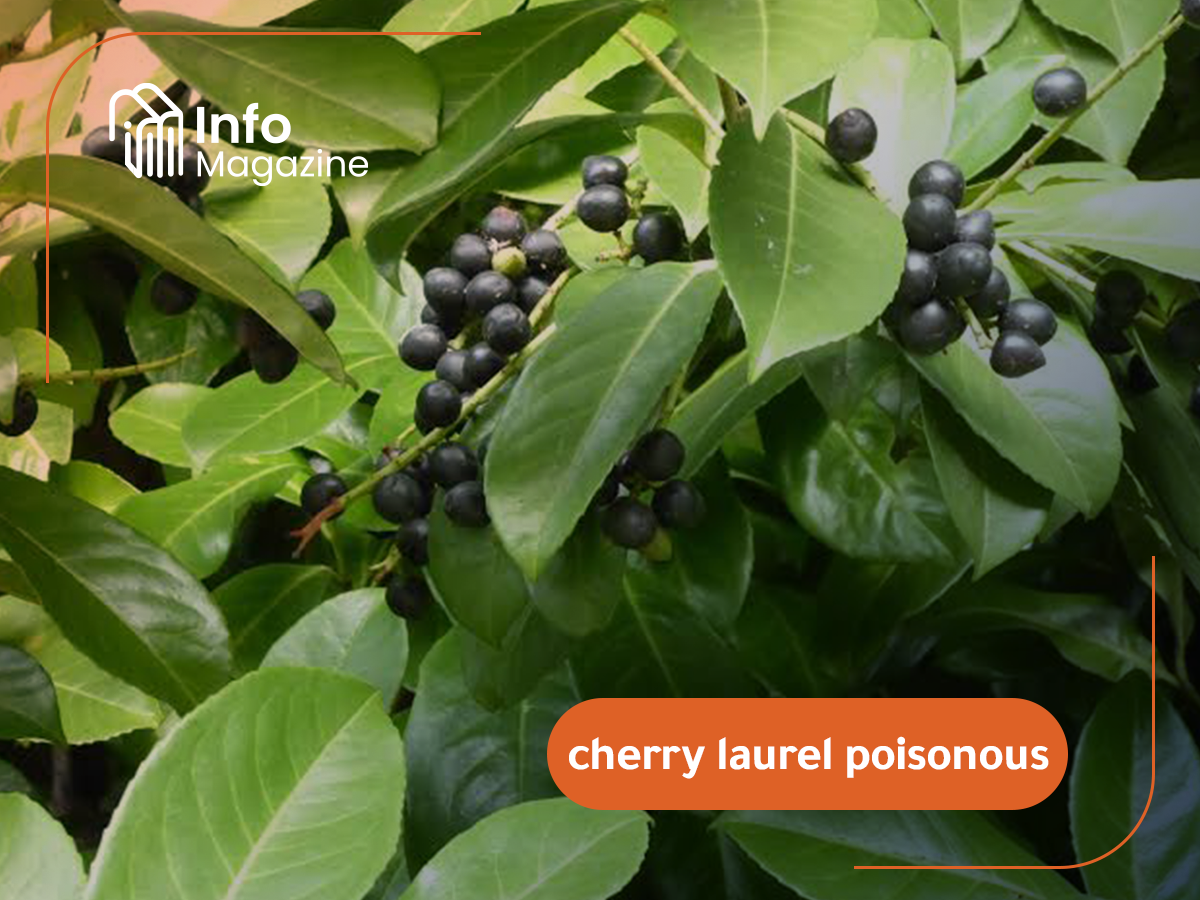
Understanding that cherry laurel poisonous compounds can pose serious health risks is the first step toward ensuring the safety of your family, pets, and livestock, Many gardeners admire this popular evergreen shrub for its dense foliage and fast growth, yet they remain unaware of the dangerous cyanogenic glycosides hidden within its leaves, stems, and seeds,
Accidental ingestion, even in small amounts, can lead to severe symptoms such as difficulty breathing, seizures, or cardiac arrest, requiring immediate emergency medical intervention, In this comprehensive guide, we will explore the specific toxic components, detailed symptom profiles, essential first aid protocols, and critical prevention strategies to help you manage cherry laurel exposure responsibly.
Is Cherry Laurel Poisonous?
Yes, cherry laurel (Prunus laurocerasus) is highly toxic to humans, pets, and livestock.
Even small amounts of ingested leaves, stems, or crushed seeds can trigger serious symptoms, The primary danger lies in the rapid release of cyanide during metabolism, which can lead to respiratory failure within minutes to hours, If you suspect cherry laurel poisoning, contact emergency services immediately.
What Makes Cherry Laurel Toxic?
The toxicity comes from cyanogenic glycosides, primarily prunasin and amygdalin, which convert into hydrogen cyanide.
- Enzymatic reaction: When plant cells are damaged (chewing, crushing), an enzyme called beta-glucosidase breaks down the glycosides.
- Hydrogen cyanide release: This reaction produces hydrogen cyanide (HCN), a potent poison that blocks cellular oxygen use.
- Rapid onset: Symptoms can appear within 15–30 minutes after ingestion, depending on the amount consumed.
- Accumulation risk: Even repeated small exposures can cumulatively cause toxicity in pets or grazing animals.
Which Parts of Cherry Laurel Are Poisonous?
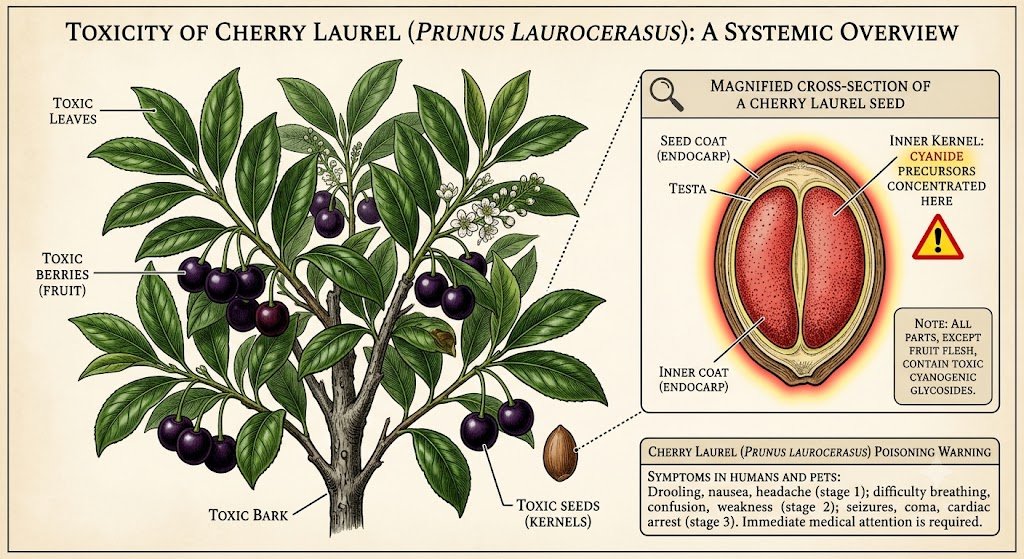
All parts—leaves, stems, bark, flowers, and seeds—contain dangerous levels of cyanogenic compounds.
Cherry laurel berries are particularly dangerous because they resemble small cherries and are attractive to children and pets, The seeds inside the berries contain the highest concentration of cyanogenic glycosides, Even dried plant material retains toxicity—wilted leaves from pruning can still poison animals if eaten, The woody stems and bark also contain the toxins, though they are less likely to be consumed.
Is Cherry Laurel Dangerous to Humans?
Yes, cherry laurel is dangerous to humans, especially children who might eat berries or leaves.
Question: What are the first signs of cherry laurel poisoning in humans?
Answer: Early symptoms include headache, dizziness, confusion, drooling, difficulty breathing, and a bitter almond smell on the breath, Severe cases lead to seizures, coma, and cardiac arrest.
If someone ingests any part of the plant, do not induce vomiting—call poison control immediately (in the US: 1-800-222-1222), Cherry laurel toxicity is a medical emergency requiring immediate hospital treatment with cyanide antidotes.
Is Cherry Laurel Toxic to Dogs and Cats?
Yes, cherry laurel is toxic to dogs and cats, causing rapid and often severe poisoning symptoms.
| Symptom | Dogs | Cats | Onset |
|---|---|---|---|
| Drooling / Vomiting | Very common | Common | 15–30 minutes |
| Panting / Rapid breathing | Common | Common | 30–90 minutes |
| Lethargy / Weakness | Frequent | Frequent | 1–2 hours |
| Seizures / Collapse | Moderate | Less common | 2–4 hours |
If you suspect cherry laurel toxic to dogs or cats, do not wait for symptoms to worsen—rush them to a veterinarian immediately, Cherry laurel poisoning in pets progresses faster than in humans, The vet may induce vomiting, administer activated charcoal, and provide oxygen therapy, Always keep emergency vet numbers handy if cherry laurel grows in your yard.
Symptoms of Cherry Laurel Poisoning
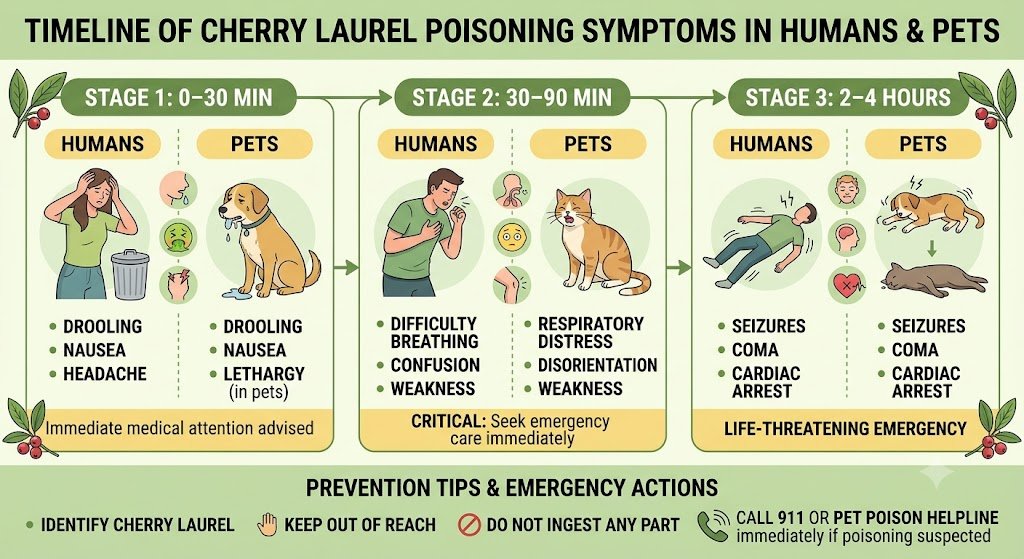
Symptoms depend on the amount ingested and the person or animal’s size, but onset is typically rapid.
Question: What are the earliest signs of cherry laurel poisoning symptoms to watch for?
Answer: In all species, the earliest signs include excessive drooling, nausea, vomiting, and a noticeable bitter almond odor on the breath, This is followed by rapid breathing, muscle twitching, and weakness.
- First 15 minutes: Drooling, lip smacking (pets), tingling mouth (humans), and a metallic taste.
- 15–60 minutes: Vomiting, panting, headache, dizziness, and a feeling of chest tightness.
- 1–3 hours: Lethargy, difficulty walking, confusion, dilated pupils, and difficulty breathing.
- Beyond 3 hours: Seizures, loss of consciousness, and respiratory or cardiac arrest without treatment.
The severity of cherry laurel plant toxicity depends on body weight and the amount of plant material consumed, Even small amounts in children or small pets can be life-threatening.
What Happens If You Eat Cherry Laurel Berries or Leaves?
Ingesting any part triggers a rapid biochemical chain reaction that starves the body’s cells of oxygen.
Question: Are cherry laurel berries poisonous even if swallowed whole?
Answer: Yes, While intact seeds pass through the digestive system more slowly, chewing or crushing them releases cyanide, Cooking does not fully destroy the toxins—it reduces them but does not eliminate the danger.
When leaves or berries are chewed, the enzyme beta-glucosidase converts the glycosides into hydrogen cyanide, This poison binds to the enzyme cytochrome c oxidase in the mitochondria, blocking cellular respiration, Within minutes, cells cannot use oxygen, leading to tissue hypoxia, The brain and heart are most affected, Symptoms escalate dramatically: from minor irritation to coma in under two hours if a significant dose is consumed.
How Cherry Laurel Poisoning Is Treated
Treatment is time-critical and focuses on removing the toxin, supporting breathing, and administering antidotes.
| Treatment Step | For Humans | For Pets |
|---|---|---|
| 1, Initial decontamination | Remove plant material from mouth, Do NOT induce vomiting unless advised, Give activated charcoal if within 1 hour. | Vet may induce vomiting (within 30 minutes), Activated charcoal is commonly used. |
| 2, Supportive care | Oxygen therapy, intravenous fluids, and monitoring of heart rate and oxygen saturation. | Oxygen cage or mask, IV fluids, and seizure control (diazepam). |
| 3, Antidote administration | Hydroxocobalamin (Cyanokit) is the standard antidote, Sodium thiosulfate may also be given. | Sodium nitrite and sodium thiosulfate are used, Hydroxocobalamin is increasingly used. |
| 4, Monitoring | 24-hour hospital observation for delayed symptoms, Blood cyanide levels are checked. | Hospitalization for at least 24 hours, Blood gas and lactate levels monitored. |
The antidotes work by binding to cyanide, forming harmless compounds that are excreted in urine, With prompt treatment, most patients recover fully, However, delayed therapy can lead to permanent neurological damage or death, Cherry laurel poisoning is considered a medical emergency.
Frequently Asked Questions About Cherry Laurel Toxicity
These answers address the most common concerns about this dangerous shrub.
Question: Can cherry laurel cause skin rashes or irritation?
Answer: Yes, some people develop contact dermatitis after handling the sap, Wear gloves when pruning, Skin contact does not cause systemic poisoning, but wash thoroughly if sap gets on skin.
Question: Is cherry laurel poisonous to horses or livestock?
Answer: Absolutely, Horses, cattle, sheep, and goats are highly susceptible, Grazing animals can be poisoned by dried leaves or bark, Fence off areas where cherry laurel grows, Prunus laurocerasus toxicity in livestock is often fatal within hours.
Question: What should I do if my pet eats cherry laurel while I’m away?
Answer: If you find evidence (chewed leaves, berries, or vomit) but no symptoms yet, call your vet immediately, Do not wait for signs of illness, Bring a sample of the plant for identification, Cherry laurel toxic to dogs and cats can progress very rapidly.
Question: Can I compost cherry laurel trimmings?
Answer: No, The cyanogenic glycosides persist in dead plant material and can release cyanide gas as they decompose, Place trimmings in sealed bags for green waste disposal, Do not burn trimmings, as the smoke can carry toxins.
Question: Are there any safe alternatives to cherry laurel for my garden?
Answer: Yes, For privacy hedges, consider non-toxic evergreens like privet (non-toxic to humans, but check pet safety), photinia, or mock orange, For ornamental value, use camellias or rhododendrons, Always verify if a plant is safe before planting, especially if you have children or pets.
Understanding the true dangers of cherry laurel poisonous plants is absolutely essential for anyone who owns a home or cares for pets, as the entire shrub contains cyanogenic glycosides that release hydrogen cyanide when chewed or digested.
Every single part of this ornamental plant, including the leaves, stems, bark, and especially the wilting foliage, poses a severe risk to dogs, cats, horses, and small children who might accidentally ingest even a small amount of the plant material.
Immediate veterinary or medical attention must be sought without delay if any exposure is suspected, because the rapid onset of symptoms such as bright red gums, difficulty breathing, and seizures can quickly become fatal without professional intervention.