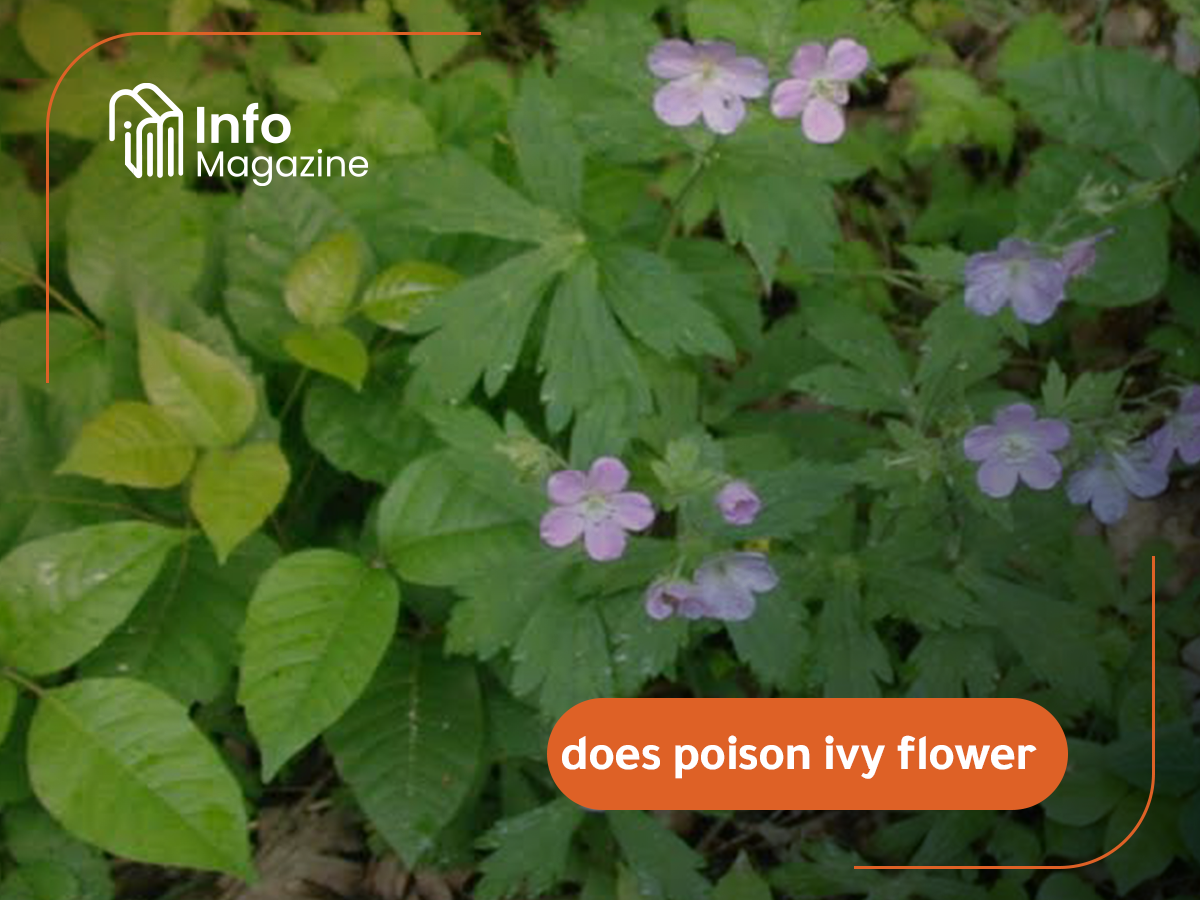
Understanding whether does poison ivy flower is a crucial first step for anyone looking to avoid the painful rash it causes during outdoor adventures, The answer is yes, poison ivy does produce small, inconspicuous flowers that are typically greenish-white or yellowish in color during late spring and early summer,
These blossoms may look harmless, but they play a key role in the plant’s reproduction and overall lifecycle, Recognizing these flowers helps you identify and avoid the plant even before its infamous three-leaf clusters become fully developed.
In this article, we will explore how to identify poison ivy flowers, why they matter for prevention, and effective strategies for avoiding contact in the wild.
Does Poison Ivy Produce Flowers?
Yes, poison ivy does flower, and recognizing this stage is critical for safe identification in the wild.
To understand the bloom, follow this chronological life cycle of poison ivy flowering:
- Bud Break: In early spring, tiny green buds emerge from leaf axils on mature vines.
- Inflorescence Development: Buds grow into loose panicles (branching clusters) that dangle slightly from the stem.
- Full Bloom: Individual five-petaled flowers open, lasting for about two to three weeks.
- Fruit Set: After pollination, the flowers are replaced by greenish-white berries (drupes) that persist through fall.
This cycle confirms that does poison ivy have flowers? Absolutely—and missing this clue is a common mistake among hikers.
What Do Poison Ivy Flowers Look Like?
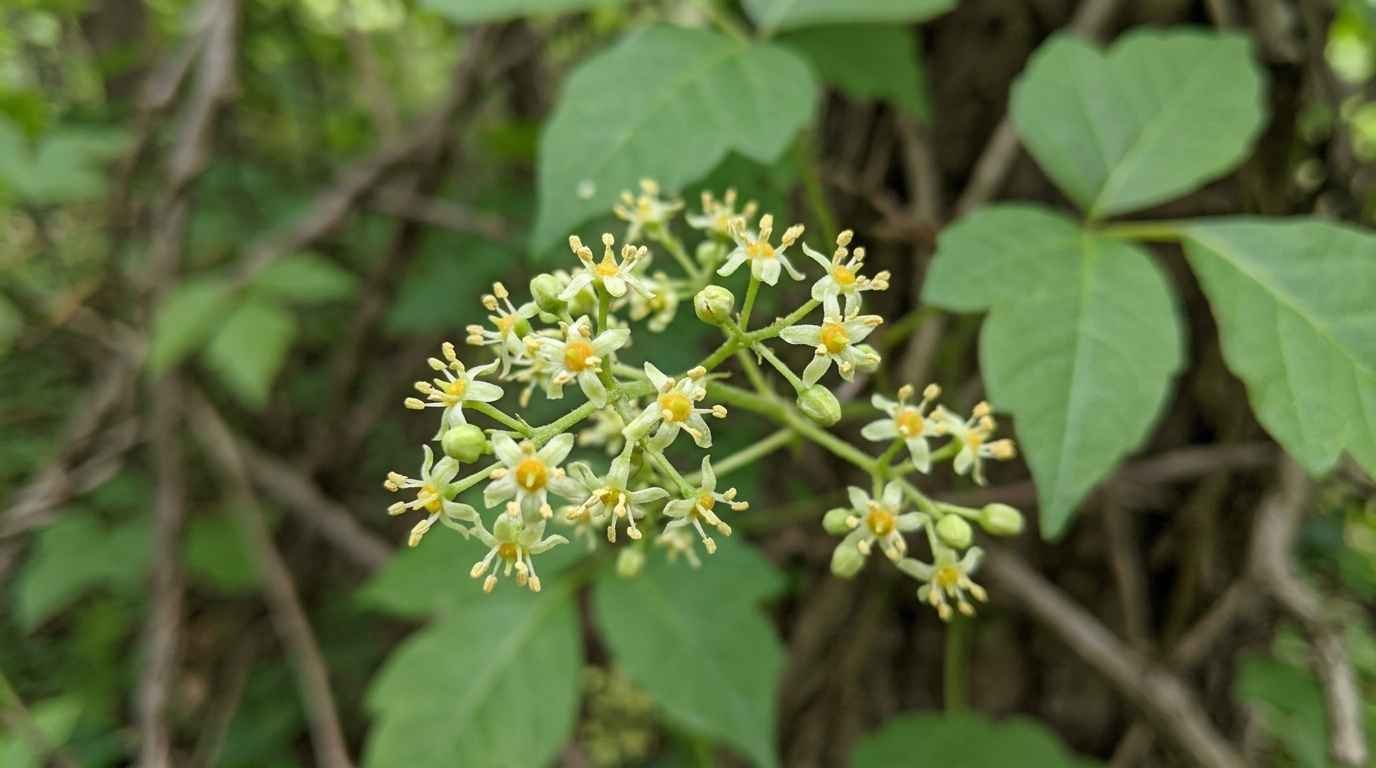
Poison ivy flowers are small, understated, and easy to overlook, but their structure offers definitive clues.
Understanding what do poison ivy flowers look like can save you from misidentifying harmless look-alikes, Here is a clean Q&A to clarify:
Question: How can I distinguish poison ivy flowers from similar wildflowers like wild strawberry or Virginia creeper?
Answer: Look for the combination of five tiny petals (usually 2–4 mm wide) that are greenish-white, arranged in loose clusters on a single stem, Unlike strawberries, which have solitary white flowers, poison ivy blossoms grow in many-flowered panicles, The flowers also lack the strong fragrance of many other woodland blooms.
Remember, the poison ivy blossom is not showy—its subtlety is exactly why hikers miss it and end up with a rash.
When Does Poison Ivy Flower?
Timing is everything: poison ivy typically flowers in late spring to early summer, depending on your region.
A data comparison table helps you match bloom timing to your region:
| Region | Typical Bloom Start | Peak Bloom | Duration |
|---|---|---|---|
| Northeastern US | Mid-May | Late May | 3 weeks |
| Southeastern US | Early April | Late April | 4 weeks |
| Midwest | Late May | Early June | 3 weeks |
| Pacific Northwest | June | Late June | 3–4 weeks |
If you are tracking poison ivy flowering in your local area, note that unseasonably warm springs can push bloom dates earlier by one to two weeks.
How to Identify Poison Ivy in Flower
Spotting poison ivy in bloom requires a systematic approach combining leaf shape, flower structure, and plant habit.
Follow this step-by-step process for poison ivy identification:
- Check the Leaf Arrangement: Confirming ‘leaves of three’ is still your first step, Look for three leaflets with pointed tips and irregular toothed edges.
- Locate the Flowering Stem: Flowers arise from the leaf axil (where leaf meets stem) on a slender stalk, This separates it from ground-covering look-alikes like wild violet.
- Examine Petal Count: Each flower has exactly five petals, Count them if you can—most look-alikes have four or six.
- Note the Color: Blossoms are pale greenish-white, never bright white, pink, or yellow, If it looks too pretty, be suspicious.
- Check the Berry Future: After bloom, look for cluster of small hard green fruits that turn white in late summer.
Mastering these steps ensures you never confuse flowering poison ivy with benign species.
Are Poison Ivy Flowers Harmful?
No, the flowers themselves do not contain urushiol oil, so touching them alone will not cause a rash.
However, a critical nuance exists: the flowers are surrounded by stems, leaves, and vines that are loaded with urushiol, Even a gentle breeze can transfer oil from nearby leaves to the blossoms, Does poison ivy flower pose a risk? Indirectly, yes—because you might touch a blossom and inadvertently brush against a leaf, Additionally, pollinators like bees can carry urushiol on their legs from flower to flower, though this is rare.
The real danger is confusion: hikers see the harmless-looking poison ivy flowers and assume the entire plant is safe, only to grab a handful of leaves, Always treat the entire plant—flowers, leaves, stems, and roots—as off-limits, Wear gloves and long sleeves if you must handle any part of it.
In summary, the blossom itself is not toxic, but it is a surefire sign that a highly allergenic plant is nearby.
What Happens After the Flowers Fade?
Once the bloom ends, the plant shifts energy into fruit production, creating a new visual identifier for hikers.
Follow this chronological progression after flowering to stay safe:
- Petals Drop (Week 1-2): The tiny flowers wither, and petals fall within days after pollination.
- Green Berry Formation (Weeks 3-6): Small, hard green drupes appear in tight clusters, still attached to the original panicle stalk.
- Berry Maturation (Late Summer): Berries transition to a waxy, off-white color with a slight berry-like shape, about the size of a pea.
- Seed Dispersal (Fall): Birds eat the berries, spreading seeds—and the cycle begins again with new poison ivy flowering plants next spring.
The fruit phase is equally telling as the poison ivy flowers stage—both are essential clues for poison ivy identification.
Poison Ivy Flowers vs Other Wildflowers
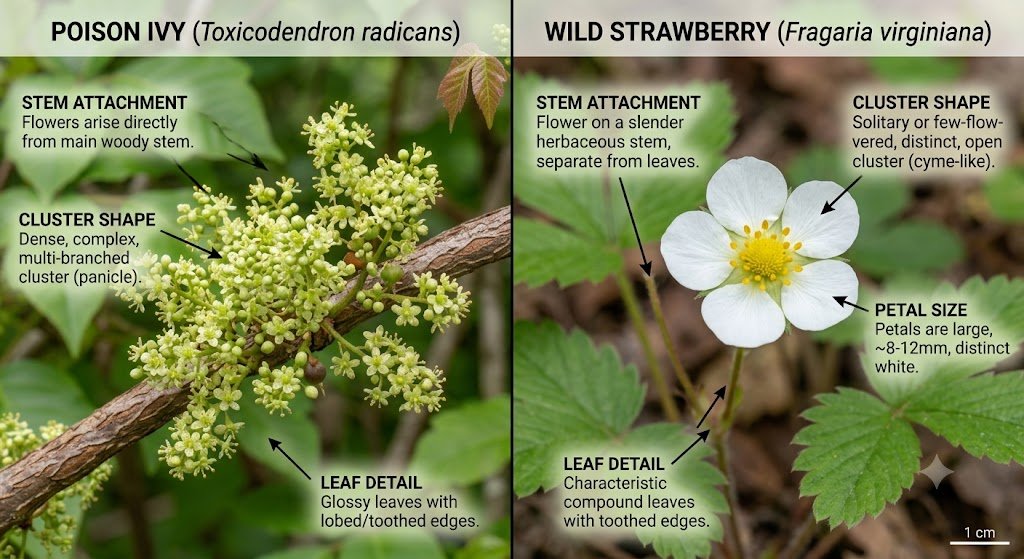
Mistaking the flower for harmless species is a leading cause of accidental contact among outdoor enthusiasts.
Use this comparison table to distinguish what do poison ivy flowers look like versus look-alikes:
| Plant Species | Flower Color | Petal Count | Leaf Arrangement |
|---|---|---|---|
| Poison Ivy | Greenish-white | 5 (tiny) | Leaves of three |
| Wild Strawberry | White | 5 (larger) | Three rounded leaflets, ground cover |
| Virginia Creeper | Greenish-white | 5 | Five leaflets (palmate) |
| Blackberry | White or pink | 5 (larger cup shape) | Three leaflets, thorny stems |
When hiking, remember: poison ivy plant flowers appear in drooping clusters, not solitary blooms, If you see a single white flower on the ground, it is almost certainly something else, Asking does poison ivy have flowers is the first step; knowing what they look like is the survival skill.
How to Avoid Contact With Poison Ivy: Does Poison Ivy Flower
Prevention is simpler than treatment—learn to avoid the plant in every season, especially during bloom.
Use this simple numbered action plan to stay rash-free:
- Learn the Look: Memorize the ‘leaves of three’ rule AND the flowering poison ivy bloom appearance described above.
- Scan Ahead: When walking, sweep your gaze from the ground up to eye level, The bloom makes the plant stand out against green foliage.
- Wear Barriers: Apply an ivy block cream (bentoquatam) to exposed skin before hiking, especially during peak poison ivy flowering months.
- Stay on Trail: Poison ivy often grows at trail edges, but venturing into thick underbrush increases your chances of brushing against a hidden poison ivy blossom.
- Clean Gear: Wash boots, hiking poles, and clothing with soap and water after a hike, Urushiol oil from broken stems near the flower can stick to fabric.
By following these steps, you can enjoy the trail without worrying about poison ivy identification mistakes.
Frequently Asked Questions About Poison Ivy Flowers
Here is one common question hikers ask to clarify the bloom of this tricky plant.
Question: Do poison ivy flowers smell? Can I identify the plant by scent?
Answer: No, poison ivy flowers have no noticeable fragrance, Unlike highly aromatic plants like honeysuckle or wild rose, the poison ivy flowers are odorless, However, if you crush a leaf, it may release a faint, slightly resinous smell—but this is from the urushiol-containing foliage, not the bloom itself, Rely on visual ID, not scent, Also, remember that does poison ivy flower is a yes—but its fragrance is a zero.
Understanding the answer to the question does poison ivy flower is a critical skill for any hiker who wants to avoid a painful and itchy encounter on the trail.
Recognizing this plant during its flowering stage, which typically occurs in late spring and early summer, helps you identify it even when its iconic leaves of three are not the most obvious feature, Knowing that the small, yellowish-green blossoms precede the white berries that spread the plant further can significantly reduce your risk of accidental contact, This floral stage is one of the least recognized but most important visual cues for positively identifying poison ivy throughout the growing season,
By mastering the identification of these subtle flowers, you protect yourself and your hiking companions from the severe skin irritation caused by the urushiol oil present in all parts of the plant, Therefore, every outdoor enthusiast should memorize what these blossoms look like to safely navigate areas where poison ivy thrives in fields, forests, and along trail edges.