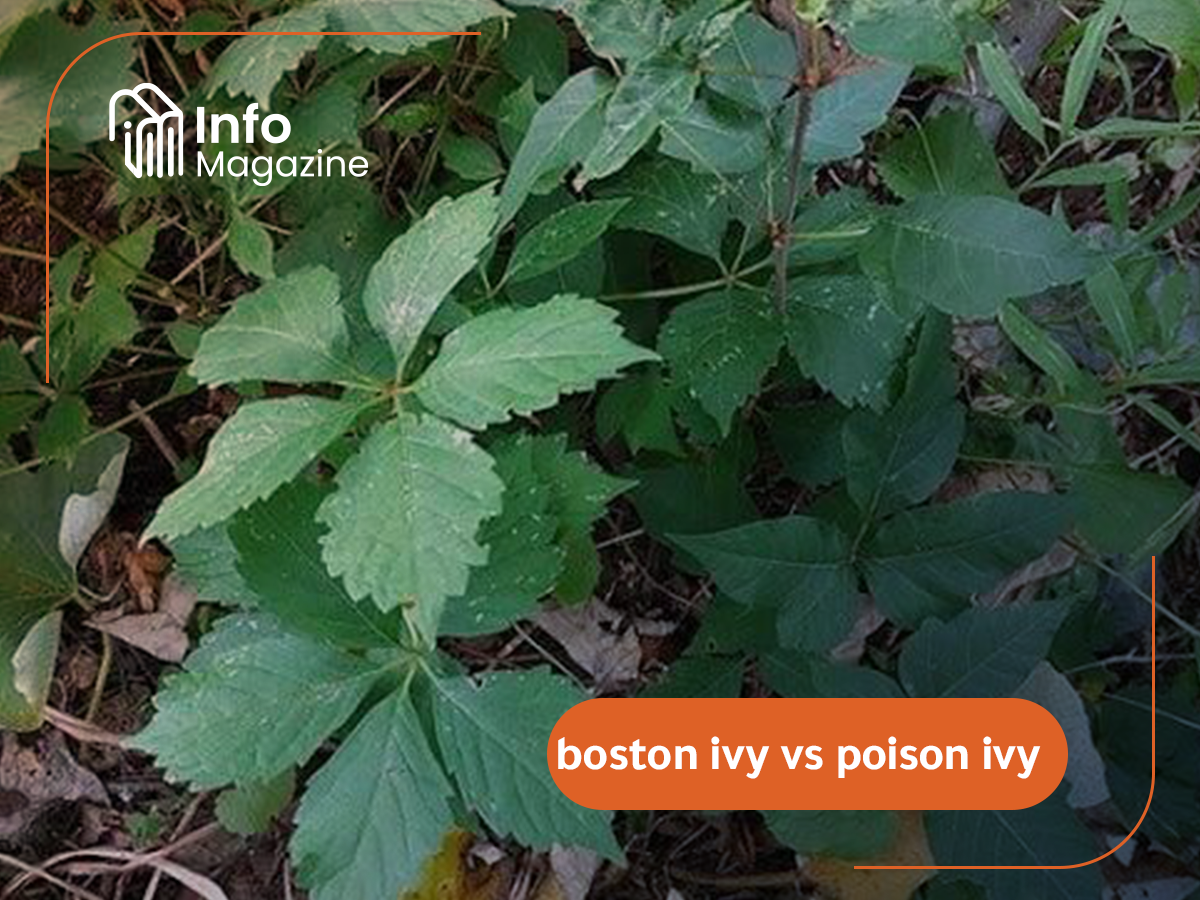
Understanding the critical differences between boston ivy vs poison ivy is essential for anyone who spends time outdoors, as confusing these two plants can lead to an extremely uncomfortable rash.
While boston ivy is a harmless, attractive climbing vine often used for decorative purposes on walls and fences, poison ivy is a notorious irritant that can cause severe skin reactions upon contact.
This article will provide a comprehensive comparison of these two plants, covering their distinct leaf patterns, growth habits, and the most effective identification strategies to ensure your safety.
What Is Boston Ivy?
Boston Ivy is a deciduous climbing vine known for its lush green foliage and striking fall color, It is often used to cover building walls.
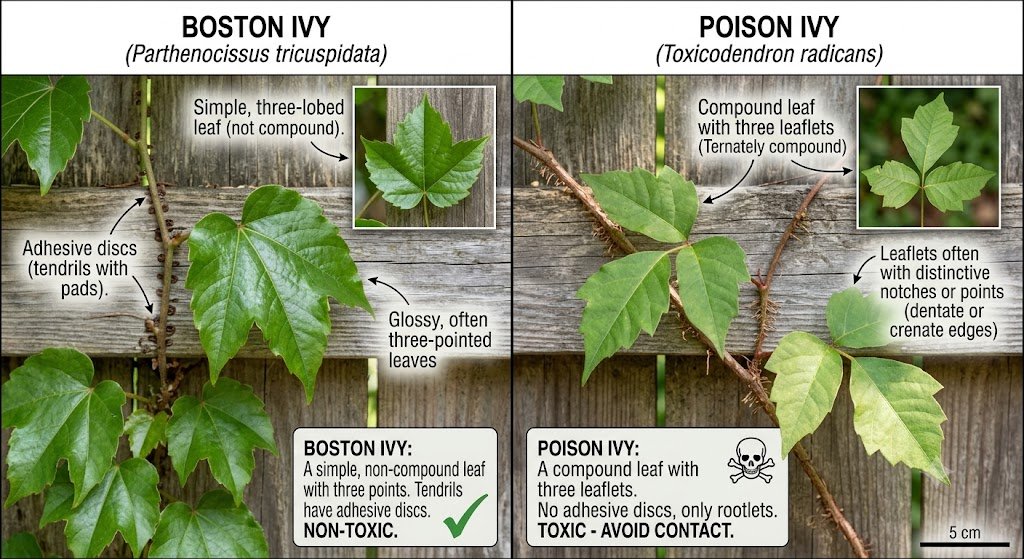
Boston Ivy (Parthenocissus tricuspidata) is native to East Asia and is a popular ornamental plant in many gardens, It clings to surfaces using adhesive pads, making it a great choice for green walls and trellises, Its leaves are typically three-lobed, but can also be simple and unlobed on younger growth, If you are researching the difference between boston ivy and poison ivy, start with the leaf shape — Boston Ivy’s leaves are usually wider and have a more maple-like appearance, This plant does not produce a toxic oil, so it is safe to handle without the risk of a rash.
What Is Poison Ivy?
Poison Ivy is a toxic plant that causes severe allergic skin reactions upon contact, It is found throughout North America and is a common hazard for gardeners.
Poison Ivy (Toxicodendron radicans) is a woody vine that can climb trees, fences, and buildings, Its leaves are compound, each consisting of three pointed leaflets, The middle leaflet has a longer stem than the two side leaflets, This plant is notorious for causing contact dermatitis due to the urushiol oil in its leaves, stems, and roots, When comparing poison ivy vs boston ivy, remember that poison ivy’s leaflets are usually duller in color and may have a reddish tint, The plant’s berries are white and waxy, while Boston Ivy produces dark blue-black berries.
Boston Ivy vs Poison Ivy Leaf Differences
Leaf shape and arrangement are the most reliable ways to tell these two plants apart, Boston Ivy leaves are simple and lobed, while Poison Ivy leaves are compound with three leaflets.
- Leaf Structure: Boston Ivy has simple, three-lobed leaves (sometimes entire), Poison Ivy has compound leaves with three separate leaflets.
- Leaf Shape: Boston Ivy leaves are broad, often resembling a maple leaf, Poison Ivy leaflets are more elongated, pointed, and may have irregular edges or small notches.
- Leaf Color: Boston Ivy’s boston ivy leaves are glossy and turn vibrant red/orange in fall, Poison Ivy’s poison ivy leaves are duller, and the underside is lighter in color.
- Leaf Arrangement on Stem: Boston Ivy leaves alternate along the stem, Poison Ivy leaves also alternate, but the three leaflets are clustered on a single small stalk.
Growth Patterns and Climbing Habits
Both plants climb, but their attachment methods differ significantly, Boston Ivy uses adhesive pads; Poison Ivy uses aerial roots that look like hairy tendrils.
When examining growth patterns for the difference between boston ivy and poison ivy, look at how they cling to surfaces, Boston Ivy attaches via small sucker-like discs at the tips of tendrils, which allows it to cling to brick, stone, and wood without damaging most surfaces, Poison Ivy, on the other hand, sends out hairy aerial roots that burrow into cracks, These roots can damage mortar and bark, In terms of overall habit, Boston Ivy tends to grow in a neat, uniform pattern, while Poison Ivy is more erratic, often sending out long, wandering shoots, Both plants lose their leaves in winter, but poison ivy’s hairy vines remain visible, a key identification trick.
Can Boston Ivy Cause Skin Irritation?
Boston Ivy is generally considered non-toxic and does not cause skin rashes in most people, It lacks the urushiol oil found in Poison Ivy.
– Question: Is it possible to get a rash from touching Boston Ivy?
– Answer: For the vast majority of people, touching Boston Ivy leaves or stems will not cause any irritation, However, a small number of individuals with extreme plant sensitivities may experience mild, temporary itching or redness due to physical texture or plant dust, This is not an allergic reaction to urushiol, The term is boston ivy poisonous is a common misconception, Unlike poison ivy, Boston Ivy is safe to handle, If you do get a rash after touching Boston Ivy, it is far more likely that you accidentally touched poison ivy growing nearby, Other poison ivy look alike plants can confuse gardeners, but Boston Ivy is the most common safe twin, If you experience unexplained boston ivy skin irritation, always check for hidden poison ivy vines intertwined.
How to Identify Poison Ivy Safely
Identifying poison ivy without touching it requires careful observation from a distance, Safety is your top priority in the garden.
- Memorize the Motto: ‘Leaves of three, let it be.’ Always check for three leaflets on a single stem.
- Examine the Leaf Shape: Poison ivy leaves are pointed with irregular edges, The middle leaflet is on a longer stalk than the two side leaflets.
- Look at the Vine: Mature poison ivy vines have a hairy, rope-like appearance with tiny rootlets, This is a classic poison ivy look alike giveaway when compared to smooth Boston Ivy stems.
- Check the Berries: Poison ivy berries are small, white, and waxy, Boston ivy berries are dark blue-black, If you see white berries, stay away.
- Use Binoculars: Don’t get close, Scan tree trunks and fence lines from a safe distance before entering an area.
Common Misidentification Problems
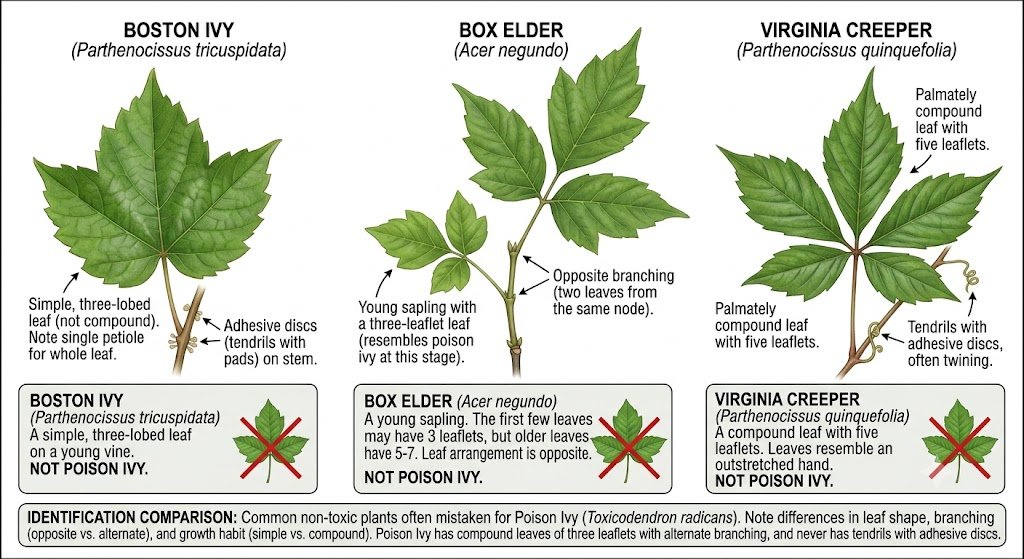
Gardeners often confuse several harmless plants with poison ivy, leading to unnecessary worry, Knowing the real difference saves time and keeps you safe.
The most common confusion is between Virginia Creeper (five leaflets) and poison ivy, but beginners also mistake Box Elder seedlings, fragrant sumac, and even raspberry canes, The key difference between boston ivy and poison ivy usually comes down to leaf count and texture, Boston Ivy has simple, three-lobed leaves that are glossy, while poison ivy has three separate, dull leaflets, Another frequent issue is misidentifying Boston Ivy as poison ivy in spring when the leaves are still small, Always wait until the leaves are fully developed before making a final ID, If you are still unsure, take a clear photo from a safe distance and use a plant identification app or consult a local extension service, Avoid touching any unknown vine until you are 100% sure it is harmless.
How to Remove Ivy Plants Safely
Removing either ivy type requires caution, but the methods and risks differ greatly, Always prioritize personal protection.
| Plant Type | Protective Gear Needed | Removal Method | Disposal |
|---|---|---|---|
| Boston Ivy (safe) | Gardening gloves, long sleeves | Pull by hand; use pruners for thick stems | Compost bin or green waste |
| Poison Ivy (dangerous) | Heavy-duty gloves, long pants, goggles, respirator | Cut stem and apply herbicide; never burn | Seal in heavy plastic bags; send to landfill |
Frequently Asked Questions About Boston Ivy vs Poison Ivy
Here are the most common questions gardeners ask about these two vines, Clear answers can prevent costly mistakes.
– Question: Can Boston Ivy cause a rash like poison ivy?
– Answer: No, Boston Ivy lacks urushiol oil, The term is boston ivy poisonous is a myth, Most people can touch it safely, If you get a rash, you likely touched poison ivy nearby.
– Question: How can I tell poison ivy vs boston ivy in winter?
– Answer: Look at the vines, Poison ivy vines are hairy and thick; Boston Ivy vines are smooth with small circular sucker pads, Also, poison ivy retains its white berries longer into winter.
– Question: Are there other poison ivy look alike plants I should worry about?
– Answer: Yes, Box elder and Virginia creeper are often mistaken for poison ivy, The safest rule: if the plant has three leaflets and grows on a hairy vine, avoid it.
– Question: Does boston ivy skin irritation ever happen?
– Answer: Extremely rare, Some people with highly sensitive skin may feel mild itching from the leaf texture or dust, but it is not an allergic reaction, Wash the area with soap and water to be safe.
Understanding the critical differences in this boston ivy vs poison ivy comparison is essential for every gardener who wants to maintain a safe and beautiful outdoor space without accidentally brushing against a harmful plant, A clear recognition of the leaf arrangements, specifically that Boston ivy displays alternate leaves while poison ivy always shows a compound grouping of three leaflets, can literally prevent a painful and itchy rash, By applying this knowledge to your garden identification practices, you empower yourself to remove the dangerous impostor while cultivating the desirable vine for its stunning autumn color.
The most reliable safety strategy involves memorizing the simple saying leaflets three, let it be for poison ivy, while confirming your Boston ivy by its tendrils with adhesive disks that cling to brick walls rather than aerial roots, Taking the time to practice this distinction through careful observation of the leaf shape, berry color differences between blue-black and white, and growth habits in your local environment will build your confidence as a plant identifier, Remember that poison ivy can appear as a climbing vine, a ground cover, or even a low shrub depending on its conditions, adding another layer of complexity to an already challenging identification.
Always wear protective gloves and long sleeves when clearing any unknown vegetation, and consider taking a photograph of the plant for later verification against a reputable botanical guide if you are uncertain about its identity, The final lesson from this boston ivy vs poison ivy discussion is that prevention and education are far better than treatment after exposure to urushiol oil, Share this crucial knowledge with your family and fellow gardeners because a community that can spot the difference is a community that can enjoy lush greenery without the fear of skin irritation.