The allure of poison purple flowers can be dangerously deceptive, as their vibrant petals often conceal potent toxins that pose serious risks to humans and pets alike. Gardeners and hikers frequently underestimate how these stunning blooms, such as monkshood and deadly nightshade, cause severe reactions ranging from skin irritation to fatal cardiac arrest upon ingestion or contact. To address your safety concerns,
this article will identify the most common toxic species, explain their chemical dangers, and provide essential guidelines for safe recognition and prevention in gardens and natural landscapes.
What Are Poisonous Purple Flowers?
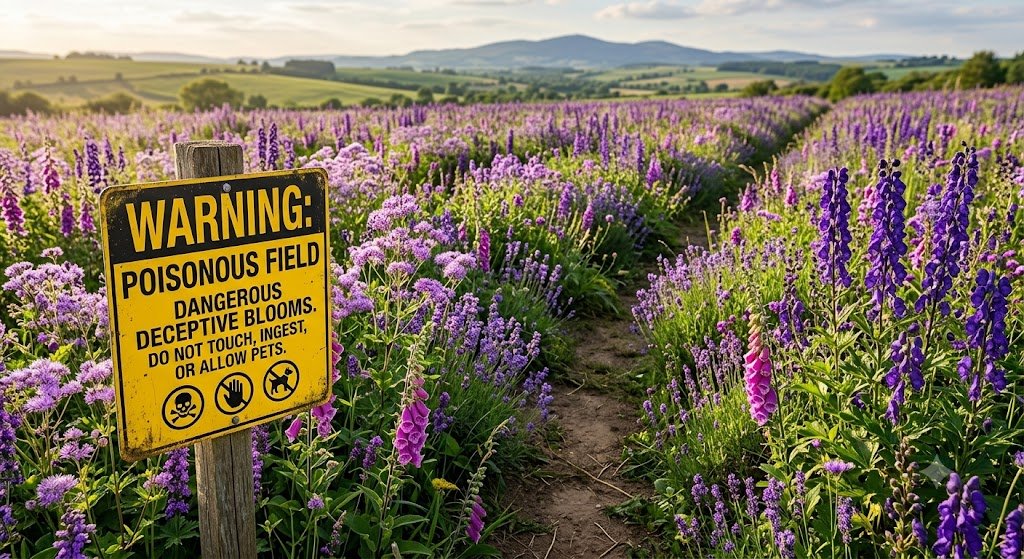
A poisonous purple flower is any purple-blooming plant that contains toxic compounds harmful to humans or animals. These beauties often hide potent alkaloids or glycosides behind their vivid petals.
Why Some Purple Flowers Are Toxic
Toxicity in purple flowers evolved as a defense mechanism against herbivores. Chemical compounds like aconitine, colchicine, and solanine disrupt vital biological processes in predators.
The Most Common Poisonous Purple Flowers
Several toxic purple flower species are widely found in gardens and wild areas across temperate regions. Their allure often leads to accidental exposure.
- Monkshood (Aconitum) – Contains aconitine, a potent neurotoxin. All parts are deadly if ingested.
- Deadly Nightshade (Atropa belladonna) – Purple bell-shaped flowers produce toxic berries. Tropane alkaloids cause severe poisoning.
- Foxglove (Digitalis purpurea) – Tall spikes of purple blooms contain cardiac glycosides affecting the heart.
- Autumn Crocus (Colchicum autumnale) – Purple crocus-like flowers contain colchicine, damaging cellular division.
Monkshood and Other Dangerous Purple Flowers
Monkshood stands out as one of the most dangerous purple flowers, but others pose similar risks. Their toxicity profiles vary widely.
| Plant Name | Toxin | Affected System | Lethal Dose (approx.) |
|---|---|---|---|
| Monkshood | Aconitine | Nervous system, heart | 3–5 mg |
| Deadly Nightshade | Atropine, scopolamine | Parasympathetic nervous system | 5–10 berries |
| Foxglove | Digitoxin | Cardiovascular | 0.5–2 grams leaves |
| Autumn Crocus | Colchicine | Digestive, cellular | 0.1–0.6 mg/kg |
Purple Flowers Toxic to Humans
Many toxic purple flowers pose serious risks to humans, especially children and foragers. Identification is critical for safety.
Question: What should I do if someone ingests a poisonous purple flower?
Answer: Immediately call your local poison control center or emergency services. Do not induce vomiting unless instructed. Bring a sample or photo of the plant for identification. Time is critical, especially with deadly purple flowers like monkshood, where symptoms can appear within minutes.
Purple Flowers Dangerous to Dogs and Cats
Many common garden purple flowers pose severe poisoning risks to pets. Dogs and cats are especially vulnerable to toxic purple flowers.
- 1 Deadly Nightshade – Berries attract dogs and cats, causing ataxia, dilated pupils, and seizures. Ingestion of 2–3 berries can be fatal for small pets.
- 2 Foxglove – All parts, especially leaves, contain digitoxin. Dogs develop vomiting, arrhythmias, and collapse within hours.
- 3 Autumn Crocus – Colchicine causes severe gastrointestinal distress, kidney failure, and bone marrow suppression in pets.
- 4 Monkshood – Even a small nibble can trigger drooling, muscle weakness, and fatal respiratory paralysis in dogs and cats.
Symptoms of Poisonous Flower Exposure

Recognizing poisoning signs early can save lives. Symptoms vary by plant, toxin, and amount ingested.
Question: What are the first symptoms of monkshood poisoning?
Answer: Initial signs include a burning sensation in the mouth, numbness of the tongue, drooling, and vomiting. Within minutes, muscle weakness and irregular heartbeat can occur.
Other common exposure signs of these deadly purple flowers include abdominal pain, blurred vision, confusion, skin rash, and difficulty breathing. For pets, watch for lethargy, loss of coordination, excessive drooling, and seizures.
How to Identify Toxic Purple Flowers
Correct identification prevents accidental poisoning from poisonous purple flowers. Always use reliable field guides and multiple visual clues.
| Feature | Toxic Plant Example | Safe Lookalike | Key Difference |
|---|---|---|---|
| Leaf shape | Monkshood (deeply divided, dark green) | Delphinium (similar leaves) | Monkshood flowers have a hooded shape, delphinium has open petals |
| Berry color | Deadly nightshade (shiny black berries in green calyx) | Blueberry (dull, waxy bloom) | Nightshade berries grow singly; blueberries in clusters |
| Stem structure | Foxglove (single tall spike, downy stem) | Comfrey (hairy stem, bell flowers) | Foxglove flowers are purple with white spots inside |
| Root type | Autumn crocus (corm, solid inside) | Wild garlic (bulb, layered) | Autumn crocus has no onion smell; wild garlic smells strongly |
What to Do After Contact With a Poisonous Flower
Immediate, correct action minimizes harm from toxic purple flowers. Stay calm and follow these steps.
- Skin contact: Remove contaminated clothing and rinse skin with lukewarm water for 15 minutes. Avoid scrubbing. Apply calamine lotion if rash develops.
- Eye exposure: Flush eyes with clean, lukewarm water for 20 minutes, holding eyelids open. Seek medical attention immediately.
- Ingestion: Call poison control (1-800-222-1222 in the U.S.). Do not induce vomiting. Save a plant sample or take a photo.
- Pet exposure: Call your vet or an animal poison helpline. Do not give home remedies. Bring the plant to the clinic.
For purple flowers toxic to humans involving children, monitor for drowsiness, drooling, or breathing changes. Do not wait for symptoms to appear before calling for help. Even if the child seems fine, seek guidance from a medical professional.
Frequently Asked Questions About Poisonous Purple Flowers
Common concerns about these toxic beauties are answered below. Always prioritize safety over curiosity.
Can touching a deadly purple flower cause poisoning?
Yes. Some species, like monkshood and autumn crocus, can cause skin irritation, numbness, or systemic poisoning through broken skin. Always wear gloves.
Are all purple flowering plants toxic?
No. Many purple flowers like lavender, violets, and clematis are safe. However, always verify a plant’s identity before handling or ingesting.
How long do poisoning symptoms take to appear?
It depends on the toxin. Foxglove symptoms appear in 30 minutes to 2 hours; monkshood can show effects within 10 minutes. Autumn crocus symptoms may be delayed 6 to 24 hours.
Can cooking or drying poisonous purple flowers make them safe?
No. Many toxins, like aconitine and colchicine, are heat-stable. Drying concentrates the poison. Never consume any part of purple flowering plants toxicity unknown to you.
Understanding the dangers associated with poison purple flowers is essential for anyone who spends time gardening or exploring natural environments, as these deceptive plants can cause severe harm if accidentally ingested or handled incorrectly.
This comprehensive guide has highlighted ten of the most notorious bloomers, including monkshood, belladonna, and hellebore, each possessing toxic compounds that require immediate medical attention upon exposure even in tiny amounts.
By familiarizing yourself with the identifying characteristics and habitats of these purple flowering species, you can significantly reduce the risk of accidental poisoning while still appreciating their undeniable aesthetic beauty from a safe distance.