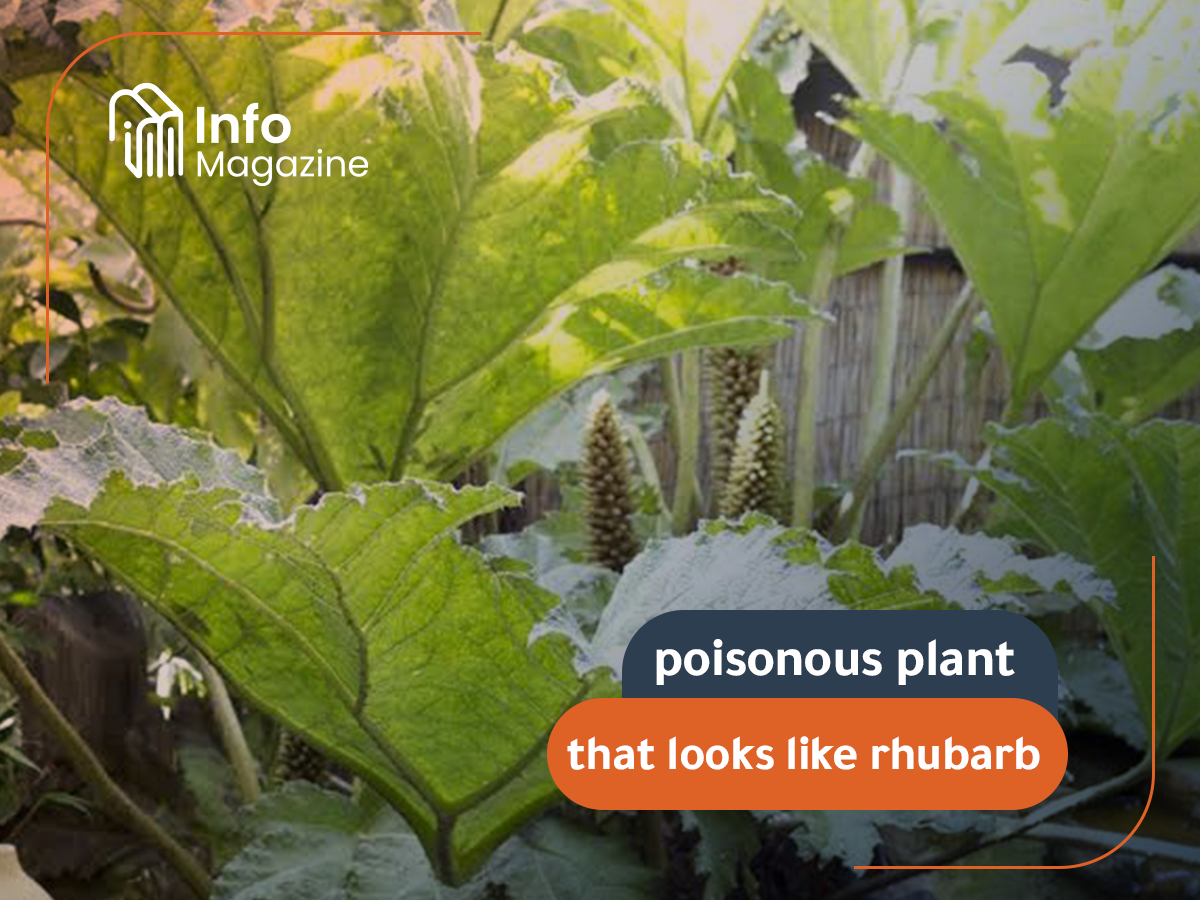
Identifying a poisonous plant that looks like rhubarb is essential for every forager and gardener who wants to avoid a dangerous mistake that can lead to serious health complications or even fatality.
Many people mistakenly believe that all large-leaved plants in their garden are safe, yet the poison hemlock and the false rhubarb often mimic the familiar vegetable’s appearance with alarming precision.
This article will explain how to distinguish this toxic impostor from true rhubarb, detail the symptoms of poisoning, and provide key safety measures for outdoor enthusiasts.
What Plants Are Commonly Mistaken for Rhubarb?
Many foragers and gardeners have been tricked by a poisonous plant that looks like rhubarb, Knowing which species are commonly confused is the first step to safety.
- Poison hemlock (Conium maculatum) – its leaves resemble rhubarb at first glance, especially in spring.
- Burdock (Arctium lappa) – young leaves are large and wavy, easily mistaken for edible rhubarb.
- Gunnera (Gunnera tinctoria) – also called giant rhubarb, but its stems are often toxic or irritating.
- Wild rhubarb (Rheum rhaponticum) – a true rhubarb species but growing in the wild can still cause confusion with dangerous look-alikes.
Each of these plants can lead to serious health risks if ingested, Your ability to perform accurate rhubarb identification is essential.
Why Rhubarb Look-Alikes Can Be Dangerous
Consuming a toxic plant that looks like rhubarb can cause severe reactions, from burning mouth to kidney failure, Understanding the risks is vital for safety.
The danger is compounded by the fact that many rhubarb look-alike poisonous plants grow in similar habitats—along roadsides, near gardens, and in damp meadows, Children and pets are especially vulnerable to accidental ingestion of these toxic plants similar to rhubard.
Poison Hemlock vs Rhubarb
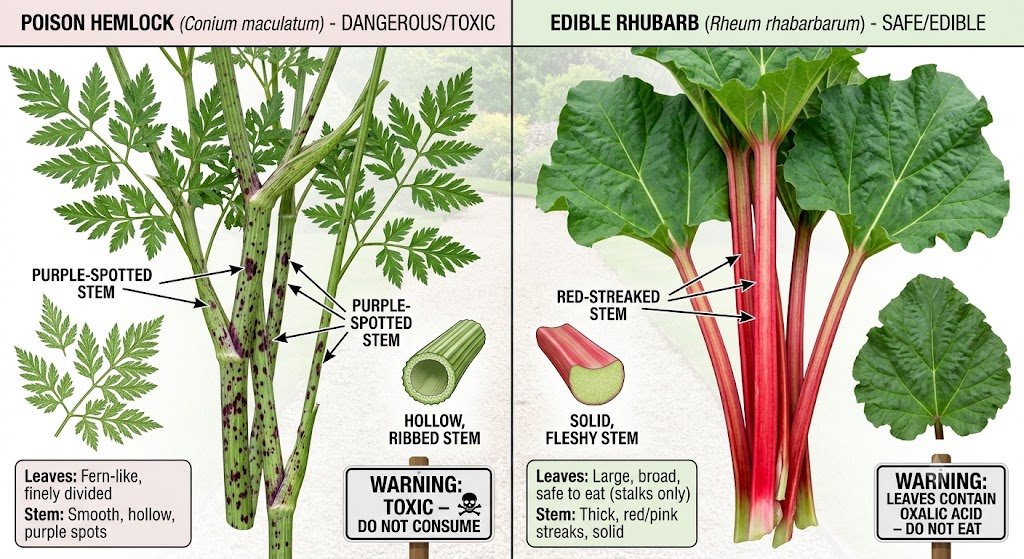
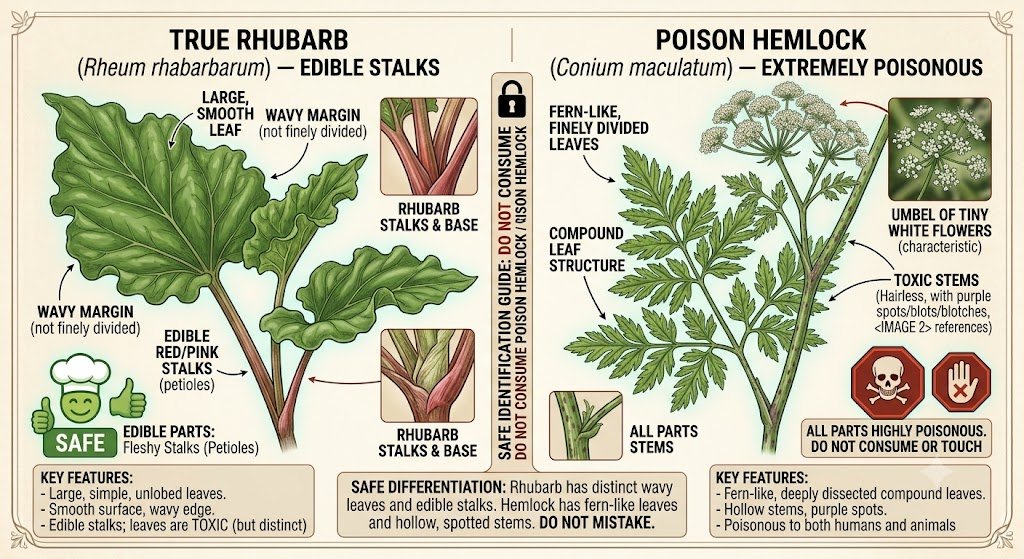
A classic case of poison hemlock vs rhubarb confusion has led to many emergency room visits, Hemlock is often deadly, while rhubarb stalk is edible.
| Feature | Rhubarb (Rheum rhabarbarum) | Poison Hemlock (Conium maculatum) |
|---|---|---|
| Stem color | Red, pink, or green with fine streaks | Green with purple spots or blotches |
| Leaf shape | Large, wavy, dark green, with a basal rosette | Fern-like, finely divided, parsley-like leaflets |
| Flowers | Small greenish-white clusters on tall stalks | White, umbrella-shaped clusters (umbels) |
| Odor when crushed | Earthy, slightly tangy | Unpleasant, mousy or musty smell |
| Toxicity | Leaves and roots toxic (oxalic acid) | Entire plant deadly (coniine alkaloids) |
This visual and olfactory comparison is critical when dealing with plants mistaken for rhubarb in the wild, Always check for purple spots—that is a red flag for hemlock.
Burdock vs Rhubarb
Another common misidentification involves burdock vs rhubarb, Burdock’s young leaves can be mistaken for edible rhubarb, but burdock root is safe, while the stalk is not.
Burdock leaves are similar in size but differ in texture and vein pattern, This confusion often leads to foraging accidents where people eat the wild rhubarb poisonous parts of burdock (the leaf stalks) thinking they are rhubarb.
Dangerous rhubarb look alikes like burdock also produce tiny burrs (hooks) on their flower heads in late summer, something rhubarb never does, This is a late-season clue but can save you from a mistake.
Gunnera vs Rhubarb
Known as giant rhubarb look alike, Gunnera species are ornamental plants with massive leaves that dwarf true rhubarb, However, Gunnera can cause skin irritation and digestive upset.
Gunnera leaves can reach up to 6 feet across, while true rhubarb leaves are rarely larger than 2 feet, The stems of Gunnera are thick, fuzzy, and often covered in brownish spines, unlike the smooth, crisp stems of rhubarb.
In some regions, Gunnera is invasive, so accurate rhubarb identification helps avoid both health risks and ecological missteps, Always stick to trusted sources for edible rhubarb plants.
How to Identify True Rhubarb Safely
Accurate rhubarb identification is your best defense against toxic impostors, Follow a clear, step-by-step process to confirm your plant.
- Examine the stem: True rhubarb has thick, crisp, slightly grooved stems with streaks of red, pink, or green, No purple spots or blotches.
- Check the leaf shape and texture: Leaves are large, broadly heart-shaped, wavy at the edges, and dark green, The underside is smooth or barely hairy, never woolly.
- Smell a crushed leaf: True rhubarb releases an earthy, tangy scent, A musty, mousy, or unpleasant odor is a major warning sign of a toxic look-alike.
- Look at the flower stalk (if present): Rhubarb produces a tall central stalk with small greenish-white flowers in a pyramid-like cluster, Avoid any plant with umbrella-shaped white flowers—a classic sign of poison hemlock.
- Confirm the root system: Rhubarb has thick, fleshy, rhizomatous roots, If you see a thin, fibrous taproot with a parsnip-like smell, you have likely found a wild rhubarb poisonous species or a dangerous relative.
Symptoms of Poisonous Plant Exposure
Ingesting a toxic plant that looks like rhubarb can trigger rapid and severe health effects, Recognize the signs early to act quickly.
| Plant Type | Main Toxins | Common Symptoms | Onset Time |
|---|---|---|---|
| Poison hemlock (Conium maculatum) | Coniine (alkaloid) | Numbness, salivation, muscle weakness, paralysis, respiratory failure | 15 minutes – 2 hours |
| Burdock (Arctium lappa) – leaf stalks only | Polyacetylenes, sesquiterpene lactones | Burning mouth, nausea, vomiting, abdominal cramps, diarrhea | 30 minutes – 4 hours |
| Gunnera (Gunnera tinctoria) | Calcium oxalate crystals | Intense burning pain in mouth and throat, swelling, drooling, difficulty swallowing | Immediate – 1 hour |
| Wild/ornamental rhubarb (non-edible species) | Oxalic acid (high levels), anthraquinones | Stomach pain, nausea, vomiting, hypocalcemia (low calcium), kidney damage | 1 – 6 hours |
What to Do If You Eat a Rhubarb Look-Alike
If you or someone you know has accidentally ingested a suspicious plant, immediate action is critical, Do not wait for symptoms to appear.
- Call emergency services or poison control immediately, In the US, dial 911 or the Poison Help line at 1-800-222-1222, Have the plant sample or a photo ready for identification.
- Remove any remaining plant material from the mouth, Rinse the mouth with water but do not swallow, Do not force fluids if the person has difficulty swallowing or is unconscious.
- Do not administer any home remedies, such as salt water, activated charcoal, or milk unless a poison specialist tells you to do so.
- Stay with the person and monitor their breathing and consciousness, If they become drowsy, stiff, or have trouble breathing, begin CPR if trained and call 911 again.
Frequently Asked Questions About Rhubarb Look-Alikes
This section answers common concerns about identifying and avoiding a poisonous plant that looks like rhubarb.
Q: Can I use a plant identification app to tell the difference between rhubarb and a look-alike?
A: Yes, but with caution, Apps like iNaturalist or PlantSnap are helpful, but they can give false positives, Always verify with manual checks: stem color (red/green vs, purple spots), leaf underside (smooth vs, woolly), and odor, Never rely solely on an app for poison hemlock vs rhubarb identification.
Q: Are all rhubarb-like plants in my garden safe to eat if they have red stems?
A: No, Some ornamental varieties, sometimes labeled “giant rhubarb look alike” (like Gunnera), have red stems but are toxic, Always purchase rhubarb from a reputable nursery and confirm the botanical name is Rheum rhabarbarum.
Q: What should I do if I find a plant that looks like rhubarb in the wild?
A: Do not eat it unless you are 100% sure it is true rhubarb, Perform the stem, leaf, and smell tests described above, If you are still unsure, treat it as a wild rhubarb poisonous specimen and avoid contact, Foraging guides can help with plants mistaken for rhubarb in your region.
Q: How can I teach my children to recognize a dangerous rhubarb look-alike?
A: Use the rule of “purple spots = poison spots.” Teach them to look for purple blotches on stems, which always signal poison hemlock vs rhubarb safety rules, Also teach them never to eat any wild plant without an adult’s approval.
Identifying a poisonous plant that looks like rhubarb is a critical skill for gardeners and foragers because mistaken identity can lead to severe poisoning or even fatality.
When you encounter a poisonous plant that looks like rhubarb, you must always check the leaf shape and stem color, as true rhubarb has smooth, red-tinged stalks while impostors like pokeweed or false rhubarb display distinct purple or green stems with leaf veins that branch differently.
By learning these key physical differences and consulting poison control centers immediately after any suspected ingestion, you protect your family from the serious health risks posed by a poisonous plant that looks like rhubarb.