Potassium toxicity in plants is a frequently overlooked issue that can severely disrupt nutrient uptake and hinder overall growth, yet many growers mistakenly attribute the symptoms to other deficiencies, Understanding the precise causes of this condition is essential for any gardener or farmer aiming to maintain healthy crops with optimal yields, This article will explain how to recognize the telltale signs of potassium toxicity, discuss its common causes, and provide actionable strategies for correcting the imbalance,
You will discover effective methods for soil testing, irrigation management, and nutrient adjustment to restore plant vitality, Finally, the comprehensive guide covers prevention techniques to ensure your plants thrive without the risk of excessive potassium buildup.
What Is Potassium Toxicity in Plants?
Potassium toxicity in plants occurs when potassium levels in plant tissues become excessively high, disrupting normal cellular functions, This condition is often linked to excess potassium in soil due to over-fertilization.
While potassium is an essential macronutrient required for enzyme activation, water regulation, and photosynthesis, an overload creates a toxic internal environment, Plants can absorb potassium far beyond their metabolic needs when soil concentrations spike, leading to physiological stress rather than growth benefits, The primary issue is not direct poisoning but severe nutrient antagonism—high potassium levels in soil block the uptake of calcium (Ca), magnesium (Mg), and other vital cations, This imbalance ultimately reduces crop quality, fruit set, and overall plant vigor, making early identification crucial.
What Causes Excess Potassium in Soil?
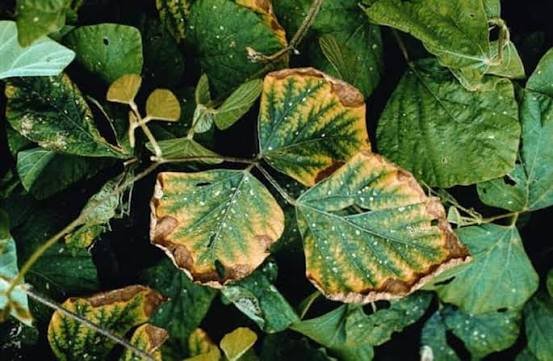
High potassium levels in soil usually result from human activities rather than natural geological processes, Understanding the root causes helps prevent future recurrence.
The most common triggers include repeated over-application of potassium-rich fertilizers (e.g., muriate of potash, potassium sulfate) without considering existing soil reserves, Heavy manure use, especially poultry manure, can also contribute significantly, Additionally, soils with poor drainage or high clay content tend to accumulate potassium because leaching is minimal, Drought conditions further concentrate K in the root zone, as water is the primary medium for salt movement, An often-overlooked factor is the use of irrigation water with high potassium content in arid regions, Identifying the specific source is the first step in correcting how to fix potassium toxicity.
How Too Much Potassium Affects Plant Growth
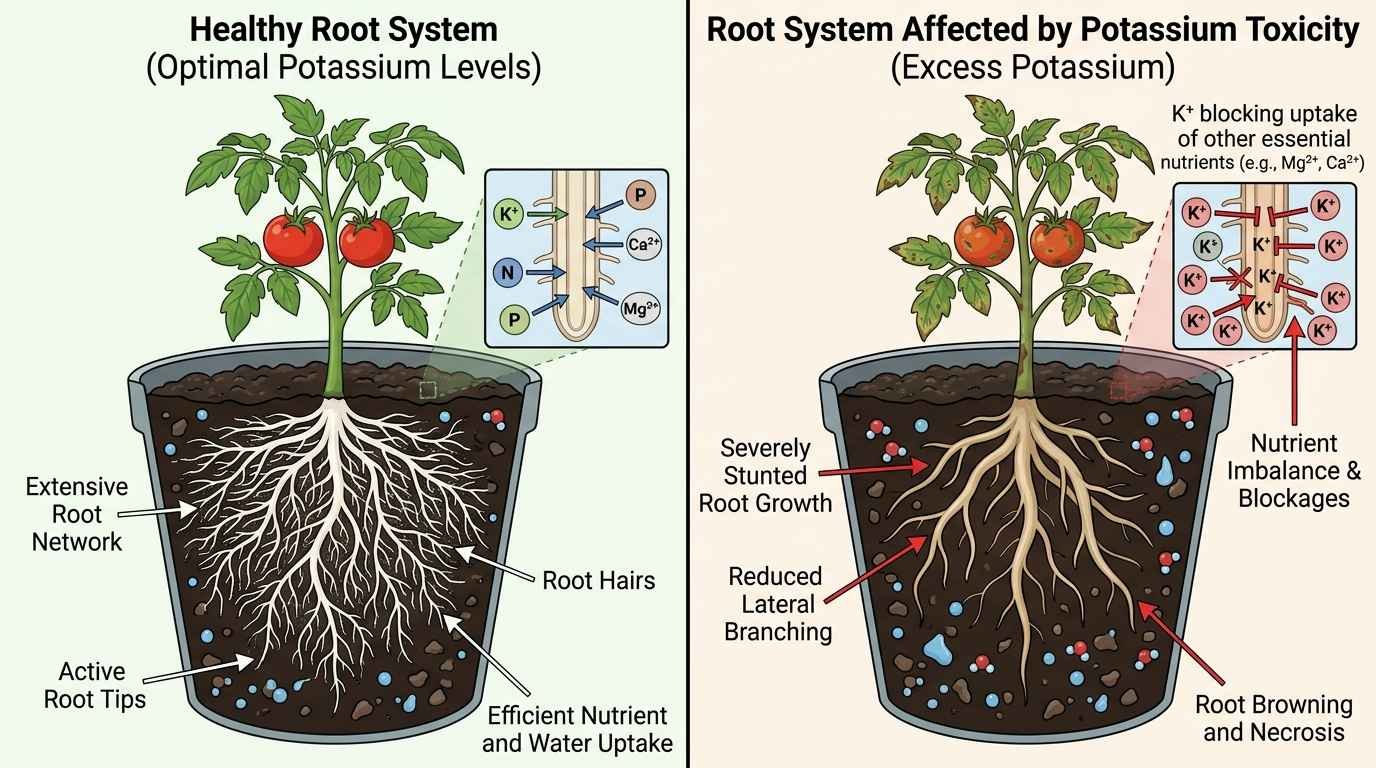
Excessive potassium disrupts water balance and nutrient uptake, manifesting in stunted growth and poor yields, This section outlines the physiological consequences.
When potassium toxicity in plants develops, the osmotic potential of root cells becomes distorted, making water absorption difficult even in moist soil—a condition known as physiological drought, Leaf margins may appear scorched or burnt, similar to salt injury, Internally, high K+ ions interfere with calcium-dependent cell signaling and magnesium activation of chlorophyll, The result is a cascade of secondary deficiencies: blossom-end rot in tomatoes, hollow stems in brassicas, and poor fruit firmness in apples, Photosynthesis efficiency drops because magnesium is displaced from the chlorophyll molecule, Over time, the plant allocates energy to manage stress rather than growth, leading to reduced biomass and harvest quality.
- Water Stress: Roots struggle to uptake water, causing wilting even with adequate soil moisture.
- Leaf Burn: Older leaves yellow and develop necrotic brown edges—a classic sign of potassium toxicity plant symptoms.
- Stunted Root Development: Excessive K inhibits root elongation, worsening the plant’s ability to explore soil for other nutrients.
- Lower Yield Quality: Fruits and seeds become smaller, less colorful, and more susceptible to post-harvest disorders.
Common Symptoms of Potassium Toxicity in Plants
Recognizing potassium toxicity symptoms in plants early can save your crop from irreversible damage, Symptoms often mimic other disorders but have distinct patterns.
The most visible sign is marginal leaf tip burn on older, lower leaves, often accompanied by yellowing (chlorosis) that starts at the edges and moves inward, Unlike potassium deficiency, which causes uniform yellowing, toxicity shows irregular interveinal chlorosis, Plants may also exhibit Mg deficiency symptoms (interveinal yellowing in older leaves) due to induced antagonism, Leaf curling, premature leaf drop, and a general ‘hard’ or brittle leaf texture are common, In fruiting crops, you may see poor fruit set, small fruit size, and increased incidence of calcium-related disorders, The roots often appear stunted and brownish, with reduced branching, These signs are most pronounced in fast-growing crops like tomatoes, peppers, and leafy greens.
Nutrient Imbalances Caused by Excess Potassium
High potassium levels in soil create a domino effect of potassium nutrient imbalance, locking out other essential nutrients, This section explains the antagonistic relationships.
Question: Which nutrients are most affected by too much potassium in plants? Answer: Calcium (Ca) and magnesium (Mg) are the primary victims, Potassium, calcium, and magnesium compete for the same uptake sites on root cell transporters, When K is abundant, it outcompetes Ca and Mg, leading to deficiencies even when these minerals are present in adequate soil concentrations, This is called cation antagonism, The imbalance worsens as K levels rise, often requiring corrective measures such as gypsum applications (for Ca) and foliar magnesium sprays, Secondary impacts include reduced uptake of zinc (Zn) and manganese (Mn) in some crops, further complicating plant health.
| Antagonistic Element | Imbalance Effect on Plant | Visual Symptom |
|---|---|---|
| Calcium (Ca) | Blossom-end rot, poor root development, leaf tip burn | Sunken spots on fruit, curled young leaves |
| Magnesium (Mg) | Chlorosis, reduced photosynthesis, stunted growth | Interveinal yellowing on older leaves |
| Zinc (Zn) | Shortened internodes, small leaves | Rosetting, leaf distortion |
| Manganese (Mn) | Interveinal chlorosis in new leaves | Pale green leaves with dark green veins |
Understanding these interactions is key to effective potassium toxicity treatment, Correcting the imbalance requires not only reducing K inputs but also restoring the equilibrium with targeted Ca and Mg supplementation.
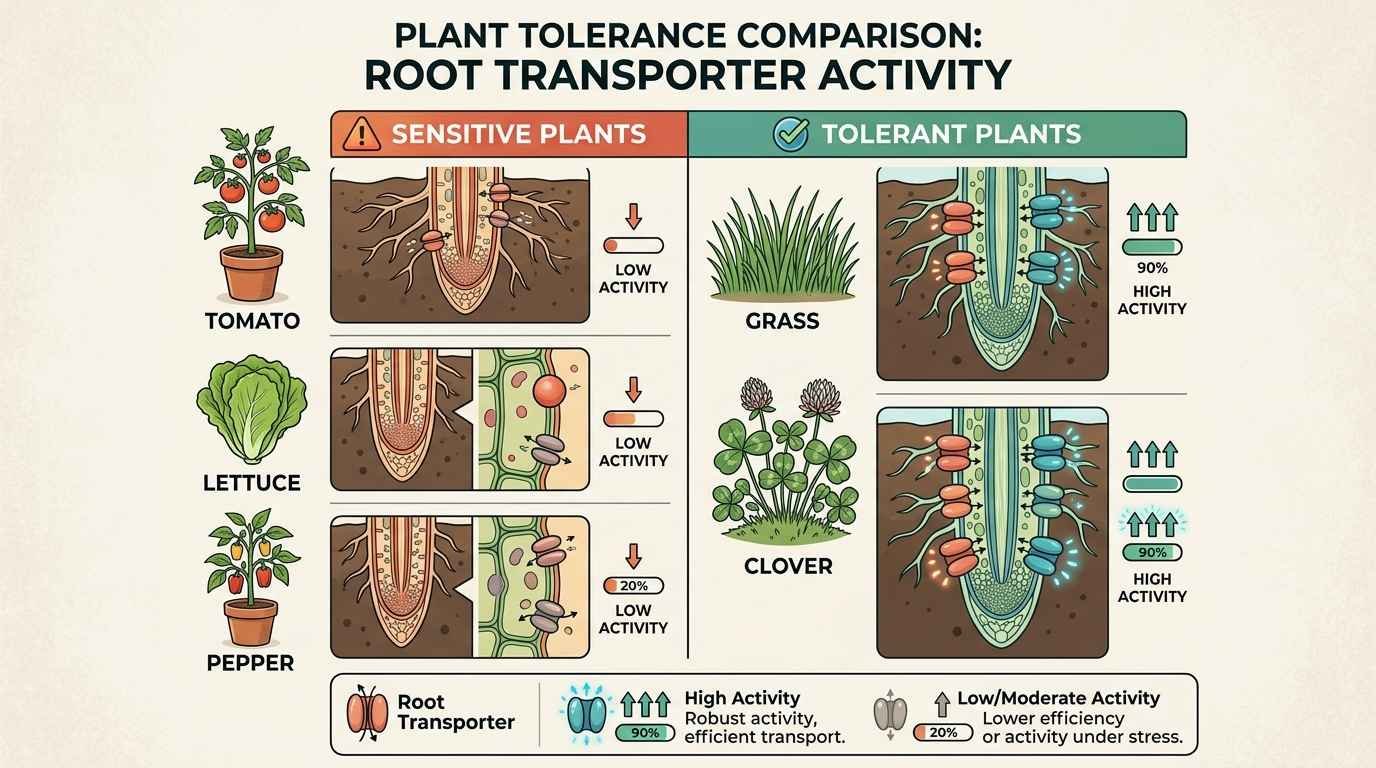
Which Plants Are Most Sensitive to High Potassium Levels?
Some species suffer more rapidly from excess potassium due to their unique uptake physiology, Understanding sensitivity helps target monitoring efforts.
Plants with rapid growth and high calcium demands are most vulnerable, Key crops include:
- Tomatoes and Peppers: Their fruit development relies on steady calcium; high potassium levels in soil trigger blossom-end rot and reduced fruit set.
- Leafy Greens (Lettuce, Spinach): Excess K induces severe chlorosis and marginal burn, dramatically reducing marketable yield.
- Brassicas (Cabbage, Broccoli): Hollow stems and internal browning appear due to calcium blockage.
- Legumes (Beans, Peas): Pod fill and seed development suffer from magnesium displacement.
- Fruit Trees (Apples, Citrus): High potassium in fruit tissue reduces storage life and increases bitter pit or creasing disorders.
How to Diagnose Potassium Toxicity
Accurate diagnosis requires combining visual inspection with laboratory data, Guesswork wastes time and resources.
Question: How do you confirm potassium toxicity in plants?
Answer: Confirm by collecting soil and tissue samples within the same week, Soil tests show high potassium levels in soil (above 200–250 ppm depending on crop), Tissue analysis from the most recent mature leaves should show K exceeding 3.5–4.5% dry weight, Always pair with calcium and magnesium tissue tests; if Ca and Mg are below sufficiency ranges while K is elevated, you have ionic antagonism, Pro tip: The K:Ca ratio in leaf tissue is more telling than K alone—a ratio > 3.0 strongly suggests potassium toxicity.
| Diagnostic Tool | When to Use | Key Indicator |
|---|---|---|
| Soil Test (Mehlich-3) | Before planting, mid-season check | K > 200 ppm triggers caution |
| Tissue Analysis (mature leaves) | When symptoms first appear | K > 4.5% dry weight |
| K:Ca Ratio in Tissue | Confirmant of antagonism | Ratio > 3.0 = potassium nutrient imbalance |
| EC Meter (soil salinity) | Where salt buildup is suspected | EC > 1.5 dS/m indicates risk |
How to Fix Potassium Toxicity in Plants
Correcting excess potassium requires a multi-step strategy targeting both soil and plant tissues, Act systematically for best results.
Step 1: Stop all potassium inputs, Immediately cease all K-containing fertilizers, manure, and amendments, Check your irrigation water for hidden K sources.
Step 2: Leach soluble potassium, Apply heavy irrigation with low-EC water to push excess K below the root zone, For potted plants, flush with three times the pot volume of water.
Step 3: Apply calcium to break antagonism, Use gypsum (calcium sulfate) at 1–2 lbs per 100 sq ft to displace K from cation exchange sites, For fast relief, apply foliar calcium sprays (calcium nitrate 1 tbsp/gal) weekly.
Step 4: Provide magnesium, Foliar Epsom salts (1 tsp/gal) or soil-applied magnesium sulfate helps restore chlorophyll function.
Step 5: Add organic matter, Well-decomposed compost or peat moss binds excess K and improves microbial buffering.
How to Prevent Potassium Buildup in Soil
Prevention relies on precise fertilizer management and crop rotation, Long-term planning stops problems before they start.
To avoid potassium buildup in soil, follow these four pillars:
- Test soil annually: Always know your base K level before applying any potash, Log results to track trends over seasons.
- Use balanced fertilizers: Avoid high-K formulas (like 15-30-15) for maintenance, Switch to formulas with lower K numbers (e.g., 5-10-10) if soil K is adequate.
- Rotate with potassium scavengers: Plant cover crops like sorghum-sudangrass or buckwheat that uptake excess K and remove it when harvested.
- Monitor irrigation quality: Well water in arid regions can contain 10–50 ppm K, Account for this source in your total budget.
- Apply manure sparingly: Poultry manure can add 20–30 lbs K per ton, Limit applications to once per rotation.
Frequently Asked Questions About Potassium Toxicity in Plants
Common concerns answered concisely, Each response addresses practical grower doubts.
Question: Can potassium toxicity in plants be reversed quickly?
Answer: Reversal takes 3–6 weeks, Immediate flushing with water reduces soil K within days, but plant recovery—new growth without symptoms—requires restoring Ca and Mg balance through foliar sprays.
Question: Do all potassium toxicity symptoms in plants appear on older leaves first?
Answer: Yes, because potassium is mobile and accumulates in older tissue, New growth often looks healthy until the imbalance becomes severe, This mobile pattern helps distinguish potassium toxicity from calcium or boron issues.
Question: How much water is needed to leach excess potassium in soil?
Answer: For sandy soils, apply 6–8 inches of water over 3 days, For clay soils, use 10–12 inches spread across 7 days, Always check drainage capacity to avoid waterlogging.
Understanding the mechanisms behind potassium toxicity in plants is essential for any gardener or farmer aiming to maintain healthy and productive crops, Recognizing the early signs of leaf margin necrosis and interveinal chlorosis allows for a prompt diagnosis of potassium toxicity in plants before irreversible damage occurs, Implementing a soil test to measure potassium levels and adjusting fertilizer application rates are the most effective ways to mitigate this nutrient imbalance, By following the top ten identification and correction strategies outlined in this article, you can protect your plants from the detrimental effects of excess potassium, Ultimately, a balanced approach to soil nutrition will lead to stronger root systems, improved water uptake, and a more resilient garden ecosystem overall.