The red spider lily poisonous nature is a crucial safety concern for anyone who encounters this strikingly beautiful flower, as every single part of the plant contains toxic alkaloids that can cause severe health issues if ingested.
Understanding the specific dangers associated with this bloom is essential for preventing accidental poisoning in both humans and pets, especially because its vibrant appearance often tempts curious hands and mouths.
This article will comprehensively explore the plant’s toxic compounds, its symptoms, necessary first aid measures, and guidance for safe cultivation in your garden.
Is Red Spider Lily Poisonous?
Yes, all parts of the red spider lily contain toxic alkaloids that pose serious risks to humans and animals.
What Is a Red Spider Lily?
The red spider lily (Lycoris radiata) is a striking autumn-blooming bulb native to Asia, known for its vibrant red flowers.
- Botanical Name: Lycoris radiata — the primary source of lycoris radiata toxicity due to lycorine alkaloids.
- Appearance: Spider-like red petals with long stamens, appearing after foliage dies back in late summer.
- Common Names: Also called hurricane lily, corpse flower, or surprise lily.
- Growth Habit: Perennial bulb that thrives in well-drained soil and partial shade.
- Cultural Significance: Often planted near graves in Japan and China, linked to death and the afterlife.
Why Is Red Spider Lily Toxic?
The plant produces potent alkaloids like lycorine as a natural defense mechanism against herbivores.
Question: What happens when lycorine is ingested?
Answer: Lycorine inhibits protein synthesis and triggers severe gastrointestinal distress, including vomiting, diarrhea, and abdominal pain, In high doses, it can disrupt nerve signaling, leading to tremors, seizures, or cardiac issues, This is why understanding red spider lily poisoning is critical for every gardener.
Which Parts of the Plant Are Poisonous?
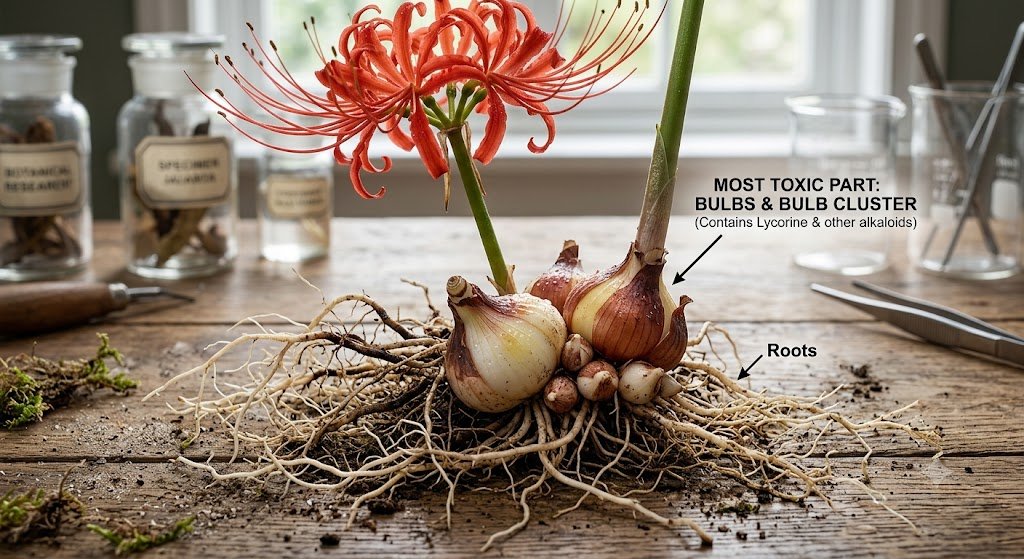
All parts contain toxins, but the bulb is the most dangerous due to its high alkaloid concentration.
| Plant Part | Toxicity Level | Primary Risk |
|---|---|---|
| Bulb | Extremely High | Severe poisoning; lethal if ingested by pets or children |
| Leaves & Stems | Moderate | Digestive upset & skin irritation |
| Flowers | Low to Moderate | Mild nausea, vomiting in large amounts |
Symptoms of Red Spider Lily Poisoning
Recognizing early signs of poisoning in humans and pets can save lives; symptoms appear within 1–3 hours of ingestion.
Common red spider lily poisoning symptoms include severe vomiting, diarrhea, dehydration, hypotension, and in extreme cases, seizures or coma, Red spider lily toxic to dogs often results in hypersalivation and vomiting within 30 minutes, Red spider lily toxic to cats can cause dilated pupils and breathing difficulties, Always keep this plant out of reach of pets and children.
Is Red Spider Lily Toxic to Children and Pets?
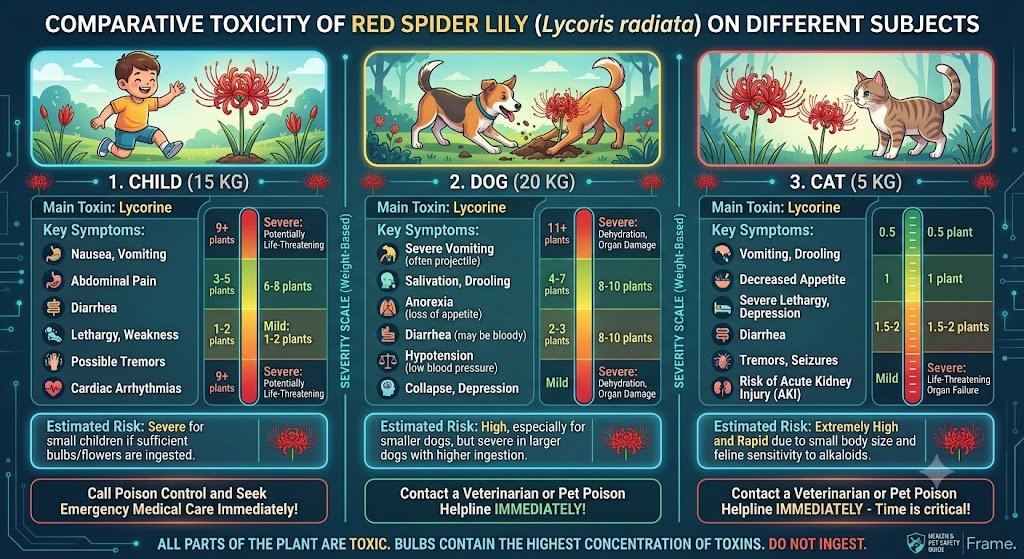
Yes, children and pets are at extremely high risk from red spider lily toxicity.
- Red spider lily toxic to humans — children under 5 years face the highest risk due to low body weight; symptoms include severe vomiting, drooling, and drowsiness after eating even one petal or a small piece of bulb.
- Red spider lily toxic to dogs — dogs often dig up bulbs and chew them; signs include hypersalivation, retching, dilated pupils, and loss of balance within 30 minutes of ingestion.
- Red spider lily toxic to cats — cats are especially sensitive to lycorine; watch for pawing at mouth, breathing difficulty, and sudden aggression due to pain.
- Is red spider lily poisonous to birds or small mammals? Yes, rabbits and chickens are also susceptible — keep all garden animals away from planted bulbs and fallen flower petals.
What to Do After Exposure to Red Spider Lily
Swift action after suspected red spider lily poisoning can dramatically reduce harm and improve recovery.
- 1, Stay calm and remove the plant material, Carefully pull any visible leaves, petals, or bulb pieces out of the mouth, Rinse the mouth gently with water — do not induce vomiting unless directed by a medical professional.
- 2, Call for help immediately, For humans: dial 1-800-222-1222 (Poison Control), For pets: call your vet or the ASPCA Animal Poison Control Center (888-426-4435), Mention re spider lily poisonous and describe the amount ingested, time, and symptoms.
- 3, Do not give any food, drink, or home remedies, Milk, salt water, or herbal teas can worsen the absorption of lycorine or cause additional complications.
- 4, Monitor for severe red spider lily poisoning symptoms, Watch for irregular heartbeat, seizures, or unconsciousness — these may take up to 4 hours to develop, Keep the victim comfortable and upright if possible.
- 5, Bring a plant sample to the ER or vet clinic, If safe, take a photo or a sealed bag with a flower or bulb piece — this helps confirm the species and speed up treatment.
Prompt medical care significantly improves outcomes, Most patients recover within 24–48 hours, but severe red spider lily toxicity cases may require intravenous fluids and anti-emetics.
How to Grow Red Spider Lily Safely
You can enjoy these striking flowers without fear by following a few simple safety protocols.
✅ Do’s
– Plant bulbs in fenced beds or raised containers out of reach
– Use thick gloves when handling bulbs (lycorine can irritate skin)
– Mark the planting area with a warning sign or decorative border
– Remove fallen flowers immediately to prevent pet curiosity
– Educate children that the plant is “look but don’t touch”
❌ Don’ts
– Never plant near vegetable gardens or herb patches
– Do not compost any part of the plant — toxins persist in soil
– Avoid mulching with red spider lily debris
– Do not allow pets to roam unsupervised near the plant
– Never eat or use any part for medicinal purposes
Frequently Asked Questions About Red Spider Lily Toxicity
Here are clear answers to the five most common concerns gardeners have about this plant.
Answer: Yes, handling the bulbs or sap can cause skin irritation, redness, and itching in sensitive individuals, Always wear gloves when planting, dividing, or cleaning the plant, Wash hands immediately after any contact.
Answer: Yes, even one or two petals contain enough lycorine to trigger vomiting and abdominal pain in a small child or pet, The toxins are concentrated in all parts of the plant, so any amount should be treated as an emergency.
Answer: In rare but documented cases, large ingestion of bulbs (especially by dogs or toddlers) has led to respiratory failure or cardiac arrest, With prompt medical care, fatalities are very uncommon, Always treat the plant with extreme respect.
Answer: Mild cases resolve within 12–24 hours, while moderate cases may require 48 hours of supportive care, The most severe red spider lily poisoning symptoms (seizures, arrhythmia) usually fade within 3 days of treatment, Full recovery is typical if intervention occurs early.
Answer: Yes, the surprise lily (Lycoris squamigera) and the pink spider lily are also in the Lycoris family and are toxic, A safe alternative is the amaryllis belladonna — though not identical — it blooms similarly but has lower toxicity, Always confirm the species before planting near young children or pets.
Understanding that the red spider lily poisonous nature poses a serious risk to both humans and pets is absolutely essential for any responsible gardener who chooses to cultivate this striking autumn bloom, Every part of this plant contains toxic alkaloids like lycorine, which can cause severe gastrointestinal distress, neurological symptoms, and even life-threatening complications if ingested in significant quantities, Gardeners must therefore exercise extreme caution by planting these bulbs in areas inaccessible to children and curious animals, and always wearing protective gloves when handling the bulbs or foliage to prevent skin irritation.
While the red spider lily poisonous reputation rightly demands respect, it is equally important to recognize that responsible cultivation can still allow you to enjoy its dramatic, spider-like crimson flowers without unnecessary danger, By implementing simple safety measures such as clear labeling, secure fencing, and immediate removal of spent blooms before they dry and become tempting curiosities, you can minimize accidental exposure, Additionally, educating all household members, including older children, about the plant’s toxicity reinforces a culture of garden safety that protects everyone.
Ultimately, the red spider lily poisonous attributes should never deter a dedicated gardener from appreciating its cultural significance and unique beauty, provided that informed precautions are consistently followed, Consulting with local poison control centers and veterinary professionals for emergency contact information is a prudent step before adding this species to your landscape, With knowledge, vigilance, and respect for this plant’s potent chemistry, you can safely integrate the red spider lily into a dazzling and secure garden environment.