The star of bethlehem flower poisonous to humans is a critical safety concern that every gardener and pet owner must understand before planting this deceptive spring bloom, While this delicate white flower adds undeniable beauty to landscapes across North America, ingesting any part of the plant can trigger severe gastrointestinal distress and dangerous cardiac glycoside toxicity that requires immediate medical intervention,
This comprehensive guide will cover essential identification tips, toxic dose thresholds, symptoms requiring emergency care, and effective prevention strategies to protect your family and pets from accidental poisoning.
Is the Star of Bethlehem Flower Poisonous to Humans?
Yes, the star of Bethlehem flower is poisonous to humans and requires serious caution in gardens.
- Identify the plant: Recognise Ornithogalum umbellatum by its white star-shaped petals and green stripes.
- Understand the risk: All parts contain cardiac glycosides that disrupt heart function.
- Prevent exposure: Wear gloves when handling and keep children away from bulbs and leaves.
- Act quickly: If ingestion occurs, contact poison control immediately—delayed treatment is dangerous.
What Is the Star of Bethlehem Plant?
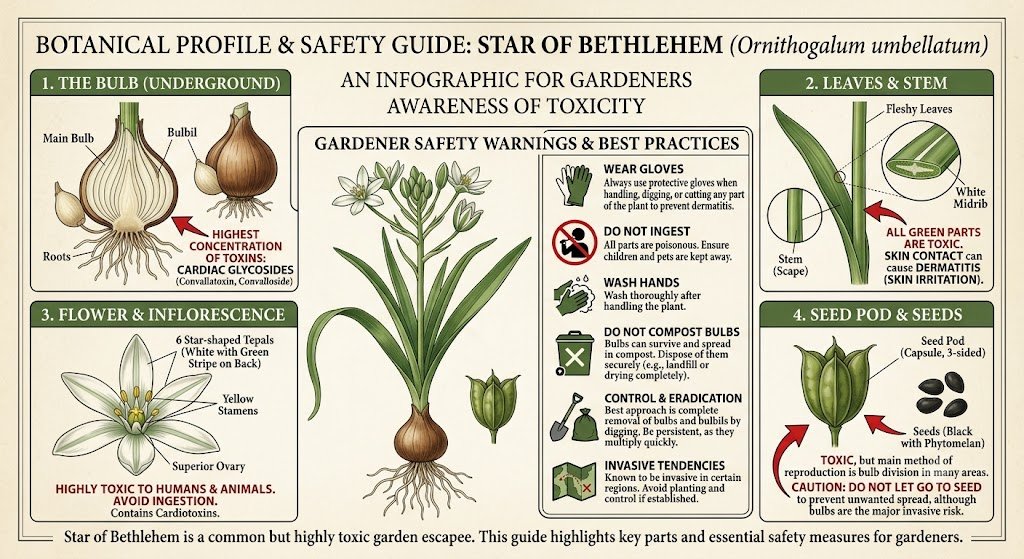
Ornithogalum umbellatum is a perennial bulb native to Europe with distinctive white flowers and grass-like leaves.
The plant usually blooms in late spring and grows up to 30 cm tall, Its small bulb resembles a tiny onion, and the flower has six pointed petals with a green stripe underneath, Many gardeners confuse it with wild garlic due to similar foliage, but the star of Bethlehem flower toxicity makes this a dangerous misidentification.
| Feature | Star of Bethlehem | Wild Garlic |
|---|---|---|
| Leaf shape | Narrow, grass-like, no odor | Flat, broad, strong garlic smell |
| Flower color | White with green stripe | White or pink, no stripe |
| Toxicity | High | None (edible) |
Why Is Star of Bethlehem Toxic?
This plant produces cardiac glycosides that interfere with sodium-potassium pumps in heart cells.
The primary toxins belong to the bufadienolide group, similar to compounds found in some toad venom, When ingested, these chemicals cause the heart to beat erratically—first slowing down, then speeding up dangerously, This explains why star of Bethlehem poisoning can lead to cardiac arrest even in small amounts.
The question ‘is star of Bethlehem poisonous’ is clearly answered by its chemical defense mechanism: the plant evolved these compounds to deter herbivores, but they also make it a serious threat to curious humans.
Which Parts of the Plant Are Poisonous?
Every part of the star of Bethlehem plant is toxic, but the bulb and sap are the most concentrated sources.
The leaves, when cut, release a milky sap that can blister skin, Dried flowers in potpourri still retain toxicity, If you have pets or children, removal of the entire plant from accessible areas is strongly advised, as star of Bethlehem toxic to humans affects all ages equally.
Symptoms of Star of Bethlehem Poisoning
Recognising early signs like nausea, blurred vision, and irregular heartbeat can save a life.
- Gastrointestinal: Vomiting, diarrhea, abdominal cramps
- Cardiovascular: Slow or irregular pulse, dizziness, fainting
- Neurological: Confusion, dilated pupils, hallucinations
- Dermal: Skin irritation, redness, blistering after contact with sap
Severe cases may progress to seizures, coma, or cardiac arrest, If you suspect star of Bethlehem poisoning, do not wait—call your local poison center or emergency services immediately for star of Bethlehem poisoning treatment guidance, Activated charcoal may be given within one hour of ingestion, and intravenous medications like digoxin-specific Fab fragments can reverse heart toxicity.
What Happens If You Touch or Eat the Plant?
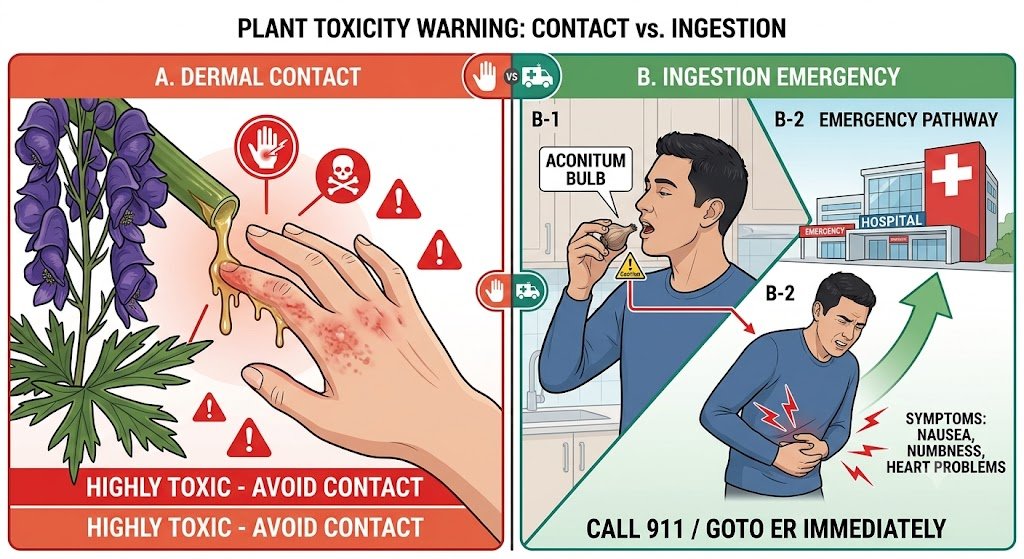
Immediate effects range from skin irritation to life-threatening cardiac distress after ingestion.
- Touching sap or crushed leaves: Redness, blisters, or burning sensation on skin within 10–30 minutes, Wash thoroughly with soap and water.
- Accidental ingestion of any part: Burning in mouth, drooling, nausea, then vomiting and diarrhea within 15–60 minutes.
- Bulb consumption (most dangerous): Rapid onset of blurred vision, slow heart rate, dizziness, and possible collapse within 2 hours.
Who Is Most at Risk of Poisoning?
Children under six, elderly adults, and people with pre-existing heart conditions face the highest danger.
Gardeners who work without gloves also risk dermal absorption of cardiac glycosides through cuts or prolonged contact, The star of Bethlehem toxic to humans reality means even breathing dust from dried bulbs during weeding can trigger mild respiratory symptoms in sensitive individuals, If you have toddlers, consider removing star of Bethlehem completely from your yard, as the small white bulbs look strikingly similar to wild garlic or onions.
How Star of Bethlehem Poisoning Is Treated
Medical intervention focuses on stabilising heart rhythm and removing toxins from the body quickly.
Doctors monitor electrocardiogram changes for at least 24 hours, as delayed cardiac effects can appear, Intravenous fluids and antiemetics control dehydration from vomiting, If you call poison control, provide the following details: part of plant eaten (bulb, leaf, flower), estimated amount, time since ingestion, and any star of Bethlehem poisoning symptoms observed, Never wait for symptoms to appear—seek emergency star of Bethlehem poisoning treatment immediately, even if the person feels fine initially.
Frequently Asked Questions About Star of Bethlehem Toxicity
Short answers to the most common concerns about is star of Bethlehem poisonous.
– Question: Can the star of Bethlehem flower poisonous to humans cause death?
Answer: Yes, especially in children or if the bulb is eaten, However, with rapid medical care, most cases recover fully without permanent damage.
– Question: How much of the plant is dangerous?
Answer: Even one small bulb can trigger severe star of Bethlehem toxicity in an adult, A few leaves may cause mild to moderate symptoms like vomiting or irregular heartbeat.
– Question: Is it safe to handle the plant with gloves?
Answer: Yes—wearing thick gardening gloves prevents dermal exposure, Wash tools and gloves after handling, as ornithogalum toxicity persists on surfaces.
– Question: Does drying or cooking destroy the toxins?
Answer: No, Cardiac glycosides remain stable after drying and heat, Never consume star of Bethlehem dried flowers in teas or cooking.
Understanding that the star of bethlehem flower poisonous to humans is a genuine threat is absolutely essential for any gardener who values the safety of their household and community, Every single part of this deceptive spring bulb contains toxic cardiac glycosides that can cause severe vomiting, heart arrhythmias, and even fatal poisoning if ingested in sufficient quantities, Gardeners must therefore exercise extreme caution when planting, weeding, or even touching this plant, especially in gardens frequented by young children or pets who might be tempted to taste its attractive white blooms.
Proper identification remains the single most effective prevention strategy, as the star of bethlehem flower poisonous to humans closely resembles harmless wild garlic and other edible plants until it is examined carefully for its distinct flower structure and leaf arrangement, Always wear thick waterproof gloves when handling any part of the plant, and never compost the bulbs or trimmings in a way that could allow toxins to leach into vegetable beds or water sources.
If you suspect that anyone has ingested any part of this plant, do not wait for symptoms to appear but instead call the nearest poison control center or emergency medical service immediately for professional guidance, The safest long-term approach for families concerned about the star of bethlehem flower poisonous to humans is to replace it entirely with non-toxic native alternatives that provide the same delicate star-shaped beauty without any risk of accidental poisoning.