Delphinium poison is a serious risk for gardeners and pet owners, as all parts of this beautiful plant contain highly toxic alkaloids that can affect the nervous system، Understanding how this toxin works is the first step in preventing accidental ingestion by children, dogs, or livestock.
In this article, you will learn the key symptoms of poisoning, immediate first aid steps to take in an emergency, and effective prevention strategies to keep your garden safe، This guide covers the critical facts for identifying and managing exposures to ensure your safety and that of your loved ones.
What Is Delphinium Poisoning?
Delphinium poisoning is a toxic reaction caused by ingesting any part of a delphinium plant, primarily affecting the nervous system.
This condition, also known as larkspur poisoning, occurs when alkaloids in the plant disrupt nerve signals، The severity depends on the amount ingested and the species affected، Immediate recognition of delphinium poisoning symptoms can save a life.
Why Is Delphinium Poisonous?
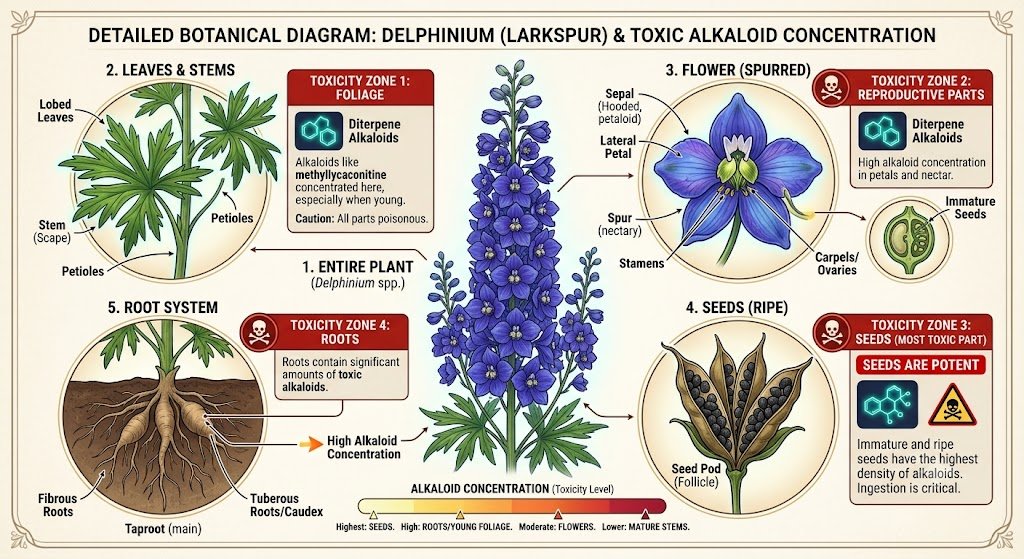
The plant contains potent alkaloids like delphinine that attack the central nervous system when consumed.
- Alkaloid Mechanism: Delphinine binds to nerve receptors, blocking normal acetylcholine transmission.
- Neuromuscular Blockade: This leads to paralysis by preventing muscle contraction signals.
- Cardiotoxicity: Severe cases can also disturb heart rhythm, causing arrhythmias.
- Species Sensitivity: Ruminants (like cattle) are more vulnerable than humans due to metabolic differences.
[Image: Detailed diagram of a delphinium flower with labeled parts: leaves, stems, seeds, and roots, showing where toxic alkaloids are concentrated]
Which Parts of Delphinium Are Toxic?
Every part of the delphinium plant harbors toxins, but some are far more dangerous than others.
| Plant Part | Toxin Concentration | Primary Risk |
|---|---|---|
| Seeds | Very High | Fast-acting neurotoxicity |
| Young Leaves & Stems | High | Digestive upset & weakness |
| Roots | Moderate | Chronic toxicity if chewed |
| Mature Flowers | Low to Moderate | Mild irritation |
Symptoms of Delphinium Poisoning
Recognizing delphinium poisoning symptoms early is critical for effective treatment and recovery.
Common indicators include excessive drooling, nausea, vomiting, and diarrhea، On the nervous side, watch for muscle stiffness, staggering gait, and rapid breathing، In advanced cases, convulsions or coma may occur، Both delphinium toxic to dogs and delphinium toxic to cats can manifest similarly, though cats tend to hide symptoms longer.
Is Delphinium Poisonous to Humans?
Yes, is delphinium poisonous a confirmed reality: all parts of the plant are toxic to humans if eaten.
While rare in adults, accidental ingestion by children or misuse of herbal remedies can cause delphinium poisoning، Symptoms mirror those in animals: burning mouth, abdominal pain, dizziness, and muscle weakness، Skin contact may cause mild dermatitis in sensitive individuals.
Understanding delphinium plant toxicity helps you create a safer garden, especially if children or pets frequent the area.
Is Delphinium Toxic to Dogs, Cats, and Horses?
Yes, delphinium is highly toxic to dogs, cats, and horses, though severity varies by species and amount ingested.
Horses and cattle are especially vulnerable because they may eat large quantities of young plants، Dogs and cats can also suffer severe reactions if they chew on stems or flowers، The alkaloids in the plant affect each species differently, but the core risk remains neuromuscular paralysis، In horses, the condition is often called larkspur poisoning and can be fatal within hours if untreated، For pets, the key is speed of intervention — the faster you act, the better the outcome.
What to Do After Delphinium Exposure
If you suspect any exposure to delphinium, act immediately and follow these four critical steps.
- Remove the Source: Gently take away any remaining plant material from the mouth or paws، Avoid inducing vomiting unless instructed by a professional, as it can cause aspiration.
- Check Vital Signs: Look for breathing rate, heart rhythm, and consciousness، Note any muscle tremors or weakness — these are early signs of severe poisoning.
- Call a Vet or Poison Control: Contact your veterinarian or a pet poison helpline (e.g., ASPCA: 888-426-4435) immediately، For humans, call 1-800-222-1222.
- Collect a Sample: If possible, take a photo or bring a piece of the plant to the clinic، This helps confirm the species and guides treatment.
How Delphinium Poisoning Is Treated
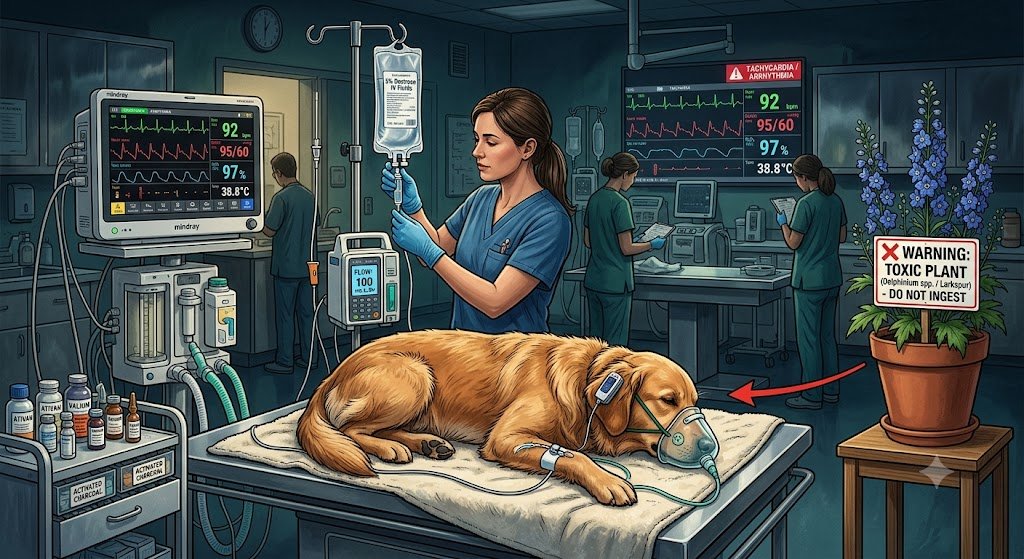
Veterinary treatment for delphinium poisoning focuses on stabilizing the nervous system and removing the toxin from the body.
In a clinical setting, the first step is often intravenous fluids to support circulation and flush toxins، If the ingestion occurred within an hour, activated charcoal may be administered to bind the alkaloids، For severe neuromuscular signs, veterinarians use antidotes like neostigmine or atropine to counteract nerve blockage، Anti-seizure medications such as diazepam help control convulsions، The patient is typically hospitalized for 12–48 hours for continuous monitoring of heart rate and breathing، Prognosis is excellent with prompt care, but delayed treatment can lead to permanent nerve damage or death، At home, never attempt to induce vomiting or give home remedies, as this can worsen the condition.
How to Grow Delphinium Safely
With proper precautions, you can enjoy delphiniums in your garden without risking your family or pets.
| Safety Measure | What to Do | Why It Works |
|---|---|---|
| Fencing | Install a low barrier around the planting area | Keeps curious pets and children away |
| Plant Placement | Locate delphiniums at the back of flower beds | Reduces accidental contact during play |
| Regular Pruning | Remove spent flowers and fallen leaves promptly | Limits toxin sources on the ground |
| Education | Teach children not to touch or eat any plant | Prevents accidental ingestion |
Frequently Asked Questions About Delphinium Poison
Here are clear answers to the most common questions about delphinium plant toxicity.
- Q: Can delphinium poison affect humans through skin contact? A: Mild skin irritation or dermatitis is possible, but systemic poisoning only occurs through ingestion.
- Q: Is delphinium toxic to humans in small amounts? A: Yes, even a few seeds can cause moderate symptoms like nausea and dizziness، Always treat it as a serious threat.
- Q: Are dried delphinium flowers still toxic? A: Yes, drying does not break down the alkaloids، Dried arrangements remain dangerous if chewed or eaten.
- Q: What is the difference between delphinium and larkspur poisoning? A: Both terms refer to the same condition, since larkspur is a common name for delphinium species.
- Q: How long do delphinium poisoning symptoms last in pets? A: With treatment, mild symptoms resolve in 24–48 hours، Severe cases may require up to a week for full recovery.
Understanding these risks empowers you to prevent larkspur poisoning and act quickly if an incident occurs، By respecting delphinium poison and its effects, you can protect both your loved ones and your garden.
Recognizing the dangers associated with delphinium poison is absolutely essential for any pet owner who values the safety of their animals in a garden environment، All parts of the delphinium plant contain potent alkaloids that can cause severe neurological and gastrointestinal distress in dogs and cats within minutes of ingestion، By familiarizing yourself with the early signs of toxicity, such as excessive drooling and muscle tremors, you can take immediate life-saving action before the condition worsens،
Understanding how to properly treat delphinium poison exposure involves immediate veterinary intervention and supportive care rather than attempting home remedies that may delay critical treatment، Protecting your pets from this preventable threat requires a commitment to removing the plant from accessible areas and supervising outdoor activities to eliminate any chance of accidental consumption، Ultimately, the best defense against delphinium poison is a proactive approach that combines education with diligent landscape management to keep curious companions safe year-round.