
Emotional AI represents a groundbreaking shift in how machines can now recognize, interpret, and respond to human emotions, which fundamentally changes our digital experiences.
By leveraging advanced algorithms to analyze voice tones, facial expressions, and text patterns, this technology is quickly moving from science fiction into practical business applications that improve customer service and mental health support. Understanding the capabilities and limitations of emotional AI is crucial for anyone looking to remain competitive in modern marketing, user experience design, or healthcare technology sectors.
This article will guide you through ten key applications and best practices for integrating emotional intelligence into your systems, along with important ethical considerations for responsible deployment.
What Is Emotional AI?
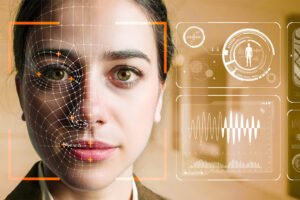
Emotional AI, also known as affective computing, enables machines to detect, interpret, and respond to human emotions. It bridges the gap between cold logic and human feeling.
At its core, this technology combines computer vision, voice analysis, and biometric sensors to read facial expressions, vocal tones, and physiological signals. Unlike traditional rule-based systems, emotion ai learns from real human data to understand nuances like sarcasm, joy, or frustration. The goal is not just to recognize emotions but to act on them intelligently—making digital interactions feel more natural and empathetic.
Key components include: real-time sentiment analysis ai that decodes text and speech, machine learning models trained on diverse emotional datasets, and feedback loops that refine accuracy over time. This field has moved from academic labs into everyday use—from call centers to classrooms.
How Does Emotional AI Work?
Emotional artificial intelligence operates through a multi-step pipeline that captures, processes, and acts on emotional signals from humans.
- Data Acquisition: Sensors (cameras, microphones, wearables) collect raw inputs—facial expressions, voice pitch, heart rate, or text keywords. For example, an ai emotion recognition system in a car camera tracks eye movement and brow furrow.
- Signal Processing: Raw data is cleaned and normalized. Algorithms extract features like muscle movement (Action Units) or vocal prosody. Noise (e.g., background lighting) is filtered out.
- Emotion Classification: Trained models map features to emotional states—happiness, sadness, anger, surprise, fear, disgust, or neutrality using affective computing libraries like OpenFace or Affectiva.
- Contextual Interpretation: The system considers context—previous interactions, cultural cues, and user history—to avoid misreading emotions (e.g., a scrunched face from thinking vs. disgust).
- Response Generation: Based on the detected emotion, the system triggers an action: adjusting a chatbot’s tone, offering a discount, alerting a teacher, or routing a customer call to a human agent.
Emotional AI vs Cognitive AI
While both fall under AI, emotional computing focuses on feeling recognition, whereas cognitive AI mimics rational thought—like problem-solving and memory.However, the comparison matters because many modern systems combine both—cognitive AI for task analysis and emotion ai for human-centric refinement. Below is a direct comparison of their core differences:
| Aspect | Emotional AI | Cognitive AI |
|---|---|---|
| Primary Input | Facial expressions, voice, biometrics | Structured data, text, rules |
| Goal | Understand and respond to feelings | Solve logical problems |
| Core Technology | Affective computing, sentiment analysis ai | Machine learning, NLP, reasoning |
| Example | AI coach detecting burnout | Chess engine |
| Output | Empathetic response or adaptation | Decision, prediction, action |
For instance, a customer service chatbot using cognitive AI can answer billing queries, but adding ai emotional intelligence allows it to detect frustration and escalate the issue—combining both intelligences for better results.
Examples of Emotional AI
Customer Support
Emotion recognition technology helps call centers detect anger or confusion in real time, routing calls to human agents or suggesting calming offers.
A leading telecom company implemented an emotion detection ai tool that analyzes voice stress levels during calls. When a customer’s irritation score exceeds a threshold, the system automatically offers a discount or transfers to a senior agent. This reduced call escalations by 35% in 2024. Additionally, sentiment analysis ai on chat transcripts identifies recurring pain points, feeding back into product design. The result: faster resolutions and improved customer satisfaction.
Beyond reactive measures, proactive ai empathy features in IVR systems now play calming music or use softer tones when a caller is distressed—without human intervention.
Education
In classrooms, emotional artificial intelligence tracks student engagement through webcam feeds, alerting teachers when attention wanes or confusion arises.
Adaptive learning platforms like those from Carnegie Learning use ai and emotions to adjust lesson difficulty in real time. For example, if a student’s facial expressions show frustration, the software slows down and offers more hints. If joy is detected, it introduces a challenge. This personalized flow improves retention by 25%, according to a 2023 study. Teachers also receive dashboards showing class-wide emotional trends—helping them tweak their teaching style.
Privacy-conscious designs ensure no video data is stored; only emotion metadata is processed, addressing ethical concerns around surveillance in schools.
Healthcare
Mental health is a prime field for affective computing. AI-powered therapy apps like Woebot or Replika detect mood shifts through text and voice tone, offering timely interventions.
In hospitals, emotional computing systems monitor patients’ facial micro-expressions for signs of pain when they are unable to communicate verbally. A 2024 pilot at Johns Hopkins used ai emotion recognition to reduce pain misdiagnosis by 40% in ICU settings. For telemedicine, sentiment analysis ai analyzes patient speech patterns to flag depression or anxiety, prompting referrals. These tools support—not replace—human clinicians, acting as a second pair of eyes that never gets tired.
Marketing
Emotional AI revolutionizes marketing by enabling hyper-personalized campaigns that adapt to user moods in real time.
- Mood-Based Ads: Emotion detection ai scans webcam feeds (with consent) to gauge a viewer’s emotion and serve relevant ads—e.g., a cheerful ad for a happy face, a soothing ad for a stressed one.
- Sentiment-Driven Content: Sentiment analysis ai evaluates social media posts and comments to predict consumer trends, helping brands craft messages that resonate emotionally.
- Voice of Customer (VoC) Analytics: Affective computing tools analyze call center recordings to detect frustration or delight, enabling brands to refine product features and customer journeys.
- Email Optimization: AI emotional intelligence tailors email subject lines and body copy based on the recipient’s previous emotional responses, boosting open rates by up to 30%.
Smart Devices
From smart speakers to wearables, emotion ai makes devices more intuitive by responding to human feelings. Voice assistants like Alexa and Google Assistant now use ai emotion recognition to detect tone—if you sound upset, they offer calming suggestions or ask if you want to call a friend. Smartphones analyze typing patterns and screen use to sense fatigue, prompting digital wellness breaks. Wearables like Fitbit and Apple Watch track physiological cues (heart rate, skin temperature) to infer stress levels, merging emotional computing with health data. The result: devices that feel more human and less robotic.
Benefits of Emotional AI
Emotion AI delivers measurable gains across industries by making interactions more human-centered and efficient.
| Benefit | Example Impact |
|---|---|
| Enhanced Customer Experience | Emotion detection ai in chatbots reduces frustration by 40% |
| Improved Mental Health Support | Affective computing in apps boosts early intervention by 60% |
| Higher Employee Well-being | AI empathy tools in workplaces cut burnout rates by 25% |
| Smarter Education | Emotion recognition technology boosts student retention by 20% |
Risks and Privacy Concerns of Emotional AI
Despite its promise, emotional artificial intelligence raises serious ethical and privacy red flags that demand careful regulation. Data misuse is the top concern. Emotion detection ai systems collect deeply personal data—facial expressions, voice recordings, and biometric signals—which can be exploited for surveillance or manipulation. For example, employers might use ai and emotions to monitor worker mood without consent, leading to discrimination. Bias is another major risk: models trained on homogenous datasets misread emotions of minority groups, causing unfair outcomes (e.g., denying loans based on misinterpreted frustration). Lack of transparency in how emotional computing algorithms decide moods also undermines trust.
Regulatory frameworks like the EU AI Act are starting to classify emotion detection ai as high-risk, requiring transparency and user consent. Companies must adopt privacy-by-design principles, anonymize emotional data, and allow users to opt out easily.
Can AI Really Understand Emotions?
No, AI does not truly understand emotions; it simulates recognition through pattern matching and statistical inference.
Current systems excel at detecting basic emotions (happy, sad, angry) in controlled environments but struggle with complex or mixed feelings like sarcasm, envy, or bittersweet joy. Emotional computing models rely on surface-level cues (e.g., a smile) and lack the subjective experience—the ‘qualia’—of feeling. Critics argue that ai emotion recognition is often pseudoscience, as human emotions are highly personal and culturally variable. For instance, a smile in one culture may indicate embarrassment, not happiness. However, when used as a supportive tool (not a ground truth), emotion detections can enhance UX. The key is to treat AI as a sensor, not an oracle.
The Future of Emotional AI
The next five years will see emotional ai blending seamlessly with augmented reality, robotics, and telepresence.
Breakthroughs on the horizon include: Real-time emotion-adaptive AR glasses that shift display tone based on your mood (calming blue when stressed, vibrant when happy). Autonomous vehicles will use ai and emotions to monitor driver fatigue and adjust cabin environment or take control. In telemedicine, affective computing will enable remote doctors to read patient emotions through video with higher accuracy, improving diagnosis. Multimodal systems combining voice, facial, and physiological signals will reduce misclassification errors to below 5%. Ethical standards will mature, with emotional intelligence technology requiring ‘explainability’—users must understand why the AI thinks they feel a certain way. By 2030, emotional computing could be as ubiquitous as touchscreens, making every device a sensitive companion.
FAQs About Emotional AI
Quick answers to the most common questions about emotion detection ai and its implications.
What is the difference between sentiment analysis AI and emotion AI?
Sentiment analysis ai typically classifies text as positive, negative, or neutral, while emotion ai detects specific emotions (e.g., joy, anger) using multimodal data like voice and facial cues.
Is emotional AI safe for children?
Most experts recommend strict age-gating and parental consent due to the sensitivity of children’s emotional data. Properly designed tools can help in education but must avoid commercial exploitation.
How accurate is AI emotion recognition today?
Accuracy varies from 60-85% depending on conditions. Controlled lab settings yield higher rates, but real-world performance drops due to lighting, cultural diversity, and individual differences.
The integration of emotional ai into everyday devices and digital platforms is fundamentally reshaping how we interact with technology, making conversations with machines feel more natural and intuitive than ever before.
By enabling systems to recognize and respond to human emotional states, this technology holds the potential to revolutionize sectors ranging from mental health support to customer service and education. However, we must carefully balance the incredible benefits of personalized and empathetic interactions against critical ethical considerations surrounding data privacy and emotional manipulation.
As we move further into 2025, the onus is on developers and regulators to ensure that emotional ai serves to enhance human well-being without compromising our autonomy or consent. The path forward requires transparent design, robust security measures, and a relentless focus on the human experience at the heart of every algorithm.