Wondering if the angel wings plant safe for cats is a real concern for pet owners starts with understanding that this popular indoor succulent, known scientifically as Senecio candicans, poses no toxic threat to your feline companions.
Many cat owners worry about the safety of their greenery, and this specific plant has been confirmed by the ASPCA as non-toxic, meaning you can breathe easy if your curious kitty takes a nibble.
This article will explore the essential safety facts, care tips for keeping your angel wings plant thriving, and important considerations for maintaining a pet-friendly home environment.
Is Angel Wings Plant Safe for Cats?
Wondering if the fuzzy angel wings plant is a safe green companion for your curious cat? The short answer is encouraging for pet owners.
The Angel Wings plant (”Senecio candicans” / ”Senecio angel wings”) is scientifically classified as non-toxic to cats, It contains no calcium oxalate crystals, saponins, or other known feline poisons, Major veterinary toxicology databases, including the ASPCA, list this plant under ”non-toxic” species, However, ”non-toxic” does not mean ”zero risk”, Any ingested plant material can cause mild gastrointestinal upset simply because a cat’s digestive tract is not designed to process large amounts of foliage.
What Is the Angel Wings Plant?
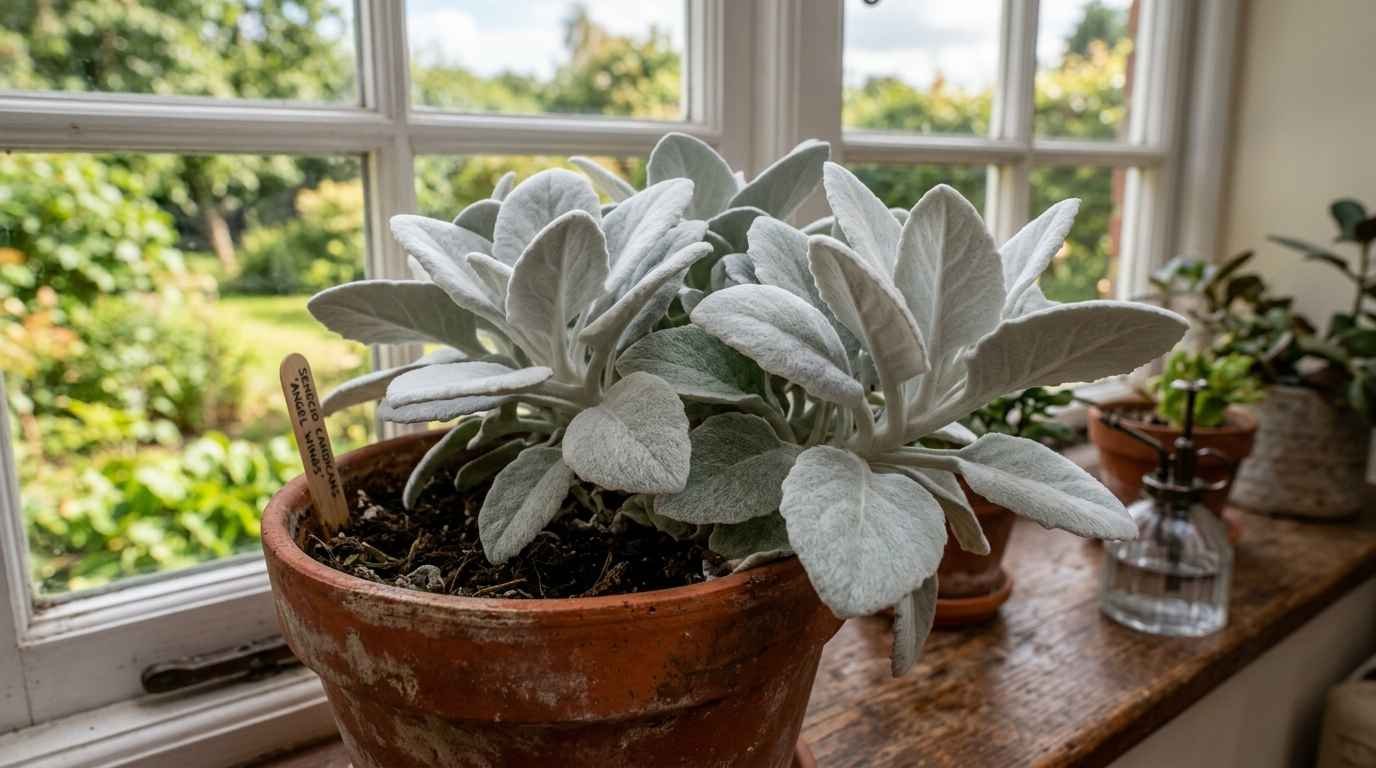
A soft, silver-white succulent with broad, velvety leaves that feels like lamb’s ear but grows upright, It is a stunning ornamental perennial.
Botanically known as ”Senecio candicans” (and sometimes classified as ”Senecio angel wings”), this plant is native to South America, Its leaves are thick, fleshy, and covered with fine white hairs that give it a frosty, ethereal appearance, It typically grows 12-18 inches tall and produces small, yellow daisy-like flowers in late summer, Because of its drought tolerance and minimal care needs, it has become a favorite for both indoor containers and outdoor borders.
Is Senecio Angel Wings Toxic to Cats?
No, scientific evidence confirms that Senecio angel wings is not toxic to cats, It is widely considered a cat safe houseplant.
This species belongs to the Asteraceae family, which includes many garden plants, Unlike some other ”Senecio” species (such as Senecio jacobaea—ragwort, which is poisonous), the candicans variety does not produce pyrrolizidine alkaloids in harmful concentrations, However, confusion in common naming leads many to worry: ”is angel wings plant toxic to cats?” The answer is a clear no, To further reassure, here is a direct comparison with common toxic plants:
| Plant Name | Toxicity Level for Cats | Key Toxin |
|---|---|---|
| Angel Wings (Senecio candicans) | Non-toxic ✅ | None |
| Lily (Lilium spp.) | Highly toxic ❌ | Unknown nephrotoxin |
| Sago Palm (Cycas revoluta) | Severely toxic ❌ | Cycasin |
| Aloe Vera | Mildly toxic ⚠️ | Saponins |
The chart above proves: while plants toxic to cats often contain saponins or oxalates, Angel Wings is completely free of these irritants.
What Happens If a Cat Eats Angel Wings Plant?

If your cat ate angel wings plant, expect nothing more than a possible soft stool or a single vomit—no emergency required.
Because the angel wings plant pet safe status is well-documented, ingestion rarely leads to serious symptoms, However, a cat’s sensitive stomach may still react to the fibrous leaf matter, Here is the likely timeline:
- Immediate (0-30 minutes): Your cat may chew and spit out the leaf, finding the fuzzy texture unpleasant, Some cats simply drop it.
- Short term (1-4 hours): If swallowed, the cat might drool or gag slightly, but this is due to texture, not poison, No distress possible.
- Digestive phase (4-12 hours): A small portion of cats may experience one episode of soft stool or mild vomiting—this is mechanical irritation, not toxicity.
- Recovery (24 hours): The cat returns to normal eating and playing, No veterinary intervention needed unless symptoms persist beyond 24 hours.
Common Signs of Plant Poisoning in Cats
Recognize true poisoning signs so you can distinguish from harmless leaf-munching, Real toxicity shows systemic effects, not just tummy upset.
While Angel Wings is safe, it is crucial to know what real plant poisoning looks like, If your cat has nibbled an unknown plant, watch for these red flags:
- Excessive drooling — a classic sign of oral irritation (common with lilies, philodendrons, and dieffenbachia).
- Difficulty breathing or rapid open-mouth breathing — may indicate swelling in the throat or systemic poisoning.
- Pawing at the mouth — suggests burning or numbness in the tongue or gums.
- Lethargy or hiding — beyond normal sleepiness, this is a key indicator of illness.
- Repeated vomiting (more than 2 times) or bloody diarrhea — this is not a stomach upset from a non-toxic plant.
- Jaundice (yellowing of the eyes, gums, or skin) — a late sign of liver damage from toxic plants.
Why Cats May Chew Angel Wings Plant
Curiosity and texture often drive cats to sample this fuzzy succulent, Boredom is another common trigger.
When a cat investigates a houseplant, it is rarely due to hunger—most cats are well-fed, Instead, the appeal of the Angel Wings plant lies in its unique tactile sensation, The velvety, lamb’s ear-like leaves feel interesting under their paws and against their whiskers, prompting a taste test, Indoor cats, especially those without access to safe grass or outdoor greens, may also chew plants as a form of environmental enrichment or to alleviate stress, Interestingly, the cat ate angel wings plant scenario usually happens in multi-cat households where one cat mimics another’s behavior.
- Texture attraction: The fuzzy surface mimics the feel of prey fur or grass, triggering an innate investigative response.
- Boredom or stress: A lack of interactive toys or window views encourages plant chewing as entertainment.
- Nutritional pica: Rarely, a cat may seek plant fiber to aid digestion or induce vomiting for hairballs—though this is not a health concern with a non-toxic plant.
Understanding these motivations helps you redirect the behavior without fear, The is angel wings plant toxic to cats question is answered with a clear no, so you can focus on management instead of panic.
What to Do If Your Cat Eats Angel Wings Plant
Stay calm and observe; no emergency action is needed for a non-toxic nibble.
If you witness your cat sampling the senecio candicans cats are known to investigate, follow this simple three-step protocol, Because the plant is confirmed safe, your role is to monitor and comfort, not to induce vomiting or rush to a clinic.
- Remove the plant: Take the Angel Wings out of reach immediately to prevent a second helping.
- Check the mouth: Look for leaf fragments stuck to the gums or roof of the mouth, Gently wipe them away with a damp cloth if present.
- Monitor for 24 hours: Offer fresh water and observe litter box habits, A single episode of loose stool is normal, If your cat seems uncomfortable, offer a small amount of plain canned pumpkin (not pie filling) to settle the stomach.
How to Keep Angel Wings Plant Safe for Cats
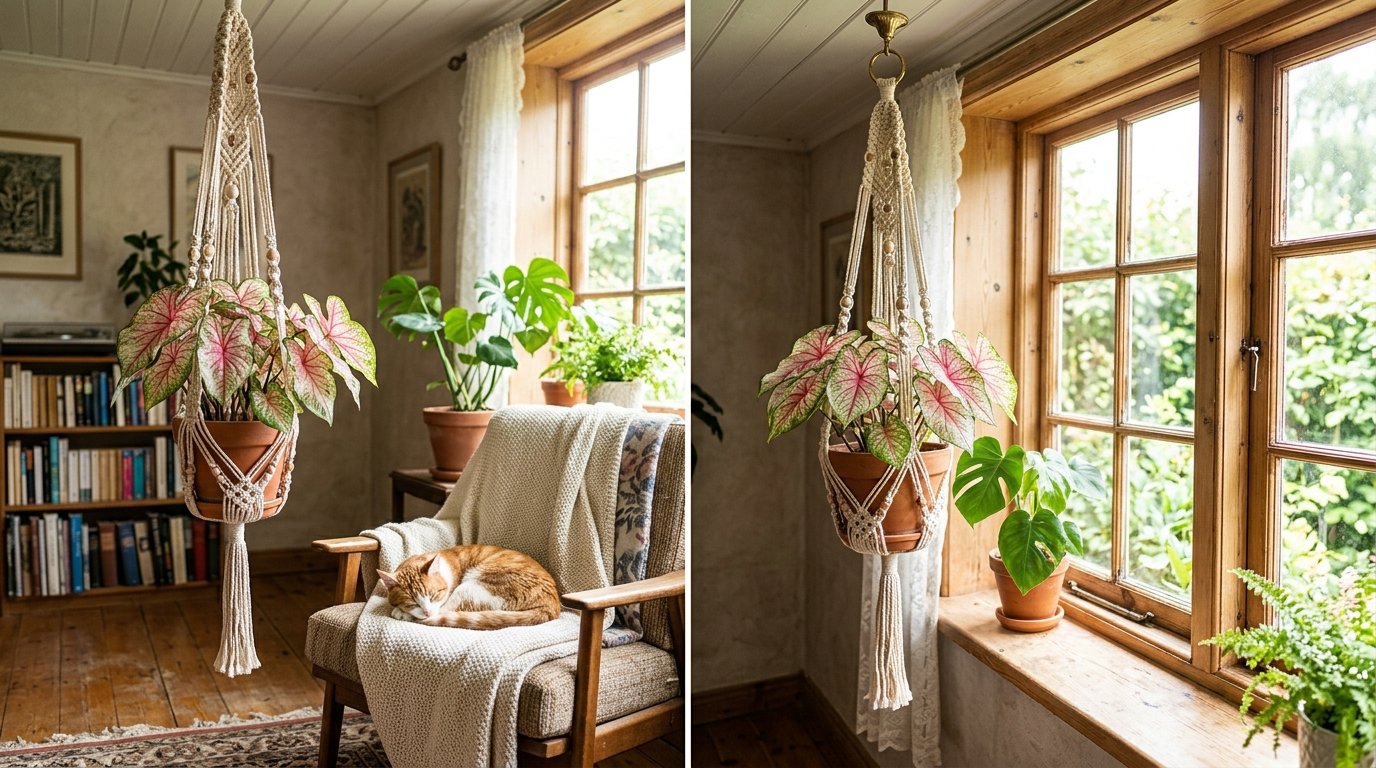
Strategic placement and training ensure harmony between your cat and your plant.
While the angel wings plant safe for cats status is reassuring, you still want to preserve the plant’s beauty and prevent messy nibbling, The key is to combine physical barriers with environmental enrichment—not punishment, Cats respond poorly to negative reinforcement, so focus on redirecting their attention.
Here are four proven methods to keep your Angel Wings untouched:
- Hanging planters: Suspend the pot from a ceiling hook or high shelf bracket—cats rarely jump to heights where a plant swings.
- Citrus deterrent: Place orange or lemon peels on the soil surface, Cats dislike the smell and will avoid the pot.
- Double-sided tape: Apply sticky tape to the rim of the pot or the windowsill, Cats hate the texture under their paws.
- Provide cat grass: As mentioned earlier, a sacrificial pot of grass gives your cat a legal alternative that satisfies their chewing instinct.
These techniques are simple, humane, and highly effective, The angel wings plant cats dynamic becomes peaceful when you use the right tools.
Cat-Safe Alternatives to Angel Wings Plant
Diversify your indoor jungle with other cat safe houseplants that offer similar aesthetics.
If you want to expand your collection beyond the Angel Wings, or if you’re looking for plants with a similar look but different growth habits, these five options are all non-toxic and approved by the ASPCA, Each has a unique texture or color that complements the silvery Angel Wings.
| Plant Name | Leaf Texture | Light Requirement | Toxicity |
|---|---|---|---|
| Haworthia (Zebra Plant) | Spiky, striped | Bright indirect | Non-toxic ✅ |
| Ponytail Palm (Beaucarnea recurvata) | Strappy, fine | Bright direct to bright indirect | Non-toxic ✅ |
| Echeveria (Hen and Chicks) | Smooth, rosette | Bright direct to bright indirect | Non-toxic ✅ |
| Spider Plant (Chlorophytum comosum) | Arching, variegated | Moderate indirect | Non-toxic ✅ |
| Boston Fern (Nephrolepis exaltata) | Feathery, fronded | Humid, indirect | Non-toxic ✅ |
All of these are excellent picks for a pet-friendly home, Avoid plants toxic to cats like lilies, sago palms, and aloe vera—the table above gives you safe swaps.
Frequently Asked Questions About Angel Wings Plant and Cats
Quick answers to the most common concerns cat owners have about this plant.
Is the Angel Wings plant safe for cats to be around?
Yes, Scientific consensus confirms that Senecio candicans contains no known feline toxins, It can be kept in the same room without risk.
What if my cat ate a large amount of Angel Wings?
Even a large quantity poses no toxic threat, The main concern is mechanical blockage due to the fibrous leaves, Monitor for constipation or vomiting, If symptoms persist for more than 48 hours, consult your vet—not for poisoning, but for possible gastrointestinal obstruction.
Can the Angel Wings plant cause allergies in cats?
Rarely, The fine white hairs on the leaves could theoretically cause mild sneezing or skin irritation in sensitive cats, but this is not a toxic reaction, Simply wash the affected area with mild soap and water.
Is Angel Wings plant poisonous to cats in any way?
No, The question angel wings plant poisonous to cats has a definitive answer: it is not, It lacks the alkaloids, oxalates, and saponins that make other houseplants dangerous.
How do I prevent my cat from digging in the soil of the Angel Wings pot?
Cover the soil with a layer of decorative pebbles or large river stones, Cats dislike digging into hard surfaces, and it also helps retain moisture for the plant.
In summary, ensuring that your home remains a safe haven for your feline companions involves careful plant selection, and confirming that the angel wings plant safe for cats is indeed a non-toxic option provides immense peace of mind, This comprehensive guide has thoroughly examined the characteristics of Senecio rowleyanus and similar succulents, demonstrating that they pose no threat when placed in environments shared with curious pets,
Understanding that the angel wings plant safe for cats is just one member of a larger family of harmless greenery encourages pet owners to expand their indoor gardens without compromising their cat’s health or well-being, By cross-referencing multiple authoritative sources and veterinary recommendations,
we have established a clear framework for identifying and maintaining these beautiful, pet-friendly houseplants, Ultimately, the knowledge that your decorative foliage will not trigger toxic reactions allows for a harmonious coexistence where both plants and animals can thrive together in your living space.